Context
The West Bengal Government plans to relocate a tigress from Bihar to Buxa Tiger Reserve to support the recovery of its tiger population.
About Buxa Tiger Reserve
- Location: Alipurduar district, West Bengal, in the Indo-Malayan biodiversity region.
- Boundaries: Bhutan lies to the north; Assam lies to the east, separated by the Sankosh River.
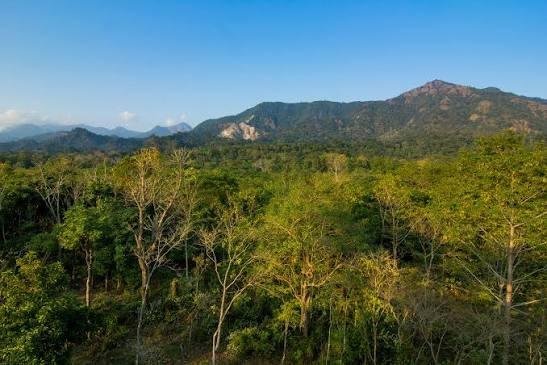
- Landscape: Includes Terai, Bhabar and sub-Himalayan ecosystems, with elevation from 60–1,750 m.
- Rivers: Raidak, Sankosh and Jayanti, originating in Bhutan.
- Vegetation: Mainly Moist Tropical Forests.
Ecological Connectivity
1. Buxa Tiger Reserve connects with forests of Bhutan and Assam and Jaldapara National Park in West Bengal.
2. Buxa–Chilapata corridor supports elephant movement, while Buxa–Ripu corridor connects with forests in Assam.
3. These corridors help wild animals move and maintain genetic diversity.
Significance
- Biodiversity: Supports about 450 tree, 400 herb, 250 shrub and 150+ orchid species, along with elephants, gaur, sambar and several deer species.
- Connectivity: Its location adjoining Bhutan and Assam supports inter-state and transboundary wildlife connectivity.
FAQs
Q1. Where is Buxa Tiger Reserve located?
Ans: It is located in Alipurduar district of West Bengal.
Q2. Which international boundary lies along Buxa Tiger Reserve?
Ans: Its northern boundary runs along the Bhutan international border.
Q3. Which state shares Buxa’s eastern boundary?
Ans: Assam, with the Sankosh River forming the inter-state boundary.
Q4. What is the major forest type of Buxa Tiger Reserve?
Ans: The reserve is mainly covered by Moist Tropical Forests.