Context
- The 2026 BRICS New Delhi Declaration reiterated the need for comprehensive reform of the United Nations and the UN Security Council (UNSC) to make global governance more representative and responsive to contemporary realities.
- China and Russia reiterated support for the aspirations of India and Brazil to play a greater role in the United Nations, including the UNSC.
- UN Secretary-General António Guterres has also highlighted the gap between the post-1945 institutional structure and present-day geopolitical realities, underscoring the need for reform.
About the UN Security Council
- The UNSC is the principal UN organ responsible for maintaining international peace and security.
- Established in 1945, it currently consists of 15 members:
- 5 permanent members (P5): China, France, Russia, the United Kingdom and the United States.
- 10 non-permanent members, elected by the UN General Assembly for two-year terms.
- Under Article 27 of the UN Charter, substantive decisions require at least nine affirmative votes, including the required concurrence of the permanent members.
- A negative vote by any permanent member can block the adoption of a substantive resolution, constituting the veto.
- An abstention by a permanent member does not constitute a veto.
Why is UNSC Reform Needed
- Outdated Representation
- The UNSC reflects the geopolitical structure of 1945, when the United Nations had only 51 members.
- The UN has since expanded to 193 member states, but the Council’s basic permanent membership has remained unchanged.
- This has created a gap between the composition of the Council and the contemporary distribution of political, economic and demographic weight.
- Regional Imbalance
- Africa and Latin America and the Caribbean do not have permanent representation in the Council.
- The representation of regions with large populations and growing economic and diplomatic significance remains limited.
- Reform is therefore linked to the broader demand for more equitable regional representation.
- Changing Security Environment
- The international security environment has expanded beyond traditional interstate conflicts.
- Issues such as terrorism, cyber threats, climate-related security risks, pandemics and emerging technologies have added new dimensions to international peace and security.
- Reform is consequently being discussed not only in terms of membership but also in relation to the Council’s working methods and effectiveness.
- Effectiveness and Legitimacy
- Differences among permanent members can constrain collective action on major international crises.
- Questions have also been raised about the transparency, accountability and representativeness of Council decision-making.
- Reform seeks to strengthen both the effectiveness and legitimacy of the UNSC.
India’s Position on UNSC Reform
- Expansion in Both Categories
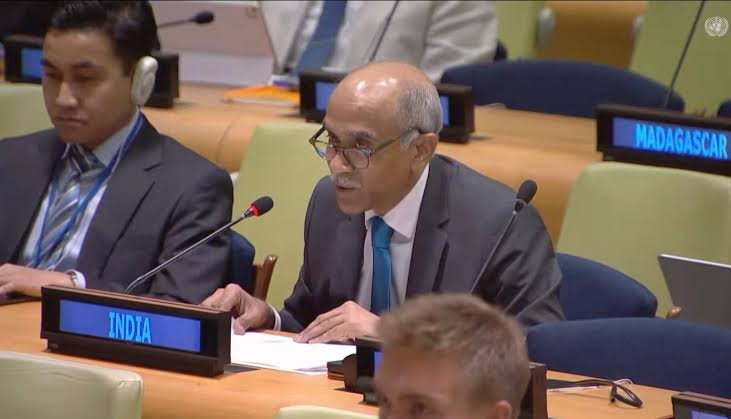
- India consistently supports expansion of the UNSC in both the permanent and non-permanent categories.
- It argues that reform should address both the Council’s representational deficit and the need for broader participation in decision-making.
- Permanent Membership and Veto
- India seeks permanent membership in a reformed UNSC.
- India has argued that, as long as the veto exists, there should be parity in the rights and responsibilities of permanent members.
- At the same time, India has supported discussions on veto restraint and accountability.
- Support for the African Model
- India supports the African Union’s Ezulwini Consensus and Sirte Declaration as an important basis for addressing Africa’s under-representation.
- The African position seeks permanent representation for Africa along with additional non-permanent representation.
- Global South Representation
- India links UNSC reform with greater representation of the Global South in global decision-making.
- Its position emphasizes moving developing countries from primarily being rule-takers to having a greater role in shaping international rules and institutions.
- Peacekeeping and Role of TCCs
- India has a longstanding contribution to UN peacekeeping operations.
- It supports a stronger role for Troop-Contributing Countries (TCCs) in discussions concerning the formulation, implementation and renewal of peacekeeping mandates.
- Veto Use and Accountability
- India has advocated greater accountability and transparency in the use of the veto.
- It has also drawn attention to situations in which Council members may effectively block or delay Council action without formally exercising a veto.
- The General Assembly’s Resolution 76/262, adopted in 2022, provides for a General Assembly debate following the use of a veto in the UNSC.
Five Clusters of UNSC Reform
Intergovernmental negotiations on UNSC reform broadly address five clusters:
- Relationship between the UNSC and the UN General Assembly
- Size of an enlarged Council and its working methods
- Categories of membership
- Question of the veto
- Regional representation
These clusters provide the principal framework for negotiations on Council reform.
Major Reform Proposals
G4 Model
The G4—India, Brazil, Germany and Japan supports expansion of the UNSC in both permanent and non-permanent categories.
- The G4 has proposed an enlarged Council of 25–26 members.
- It supports new permanent members having responsibilities and obligations comparable to existing permanent members.
- Under the G4 proposal, new permanent members would initially not exercise the veto, with the issue to be reviewed after 15 years.
- The G4 also emphasizes text-based negotiations, supported by clear milestones and timelines.
Uniting for Consensus
- The Uniting for Consensus (UfC) group, also known as the Coffee Club, opposes the creation of additional permanent seats.
- It favours an expanded Council with greater representation through elected, non-permanent seats.
- The group argues that periodic elections can provide wider accountability and regional representation.
African Union Position
- The African Union’s position is articulated through the Ezulwini Consensus and Sirte Declaration.
- It seeks two permanent seats for Africa, along with additional non-permanent representation.
- The African position also calls for adequate representation in the Council’s decision-making structure.
Major Obstacles to Reform
- Complex Charter-Amendment Procedure
- Reform affecting the UN Charter faces a demanding legal procedure under Article 108.
- A Charter amendment requires adoption by a two-thirds majority of the General Assembly and ratification by two-thirds of UN members, including all permanent members of the Security Council.
- Consequently, any structural reform ultimately requires the concurrence of the P5.
- Divergent Reform Models
- Member states differ over the number and nature of new seats, the distribution of regional representation and the question of veto rights.
- The G4, UfC and African Union approaches therefore represent different institutional models.
- Reconciling these positions remains a major challenge in the reform process.
Way Forward
- Pursue Comprehensive Reform
- Reform should address membership, regional representation, veto-related issues and working methods rather than focusing on a single element.
- Advance Text-Based Negotiations
- Negotiations should move towards concrete, text-based proposals with clearly identified areas of convergence and disagreement.
- This can make the process more focused and facilitate substantive negotiations.
- Build Wider Convergence
- Reform requires sustained dialogue among the P5, aspiring permanent members, regional groups and other UN member states.
- Greater convergence can help bridge differences among competing reform models.
- Strengthen the Role of TCCs
- Countries contributing troops and personnel to peacekeeping operations should have greater opportunities to participate in discussions on mandates and their implementation.
- Improve Working Methods
- Greater transparency, consultation, accountability and predictability in Council procedures can complement structural reform.
- Improvements in working methods can strengthen the Council’s effectiveness while broader negotiations on its composition continue.
Conclusion
UNSC reform is fundamentally about aligning a post-1945 institutional structure with contemporary geopolitical, demographic and security realities. India’s position combines the demand for permanent representation with broader participation of developing countries, greater regional balance, a stronger role for peacekeeping contributors and improvements in Council working methods. Progress will depend on reconciling competing reform proposals through inclusive, text-based negotiations while addressing the legal requirements of the UN Charter.
UPSC FAQs
- What is the composition of the UN Security Council?
The UNSC has 15 members: five permanent members and ten non-permanent members elected by the General Assembly for two-year terms.
- What are the five clusters of UNSC reform?
They concern the UNSC-General Assembly relationship, Council size and working methods, categories of membership, the veto and regional representation.
- What is the G4 proposal?
The G4—India, Brazil, Germany and Japan—supports expansion in both membership categories and proposes a 25–26-member Council. Its model also provides for a 15-year review of veto arrangements for new permanent members.
- What is the Uniting for Consensus approach?
The UfC group opposes additional permanent seats and advocates an expanded Council based primarily on elected, non-permanent representation.
- What does the Ezulwini Consensus seek?
The African Union position seeks two permanent seats for Africa along with additional non-permanent representation.
- What are TCCs?
Troop-Contributing Countries are states that provide military or other personnel to UN peacekeeping operations. India supports greater participation of TCCs in peacekeeping mandate-related discussions.
- Why is Article 108 important for UNSC reform?
Article 108 prescribes the Charter-amendment procedure. It requires adoption by a two-thirds General Assembly majority and ratification by two-thirds of UN members, including all five permanent members of the UNSC.