Context
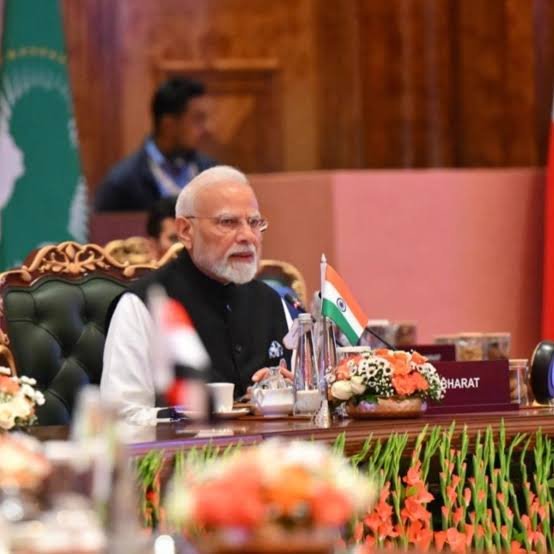
At the BRICS Summit, Prime Minister Narendra Modi highlighted the growing use of technology and critical minerals as instruments of geopolitical leverage.
What is Weaponization?
- Weaponization refers to using control over an economically important technology, resource or supply chain to exert geopolitical pressure by restricting access.
- The risk increases when production or processing is concentrated among a few countries.
- AI, semiconductors, batteries, EVs and renewable-energy technologies are particularly exposed because they depend on specialised technologies and critical minerals.
Technology as a Geopolitical Instrument
- Export controls: Restrictions on advanced chips and sensitive technologies can limit access for strategic competitors.
- Sanctions and entity restrictions: Selected companies can be denied access to markets, finance or technological ecosystems.
- Technological chokepoints: Control over a specialised production stage can constrain the wider industry. ASML’s role in advanced semiconductor-manufacturing equipment illustrates this vulnerability.
- Platform dependence: Reliance on foreign AI models and digital platforms can create strategic exposure.
- Standards-setting power: Technological leaders can influence technical standards and gain long-term market advantages.
- Governance architecture: Competing approaches to technology governance can shape future international rules and institutional frameworks.
Critical Minerals as a Geopolitical Instrument
- Processing concentration: Control over refining can create leverage even when extraction occurs elsewhere. China has a dominant position in rare-earth processing.
- Export licensing: End-use certification and tighter licensing can regulate access to rare earths, gallium, germanium and graphite.
- Overseas asset acquisition: Securing mining rights abroad can strengthen long-term control over strategic resources.
- Critical minerals are essential inputs for EVs, batteries, renewable-energy systems and advanced defence equipment.
India’s Vulnerabilities
- Import dependence: India remains heavily dependent on overseas supplies of several critical minerals, including lithium, cobalt and nickel.
- Exploration gap: Domestic mineral potential remains insufficiently explored and developed.
- Processing deficit: Limited domestic refining and processing capacity restricts value addition.
- Technology gap: India faces capability gaps in frontier AI, high-performance computing and semiconductor manufacturing.
- Capital constraints: These sectors require large investments and involve substantial technological and commercial risks.
- Strategic balancing: India must manage different external dependencies for technology and mineral supplies.
India’s Major Initiatives
- 30 Critical Minerals: India identified 30 critical minerals in 2023.
- National Critical Mineral Mission (NCMM): Covers exploration, mining, processing and recycling across the mineral value chain.
- KABIL: Khanij Bidesh India Limited seeks strategic mineral assets and mining opportunities overseas.
- IndiaAI Mission: Seeks to expand domestic AI computing capacity.
- India Semiconductor Mission: Promotes domestic semiconductor manufacturing.
- ACC Battery PLI: Supports domestic production of Advanced Chemistry Cell batteries.
- International cooperation: India participates in the Quad Critical Minerals Initiative, Minerals Security Partnership and BRICS.
- Recycling: Recovery of critical minerals from e-waste, batteries and electronic products is being promoted as an additional resource stream.
Way Forward
- Accelerate domestic resource development through faster exploration, auctions and project execution.
- Expand refining and downstream capacity to increase domestic value addition.
- Establish strategic mineral reserves for supplies vulnerable to disruption.
- Diversify external sourcing across reliable producer countries.
- Improve long-term finance, skilled manpower and research in strategic technologies.
- Align mineral security with industrial, energy and defence planning.
- Promote greater participation of the Global South in technology standard-setting and rule-making.
Conclusion
The growing concentration of strategic technologies and critical-mineral supply chains is creating new forms of geopolitical dependence. India’s long-term resilience requires stronger domestic capabilities, diversified sourcing and deeper international cooperation so that disruptions at any single point do not undermine critical economic and security interests.
FAQs
- What is a technological chokepoint?
It is a critical stage or component with few substitutes through which an important supply chain must pass. - Why can processing create mineral-security risks?
A country may possess mineral resources but remain vulnerable if it depends on another country for refining and processing. - What is sovereign computing?
It refers to domestically controlled computing capacity available for strategic applications such as advanced AI. - Why does standards-setting matter in technology competition?
Technical standards influence compatibility, market access and future technological ecosystems. - Why are critical minerals important for defence?
They are required for several advanced defence platforms and systems, linking resource access with strategic capability. - Why is supply-chain diversification necessary?
Multiple sourcing options reduce exposure to export restrictions, geopolitical tensions and sudden disruptions.