Context
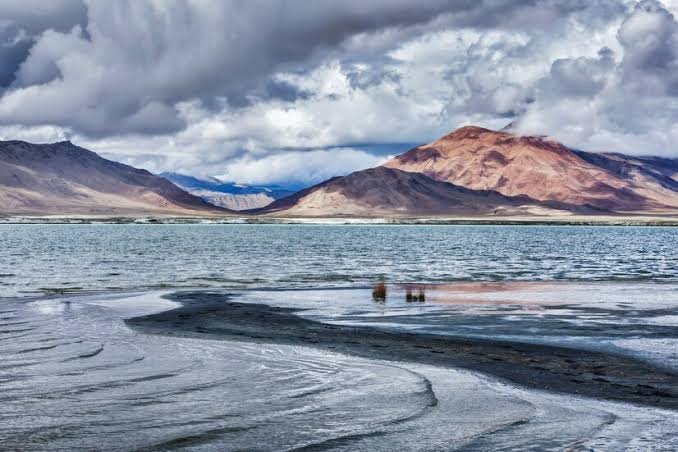
The Ladakh administration has launched a restoration project to revive the shrinking Tso Kar Lake by diverting nearly 320 million litres of glacier water daily from the Rupsho Kharnak glacial stream.
About Tso Kar Lake
- Location: High-altitude salt lake in the Rupshu Valley, Ladakh.
- Tso Kar means “White Lake” in Ladakhi, referring to the white salt deposits along its shores.
- Elevation: About 4,660 m (15,280 ft).
- Regional Lakes: It is the smallest of the three prominent lakes of the region — Pangong Tso, Tso Moriri and Tso Kar.
- Wetland System: The Tso Kar basin includes Tso Kar and Startsapuk Tso, a nearby freshwater lake, forming a unique wetland system.
- Climate: Extremely cold winters can fall below –40°C, while summer temperatures can reach around 30°C.
- Local Community: Khampas (nomadic communities) traditionally collect salt from the lake’s shores and sell it in nearby regions.
- Biodiversity: Its surrounding marshlands support bar-headed geese, great crested grebes and Brahminy ducks. Black-necked cranes also visit the lake for breeding.
- Mammals: The area supports kiang (wild ass), ibex, snow leopard and snow fox.
- Ramsar Site: Recognised as a Wetland of International Importance under the Ramsar Convention in 2020.
FAQs
Q1. Why is Tso Kar Lake significant in 2020?
It was designated a Ramsar Wetland of International Importance in 2020, highlighting its ecological value.
Q2. What restoration step is being taken now?
Ladakh administration is diverting ~320 million litres of glacier water daily from Rupsho Kharnak stream to revive the shrinking lake.
Q3. Which lakes form the Tso Kar wetland system?
Tso Kar (saltwater) and Startsapuk Tso (freshwater) together create a rare high‑altitude wetland system.
Q4. Which species make the site ecologically unique?
- Birds: Bar‑headed geese, Brahminy ducks, black‑necked cranes (breeding).
- Mammals: kiang (wild ass), ibex, snow leopard, snow fox.
Q5. What is the cultural link with local communities?
Khampas (nomadic herders) traditionally collected salt deposits from the lake’s shores for trade in nearby regions.