Context
- India and France announced three commercial space agreements during the first International Space Summit, held in Paris in September 2026.
- The agreements cover:
- space-based surveillance systems;
- satellite launch services;
- microsatellite technology and manufacturing.
- The development marks a shift in India–France space relations from mainly government-to-government cooperation towards deeper private-sector and commercial integration.
What Are the Three Major Deals?
- Safran Space–Dhruva Space
France’s Safran Space signed contracts worth over €5 million with India’s Dhruva Space.
Safran will provide:
- communication systems;
- inertial navigation units;
- optical payloads;
- ground-station systems.
These technologies are expected to support satellites associated with India’s planned Space-Based Surveillance-3 (SBS-3) programme.
What Is SBS-3?
- SBS-3 is India’s planned 52-satellite surveillance constellation.
- Its deployment is expected between 2027 and 2030.
- Satellites are envisaged across different orbital regimes to improve persistent observation.
Its major objectives include:
- monitoring land and maritime areas;
- improving situational awareness;
- strengthening secure communications;
- supporting defence and security operations.
Thus:
Satellite constellation → Persistent observation → Better situational awareness
- RIDE!–TakeMe2Space
- French launch-services company RIDE! will facilitate the launch of two satellites for Indian startup TakeMe2Space.
- TakeMe2Space is developing orbital data-centre technology, where some data processing is performed directly in space.
- This can reduce the need to transmit all raw satellite data to Earth before processing.
The deal therefore expands India–France cooperation into commercial launch services and space-based computing.
- U-Space–AXISCADES
- French company U-Space and Indian company AXISCADES have agreed to cooperate in the microsatellite segment.
- The partnership combines:
- French satellite-platform expertise;
- Indian engineering and manufacturing capability.
- It can support commercial and institutional demand for small, rapidly deployable satellite platforms.
Why Are Microsatellites Important?
- Lower cost: Smaller satellites generally require fewer resources to manufacture and launch.
- Faster deployment: They can be developed and launched more quickly than large satellites.
- Constellation suitability: Multiple small satellites can provide frequent and distributed coverage.
- Technology demonstration: New payloads and sensors can be tested without requiring large spacecraft.
Hence, microsatellites are useful for:
Earth observation → Communications → Surveillance → Technology testing
Why Do These Deals Matter for India?
- Private-sector deepening: Indian companies are moving beyond component supply towards satellites, launch services, surveillance systems and space-based computing.
- Commercial scaling: Partnerships can help Indian startups move from prototype-level activity to larger commercial deployment.
- Global market access: Indian companies gain exposure to international customers, launch networks and supply chains.
- Defence capability: The Safran–Dhruva agreement can strengthen surveillance and situational-awareness capabilities linked to SBS-3.
- Industrial diversification: The deals expand India’s space ecosystem beyond ISRO-led activity into a broader commercial industry.
Thus:
Private participation → Commercial scale → Global integration → Stronger space ecosystem
Evolution of India–France Space Cooperation
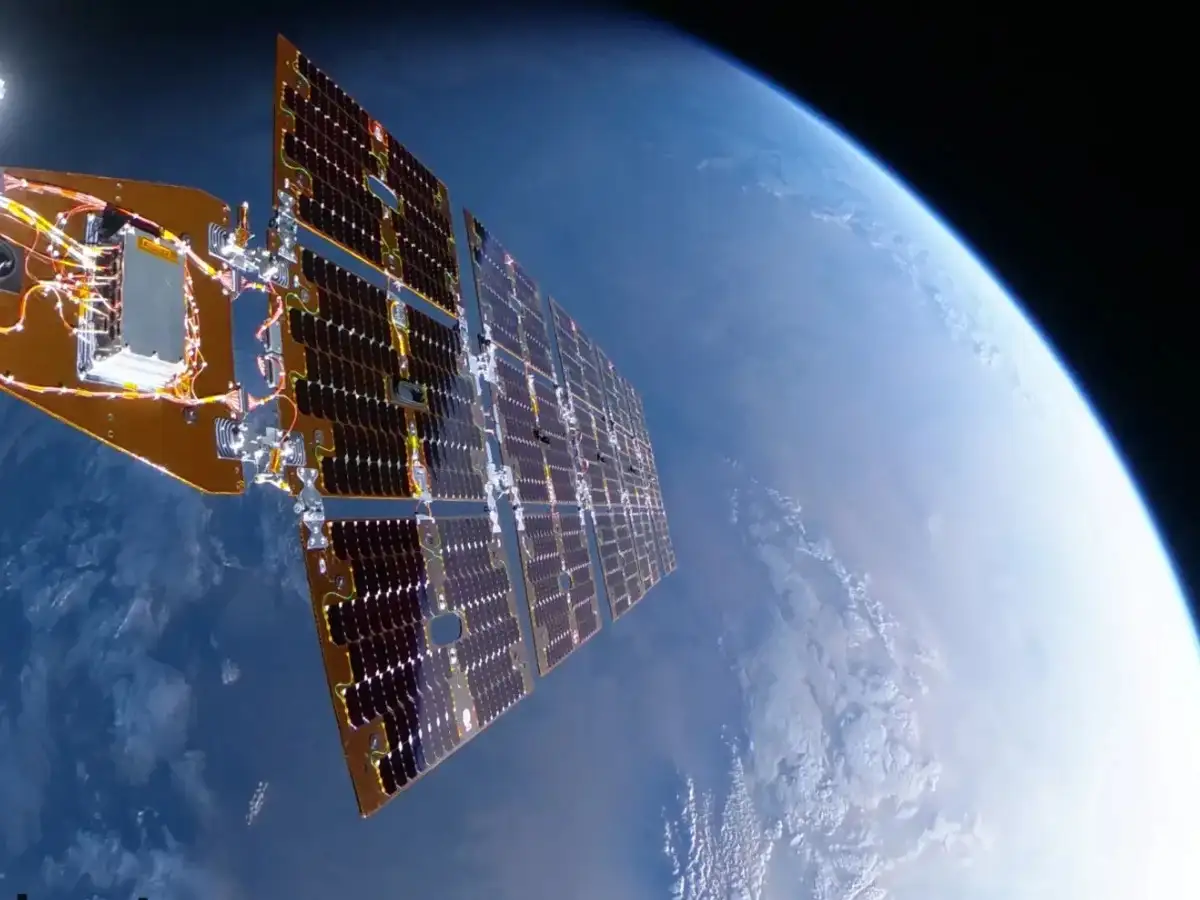
India and France have maintained space cooperation for several decades, largely through ISRO and CNES.
Earlier cooperation included:
- Megha-Tropiques;
- SARAL;
- Earth-observation and climate-related programmes.
The new agreements reflect an important transition:
ISRO–CNES cooperation → Public-private collaboration → Commercial space partnership
This does not replace traditional agency cooperation; it adds a new industrial layer to it.
Strategic Relevance
- Maritime domain awareness: Better satellite surveillance can improve monitoring of the Indian Ocean Region.
- Space sovereignty: Greater domestic participation in critical satellite systems reduces dependence on external providers.
- Dual-use capability: Imaging, communications and navigation technologies can serve both civilian and security applications.
- Supply-chain resilience: Wider international partnerships reduce dependence on a narrow set of technology suppliers.
- Space diplomacy: Commercial cooperation strengthens India’s broader strategic partnership with France in high-technology sectors.
India’s Changing Space Model
India’s space sector is gradually shifting from a predominantly state-led system towards a broader institutional ecosystem:
- ISRO: advanced research, exploration and strategic missions;
- IN-SPACe: enabling and regulating private participation;
- NSIL: commercialisation of space capabilities;
- Private firms: satellites, launch services, manufacturing and downstream applications.
The objective is not to replace ISRO, but to allow it to focus increasingly on high-end science and strategic missions, while commercial activities expand through industry.
Key Challenges
- External technology dependence: Reliance on imported high-value components can limit long-term autonomy.
- Commercial sustainability: Private firms require stable demand and viable revenue models.
- Data security: Strategic satellite systems require strong protection of surveillance and communication data.
- Orbital congestion: Growing constellations increase the importance of debris management and space-traffic coordination.
Way Forward
- Deepen technology absorption: International partnerships should build domestic design, manufacturing and maintenance capabilities.
- Strengthen indigenous supply chains: Encourage production of sensors, payloads, navigation systems and satellite components within India.
- Protect strategic data: Build secure ground infrastructure and cybersecurity standards.
- Promote responsible space operations: Expand commercial and surveillance constellations alongside debris mitigation and space situational awareness.
The long-term objective should be:
Global partnerships + Domestic capability + Private innovation + Strategic autonomy
FAQs
Q1. Where were the latest India–France commercial space agreements announced?
At the International Space Summit in Paris in September 2026.
Q2. Which companies are associated with the SBS-3-related agreement?
Safran Space and Dhruva Space.
Q3. What is SBS-3?
It is India’s planned 52-satellite space-based surveillance constellation.
Q4. Which Indian company is associated with orbital data centres?
TakeMe2Space.
Q5. What broader change do these agreements represent?
They mark a shift from mainly government-led space cooperation towards deeper commercial and private-sector integration.