Context
- India is intensifying efforts to secure overseas lithium resources because domestic availability remains limited and future demand is expected to rise sharply.
- In September 2026, Union Minister for Coal and Mines G. Kishan Reddy stated that India was in talks with Australia and Chile for lithium assets and was seeking additional lithium blocks in Argentina.
- The development reflects India’s attempt to secure critical minerals needed for electric vehicles, battery manufacturing and renewable-energy storage.
What Is Lithium?
- Lithium (Li) is a soft, silvery-white metal belonging to Group 1 of the periodic table — alkali metals.
- It has atomic number 3 and is the lightest metallic element.
- Lithium is highly reactive and therefore does not normally occur freely in nature.
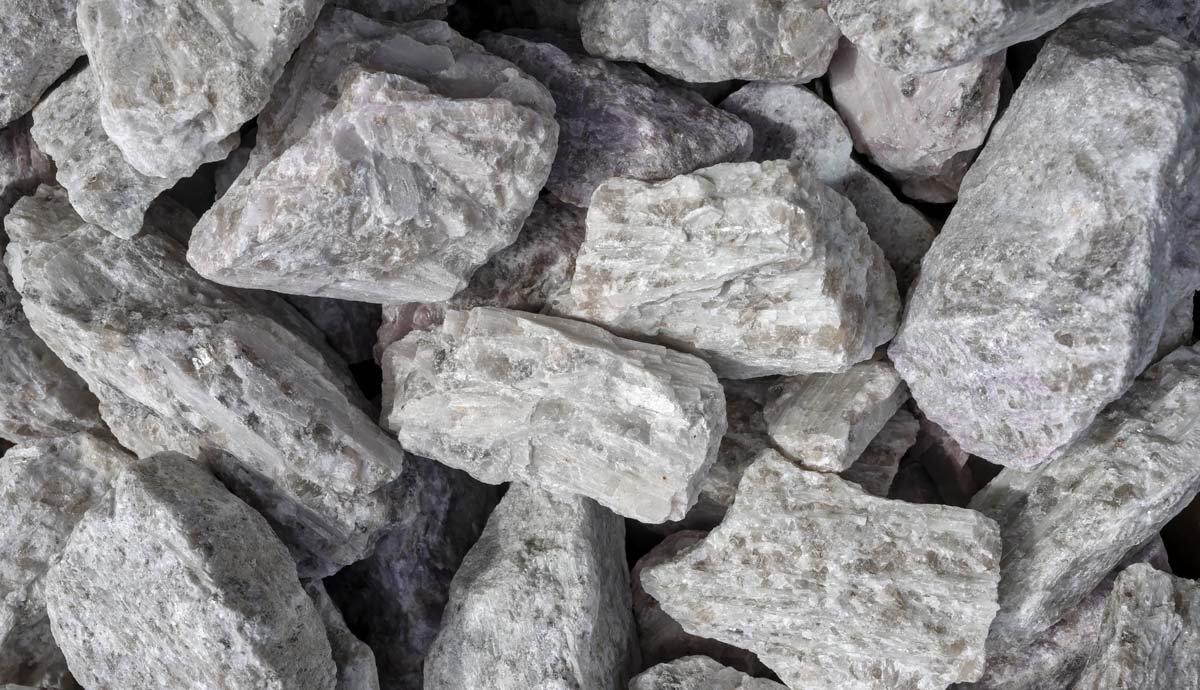
- It is mainly obtained from:
- hard-rock minerals, especially spodumene;
- brine deposits, particularly salt flats.
Key Properties
- Low density: Makes lithium useful where lightweight materials are required.
- High electrochemical potential: Enables efficient movement of electrical energy in batteries.
- High reactivity: Lithium reacts readily with air and moisture and therefore requires controlled handling.
- Low atomic mass: Helps batteries achieve a high energy-to-weight ratio.
These properties make lithium especially valuable for modern electrochemical technologies.
Why Is Lithium Important for Batteries?
Lithium-ion batteries can store relatively large amounts of energy while remaining comparatively light.
This is especially important for:
- electric vehicles;
- portable electronics;
- renewable-energy storage;
- grid-scale battery systems.
Thus:
Low atomic mass + High electrochemical potential → High energy density → Efficient energy storage
Major Uses of Lithium
- Battery manufacturing: Used in rechargeable lithium-ion batteries.
- Ceramics and glass: Improves heat resistance and durability.
- Lubricating greases: Lithium compounds provide thermal stability and water resistance.
- Lightweight alloys: Used where reduction in weight is important.
- Medicine: Lithium salts are used under medical supervision as mood stabilisers, particularly in bipolar disorder.
- Nuclear applications: Certain lithium isotopes have specialised uses in nuclear technologies.
Global Distribution of Lithium
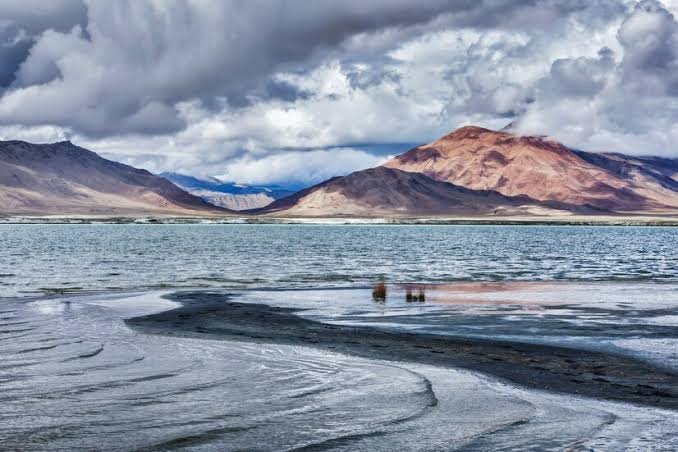
Lithium Triangle
The salt-flat regions of:
- Argentina
- Bolivia
- Chile
are collectively known as the Lithium Triangle.
This region contains some of the world’s largest lithium resources, especially in brine deposits.
Major Producers and Resource Holders
Important lithium-producing or resource-rich countries include:
- Australia
- Chile
- Argentina
- China
- Bolivia
A key Prelims distinction is:
Resource ≠ Reserve
- Resource: A known geological concentration that may potentially be extracted.
- Reserve: The economically extractable part of a resource under current conditions.
Lithium in India
India’s domestic lithium base is still at an early exploration stage.
Reasi, Jammu & Kashmir
- The Geological Survey of India identified about 5.9 million tonnes of inferred lithium resources in the Salal-Haimna area.
- Since these are inferred resources, further exploration is required before commercial viability can be established.
Mandya, Karnataka
- Lithium occurrences have also been identified in the Marlagalla area of Mandya district.
The important distinction is:
Geological discovery ≠ Commercial production
Commercial mining depends on grade, technology, infrastructure, environmental clearance and economic viability.
Why Is Lithium Strategically Important for India?
- Energy security: Battery storage is increasingly important for integrating variable renewable energy into the power system.
- EV transition: Secure lithium supply directly influences the cost and scale of electric mobility.
- Import dependence: Limited domestic production exposes India to disruptions in overseas supply chains.
- Industrial competitiveness: Reliable lithium access is necessary for building domestic battery-cell manufacturing and downstream industries.
Thus:
Lithium security → Battery security → Energy transition → Industrial capability
India’s Overseas Lithium Strategy
India is using Khanij Bidesh India Ltd. (KABIL) to identify and acquire strategic mineral assets abroad.
KABIL is a joint venture involving:
- NALCO;
- Hindustan Copper Ltd.;
- Mineral Exploration and Consultancy Ltd.
Argentina
KABIL has acquired exploration and development rights over lithium blocks in Catamarca province and India is seeking additional opportunities.
Australia
India has explored cooperation for access to lithium and other critical-mineral assets.
Chile
India has also engaged with Chile for possible opportunities in brine-based lithium projects.
The strategic shift is:
Mineral imports → Overseas asset participation → More secure long-term supply
Policy Framework in India
MMDR Amendment Act, 2023
- Lithium was included among India’s critical and strategic minerals.
- The amendment strengthened the Central Government’s role in auctioning mineral concessions for such minerals.
National Critical Mineral Mission
- The mission seeks to strengthen:
- domestic exploration;
- overseas acquisition;
- processing;
- recycling;
- critical-mineral supply-chain resilience.
This policy framework aims to reduce vulnerability across the entire mineral value chain.
Key Challenges
- Limited domestic certainty: Most Indian lithium findings are still at the exploration stage.
- Processing gap: Mining lithium is not enough; battery-grade lithium requires specialised refining and chemical processing.
- External concentration: Global resources and processing capacity are concentrated in a limited number of countries.
- Environmental concerns: Hard-rock mining and brine extraction can create pressure on land, water and local ecosystems.
Way Forward
- Deepen exploration: Upgrade inferred resources into higher-confidence reserve estimates.
- Diversify overseas assets: Avoid excessive dependence on any single country or geography.
- Develop refining capacity: Build domestic battery-grade lithium processing capability.
- Expand recycling: Recover lithium from used batteries to create a secondary domestic supply.
- Build full value chains: Link mineral security with cell manufacturing, battery technology and recycling.
Thus, India’s long-term strategy should be:
Explore domestically + Secure abroad + Process locally + Recycle efficiently
FAQs
Q1. To which group of the periodic table does lithium belong?
Lithium belongs to Group 1 — the alkali metals.
Q2. Why does lithium not normally occur freely in nature?
Because it is highly reactive and readily forms compounds with other elements.
Q3. Which countries form the Lithium Triangle?
Argentina, Bolivia and Chile.
Q4. What is the difference between a lithium resource and reserve?
A resource is a known geological concentration, while a reserve is the economically extractable part of that resource.
Q5. Why is India pursuing lithium assets abroad?
Because domestic commercial production remains limited while demand from EVs, energy storage and battery manufacturing is rising.