Context
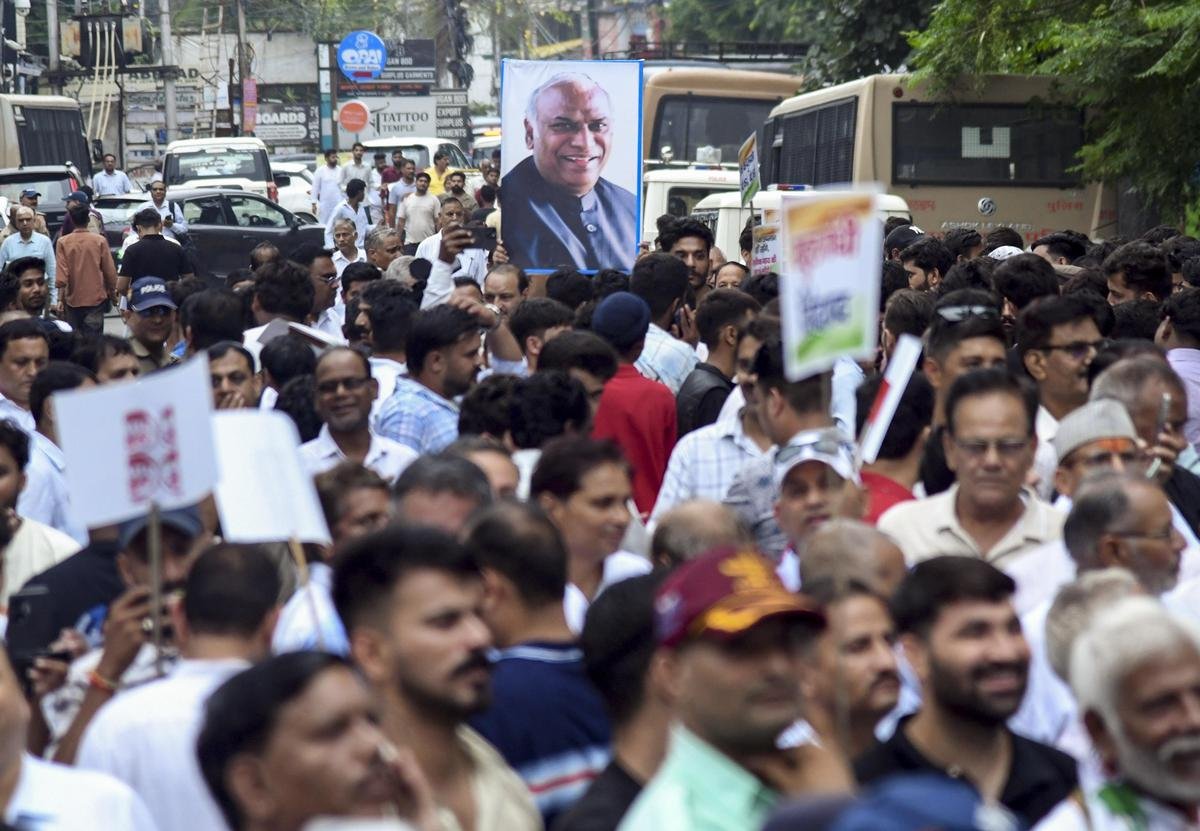
- A purification ritual was reportedly conducted at a political-event venue in Haldwani, after a senior Dalit leader addressed a rally.
- Political leaders alleged that the act had a caste-based motive, while the organisers said it was intended to restore the sanctity of the venue.
Article 17 and the Prohibition of Untouchability
- Article 17 abolishes untouchability and prohibits its practice in any form.
- It also makes the enforcement of disabilities arising from untouchability an offence punishable under law.
- As a Fundamental Right, it seeks to eliminate caste-based exclusion and uphold equality and human dignity.
- Article 17 has horizontal application, meaning it can operate against private persons and institutions, not only the State.
Understanding Untouchability
- The Constitution does not define the term “untouchability”.
- Its constitutional meaning is linked to historically rooted caste practices that treat people as inferior or impure because of birth.
- The prohibition therefore extends beyond physical exclusion to practices involving segregation, stigma or ideas of human pollution.
Historical Context: Mahad Satyagraha
- On 20th March 1927, Dr B.R. Ambedkar led Dalits to the Mahad tank to assert their right to use a public water source.
- Their exclusion was based on caste.
- A subsequent purification ritual treated their contact as polluting, illustrating the social practice that Article 17 later sought to abolish.
Religious Freedom and Its Limits
- Article 25 protects freedom of conscience and the right to profess, practise and propagate religion.
- Article 26 protects the right of religious denominations to manage their religious affairs.
- These rights are subject to public order, morality, health and other Fundamental Rights.
- Article 25 also permits State action for social welfare and reform, including measures concerning access to public Hindu religious institutions.
- Therefore, a religious ritual is not automatically unlawful. The constitutional issue arises when it is used to enforce caste-based exclusion, humiliation or stigma.
Judicial Interpretation
- Sukanya Shantha v. Union of India, 2024
- The Supreme Court struck down caste-based provisions in prison manuals, including rules linked to occupational segregation.
- The judgment recognised that caste discrimination can operate through institutional practices and notions of purity and pollution.
- It relied on constitutional guarantees under Articles 14, 15, 17, 21 and 23.
- State of Karnataka v. Appa Balu Ingale
- The case involved denial of access to a public borewell to Dalits.
- It reinforced that Article 17 applies to private actors and that the State has a duty to act against untouchability.
- Sri Venkataramana Devaru v. State of Mysore
- The Supreme Court examined the balance between religious autonomy and temple-entry reform.
- It upheld the constitutional basis for opening public religious institutions to all sections while balancing denominational rights.
The source also refers to an 1988 Rajasthan High Court case involving a purification requirement imposed specifically on Dalit devotees before temple entry. The practice was held inconsistent with Articles 14, 15 and 17.
Applicable Laws
- Protection of Civil Rights Act, 1955
- The Act addresses civil disabilities arising from untouchability.
- It provides legal protection against denial of equal access and other disabilities imposed on this ground.
- SC/ST (Prevention of Atrocities) Act, 1989
- The Act creates a broader framework against specified atrocities against Scheduled Castes and Scheduled Tribes.
- Relevant provisions cover intentional insult or intimidation with intent to humiliate an SC/ST person in a place within public view and caste-based abuse in such circumstances.
- It also provides for Special Courts, special prosecutors and victim-witness safeguards.
Legal Assessment of the Haldwani Incident
A purification ritual by itself does not establish a violation of Article 17.
The legal assessment would require evidence showing:
- A connection between the act and the person’s caste identity.
- A message that the person’s presence or touch was polluting.
- Selective treatment, exclusion or humiliation based on caste.
- Supporting evidence from statements, conduct, timing and surrounding circumstances.
Thus, the legal inquiry must distinguish between a religious act concerning the sanctity of a place and a practice that treats a person as impure because of caste.
Constitutional Morality
- Social morality may preserve practices inherited through custom and social hierarchy.
- Constitutional morality requires adherence to equality, dignity, liberty and fraternity.
- A practice does not become constitutionally valid merely because it is traditional or religious in form.
- At the same time, criminal liability must rest on evidence and the specific legal ingredients of the offence.
Conclusion
The Haldwani controversy highlights the constitutional balance between religious freedom and protection from caste discrimination.
Article 17 targets practices that attach inferiority, stigma or pollution to a person because of caste. Any legal determination must therefore depend on evidence establishing whether the reported ritual had a caste-based purpose or discriminatory effect.
FAQs
Q1. How does Article 15 complement Article 17?
Article 15(2) prevents citizens from imposing caste-based disabilities regarding access to places such as shops, public restaurants, roads, wells and tanks. It reinforces the constitutional prohibition of social exclusion.
Q2. What role does Article 21 play in cases of caste discrimination?
Article 21 protects life and personal liberty and strengthens the constitutional protection of human dignity when discriminatory practices affect an individual’s status and treatment.
Q3. What does Article 46 provide?
Article 46, a Directive Principle of State Policy, directs the State to promote the educational and economic interests of Scheduled Castes, Scheduled Tribes and other weaker sections and protect them from social injustice and exploitation.
Q4. Why is fraternity relevant to Article 17?
The Preamble’s commitment to fraternity is linked to assuring the dignity of the individual. It complements Article 17’s objective of removing caste-based social hierarchy.
Q5. What does “public view” mean under the SC/ST (Prevention of Atrocities) Act?
The requirement concerns whether the alleged insult or humiliation occurred in circumstances where it could be seen or perceived by members of the public. The location need not necessarily be government-owned.
Q6. Does every dispute involving an SC/ST person attract the SC/ST Act?
No. The alleged conduct must satisfy the specific ingredients of a listed offence. The caste status of the victim alone does not automatically bring every dispute within the Act.
Q7. Why is evidence crucial in the Haldwani controversy?
The same outward act can have different legal meanings depending on its purpose and context. The legal inquiry must establish a caste-based connection rather than rely solely on the occurrence or description of a purification ritual.