Context
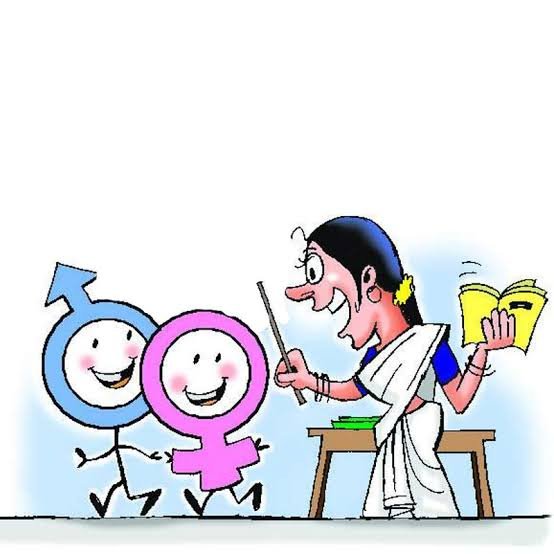
Punjab has integrated gender sensitisation into school education to challenge stereotypes that shape children’s aspirations, career choices and social behaviour from an early age.
What is Gender Stereotyping?
Gender stereotypes are socially constructed beliefs about what men and women are expected to do.
- Girls are often associated with caregiving, household work and “safe” professions.
- Boys are encouraged towards technology, leadership, adventure and financially rewarding careers.
- Such conditioning begins in childhood through toys, family expectations, media and textbooks.
- Over time, it can influence self-confidence, educational choices, employment and leadership opportunities.
Thus, gender equality requires changing not only laws and opportunities but also the social attitudes that shape choices.
Why Focus on School Textbooks?
Children develop their understanding of society during their formative years. Therefore, textbooks can either reproduce existing stereotypes or question them.
Punjab’s approach is significant because it moves gender sensitisation from an occasional awareness programme to an integrated part of regular classroom learning.
- Challenging Gendered Aspirations: The Class 7 story ‘A Gift for Sidhak’ contrasts the traditional association of girls with kitchen sets with the image of a woman fighter pilot. The larger message is not about the toy itself, but about how society subtly teaches children what is considered a “suitable” ambition for a girl or boy.
- Redefining Women’s Role within Families: The Class 6 chapter ‘A Forgotten Wish’ presents a married daughter caring for her mother. It challenges the traditional belief that after marriage a woman becomes part of only her husband’s family. This promotes the idea of shared family responsibilities irrespective of gender or marital status.
- Addressing the Glass Ceiling: The Class 8 chapter ‘Smashing the Glass Ceiling’ shows how a highly educated woman can still be prevented from working because of family expectations, while another woman with fewer formal qualifications succeeds professionally.
So, education alone does not guarantee empowerment if social norms restrict women’s choices.
Rewriting the Narrative of Women in History
The curriculum also seeks to change how historical women are remembered.
- Razia Sultan is presented as a ruler who challenged the belief that political leadership was inherently male.
- Nur Jahan is highlighted for her political influence and administrative role rather than being remembered merely as Jahangir’s wife.
This shifts the focus from “whose daughter/wife was she?” to “what did she achieve in her own right?”
Beyond Textbooks: Changing Classroom Culture
Changing content alone cannot eliminate gender bias. Therefore, the initiative also includes teacher training. Teachers are encouraged to:
- Question gender stereotypes during classroom discussions.
- Encourage girls to consider diverse careers.
- Discuss women’s right to continue careers after marriage.
- Promote men’s participation in household responsibilities.
- Ensure that gender equality is discussed with both boys and girls.
Challenges and Way Forward
| Challenges | Way Forward |
| 1. Family attitudes continue to reinforce traditional gender roles | 1. Conduct parental and community sensitisation programmes to promote equal opportunities and responsibilities |
| 2. Unconscious gender bias among teachers can influence classroom behaviour and expectations | 2. Provide regular gender-responsive teacher training |
| 3. Textbook reform without proper implementation may remain superficial | 3. Monitor classroom practices and actual implementation, not just textbook content |
| 4. Limited career exposure may restrict girls’ aspirations | 4. Provide career counselling, mentoring and exposure to diverse women role models |
| 5. Structural barriers such as safety concerns, unequal unpaid care work and workplace discrimination restrict women’s choices | 5. Complement education with safe mobility, childcare, skilling and employment opportunities |
| 6. Gender equality may become a “girls-only” agenda, leaving boys disengaged | 6. Involve boys and girls equally in gender sensitisation and promote shared responsibilities |
Conclusion
Punjab’s initiative highlights an important principle: gender equality is not created only by giving women opportunities; it also requires changing the social beliefs that determine who is encouraged to use those opportunities.
FAQs
Q1. What is gender stereotyping?
Socially constructed beliefs about roles for men and women, e.g., girls linked to caregiving and boys to leadership or technology.
Q2. Why focus on school textbooks for gender sensitisation?
Children form social attitudes early; textbooks can either reinforce stereotypes or challenge them, shaping aspirations and choices.
Q3. How is Punjab integrating gender sensitisation?
By embedding stories in Class 6–8 textbooks that challenge stereotypes, redefine women’s roles in families, and highlight barriers like the glass ceiling.
Q4. How are historical women re‑presented in the curriculum?
Figures like Razia Sultan and Nur Jahan are shown as leaders and administrators in their own right, not just as relatives of male rulers.
Q5. What measures go beyond textbooks?
Teacher training to question stereotypes, encourage diverse careers, promote shared household responsibilities, and involve both boys and girls in equality discussions.