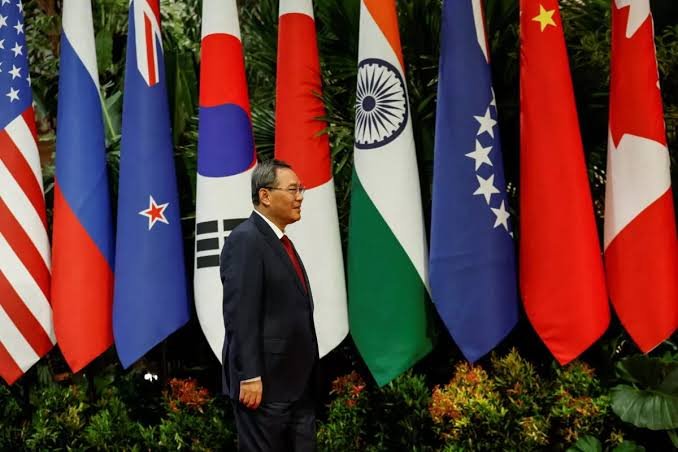
Context
At the 21st East Asia Summit (EAS) held in Manila, India’s External Affairs Minister emphasized that global maritime routes must remain safe, secure, and free from obstruction, highlighting India’s commitment to a free, open, inclusive, and rules-based Indo-Pacific.
About the East Asia Summit (EAS)
The East Asia Summit (EAS) is the Indo-Pacific’s premier leaders-led forum for dialogue and cooperation on strategic, political, economic, and security issues. It brings together ASEAN and its major Dialogue Partners to address regional and global challenges while reinforcing ASEAN Centrality in the evolving regional architecture.
- Established: 2005
- First Summit: Kuala Lumpur, Malaysia
- India is a founding member of the EAS.
- The Summit is chaired by ASEAN, with the chairmanship rotating annually among its member states.
Key Features
- Membership
- The EAS brings together 19 participating countries, comprising:
-
- 11 ASEAN member countries: Brunei, Cambodia, Indonesia, Laos, Malaysia, Myanmar, the Philippines, Singapore, Thailand, Timor-Leste, and Vietnam.
- Eight Dialogue Partners: Australia, China, India, Japan, New Zealand, the Republic of Korea, Russia, and the United States.
- Timor-Leste became the newest participant following its accession to ASEAN on 26 October 2025.
- Functions
The East Asia Summit serves as a platform to:
- Promote dialogue on strategic, political, economic, and security issues affecting the Indo-Pacific.
- Strengthen ASEAN-led regional cooperation and build mutual trust among participating countries.
- Facilitate collaboration on maritime security, connectivity, global health, disaster management, and sustainable development.
- Encourage collective efforts to maintain regional peace, stability, and prosperity.
Priority Areas of Cooperation
The EAS focuses on six priority areas:
- Environment and Energy
- Education
- Finance
- Global Health Issues and Pandemic Diseases
- Natural Disaster Management
- ASEAN Connectivity
Institutional Framework
- The Leaders’ Summit is held annually, usually in October or November.
- The Summit process is supported by Foreign Ministers’ Meetings, Economic Ministers’ Meetings, and Senior Officials’ Meetings, which coordinate cooperation, review progress, and prepare the agenda for leaders’ discussions.
Frequently Asked Questions (FAQs)
What is the East Asia Summit (EAS)?
The East Asia Summit (EAS) is the Indo-Pacific’s premier leaders-led forum, established in 2005, for dialogue and cooperation on strategic, political, economic, and security issues.
Who chairs the East Asia Summit?
The East Asia Summit is chaired by ASEAN, with the chairmanship rotating annually among ASEAN member states.
How many members are part of the East Asia Summit?
The EAS comprises 19 participating countries, including 11 ASEAN member countries and eight Dialogue Partners, with India as one of its founding members.
Why is the East Asia Summit important for India?
The EAS supports India’s Act East Policy and Indo-Pacific Oceans Initiative (IPOI) by providing a platform to engage major regional powers on security, connectivity, maritime cooperation, and economic issues.
What are the priority areas of cooperation under the East Asia Summit?
The Summit focuses on Environment and Energy, Education, Finance, Global Health Issues and Pandemic Diseases, Natural Disaster Management, and ASEAN Connectivity.
Which meetings support the East Asia Summit?
In addition to the annual Leaders’ Summit, the EAS framework includes Foreign Ministers’ Meetings, Economic Ministers’ Meetings, and Senior Officials’ Meetings, which facilitate cooperation and prepare the agenda for the Summit.