Context
As the first batch of Agniveers completes its four-year tenure in 2026, the Indian Armed Forces are reviewing the 25% retention policy. The review follows operational experience gained from the first batch and reflects efforts to align the scheme with technological modernisation, evolving security needs, and long-term military manpower planning.
Agnipath Scheme
Overview
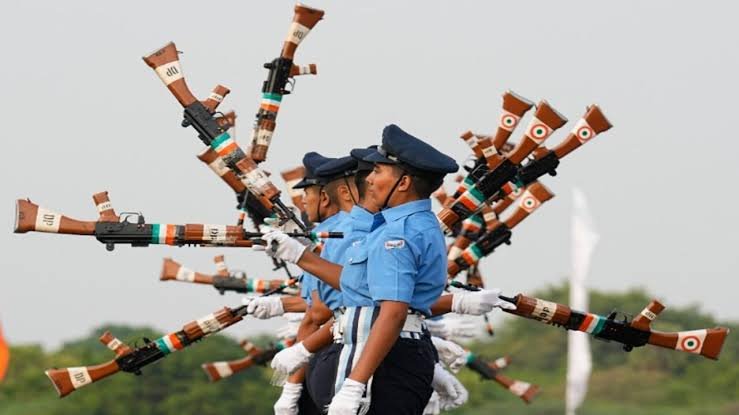
- Launched in 2022, the Agnipath Scheme is a short-term recruitment model for personnel below officer rank in the Indian Army, Indian Navy, and Indian Air Force.
- Under the scheme:
-
- Youth aged 17.5–23 years are recruited as Agniveers.
- They serve for four years, including six months of training.
- The scheme aims to:
-
- Reduce the average age of the Armed Forces from around 32 years to 26 years.
- Build a younger, agile, and technology-oriented force.
- Enhance operational effectiveness.
- Rationalise long-term pension expenditure.
Service Conditions
- During service, Agniveers receive:
-
- Pay and allowances comparable to regular personnel.
- Leave, medical, and welfare benefits.
- On completion of service:
-
- A tax-free Seva Nidhi package of about ₹11.71 lakh.
- No pensionary benefits.
- Additional benefits include:
-
- Disability compensation based on the degree of disability.
- Financial assistance to the family in case of death during service.
Existing Retention Framework
- Currently, up to 25% of Agniveers are re-enrolled as regular soldiers, sailors, or airmen based on:
- Merit,
- Performance, and
- Willingness to continue service.
- The remaining Agniveers are released after completing their four-year tenure.
Post-Service Opportunities
The Government has introduced several measures to facilitate the resettlement of former Agniveers.
- Central Government employment: 10% reservation for eligible Agniveers in the Central Armed Police Forces (CAPFs), Assam Rifles, Indian Coast Guard, and Defence Public Sector Undertakings (DPSUs).
- Civilian employment: Initiatives to facilitate induction into the merchant navy and other sectors through inter-ministerial coordination.
Proposal for Higher Retention
The Armed Forces are examining the possibility of increasing the retention ceiling based on operational and service-specific requirements.
Proposals under consideration include:
- Indian Navy: Retention of around 75% of Agniveers.
- Indian Army and Indian Air Force: Retention of around 50%.
These proposals are currently under consideration and will be examined by the Department of Military Affairs (DMA) before any policy decision is taken.
Rationale for Revising the Retention Policy
| Factor |
|
||
| Operational Capability | Retaining trained Agniveers preserves combat skills, operational experience, and mission readiness. | ||
| Technological Modernisation | Advanced weapon systems and platforms require experienced personnel, particularly in the Navy and Air Force. | ||
| Manpower Management | Higher retention can help address personnel shortages while maintaining continuity within units. | ||
| Force Effectiveness | Longer service strengthens leadership, unit cohesion, discipline, and institutional knowledge. | ||
| Lessons from Operational Deployments | Recent operational experience has highlighted the value of experienced personnel in enhancing decision-making and operational efficiency. |
Alternative Retention Model
The Armed Forces are also considering a differentiated retention model, under which:
- Higher retention may be adopted in specialised and technology-intensive units.
- Conventional combat units may continue with the existing retention pattern.
- Specialised formations, such as the proposed Bhairav battalions, could serve as a model for this approach.
Significance for Defence Reforms
The review seeks to balance two key objectives:
- Maintaining a young, agile, and technology-enabled force.
- Ensuring the availability of experienced and technically skilled personnel for emerging operational requirements.
The outcome of the review is likely to influence:
- Military human resource management.
- Operational preparedness.
- Defence modernisation.
- Long-term force restructuring.
Way Forward
| Priority Area |
|
||
| Retention Policy | Periodically review retention based on operational experience and service-specific requirements. | ||
| Capability Development | Align retention with the increasing demand for specialised and technology-intensive roles. | ||
| Human Resource Management | Balance youthful recruitment with the retention of experienced personnel. | ||
| Skill Transition | Expand skill certification, lateral entry opportunities, and industry partnerships to improve post-service employability. | ||
| Resettlement Support | Strengthen rehabilitation measures and employment opportunities for released Agniveers. | ||
| Continuous Assessment | Regularly evaluate the scheme based on operational feedback and evolving security requirements. |
Significance of the Scheme
- Promotes a younger, agile, and technology-enabled Armed Forces.
- Enhances operational readiness through continuous induction of trained personnel.
- Supports defence modernisation by aligning manpower with future warfare requirements.
- Rationalises long-term pension expenditure.
- Creates a pool of disciplined, skilled, and employable youth for civilian sectors after military service.
Conclusion
The review of the Agniveer retention policy reflects the evolving nature of the Agnipath Scheme. Going forward, its success will depend on maintaining a balance between a youthful force profile and the retention of experienced, technically skilled personnel. A calibrated, evidence-based approach, supported by continuous policy review and effective post-service rehabilitation, will be essential for strengthening operational capability and advancing India’s long-term defence modernisation.