Context
A recent fossil discovery in South Australia has led scientists to identify a new species of ancient platypus, notable for retaining teeth—an evolutionary trait no longer seen in modern platypuses.
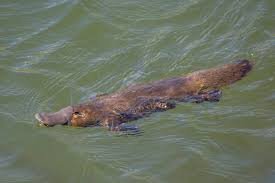
About Platypus
- The Platypus is an aquatic mammal found only in Australia and is known for its unusual mix of features with the scientific name Ornithorhynchus anatinus.
- Researchers have used environmental DNA (eDNA) techniques to track their presence in water bodies and assess post-fire impacts.
- Despite being semi-aquatic, these animals are vulnerable to environmental disturbances affecting freshwater ecosystems.
- Platypuses belong to the monotreme group:
- Egg-laying mammals, along with echidnas
- Distinct from other mammals in reproduction
- Key physical traits include:
- Streamlined body with dense, waterproof fur for insulation.
- Webbed feet for swimming.
- A flat tail aiding movement in water.
- They use electroreceptors in their bills to detect prey in murky streams and rivers.
- Male platypuses possess a venomous spur on their hind limbs:
- Mainly used during breeding.
- Causes intense pain in humans, though not fatal.
- Habitat range is diverse, covering:
- Tropical lowlands.
- Highland regions like the Australian Alps and Tasmania.
- Behavioural patterns:
- Mostly active during night and twilight hours.
- Spend time resting in burrows near riverbanks.
- Diet mainly includes aquatic organisms such as insect larvae, worms, crustaceans, and small amphibians.
- According to the IUCN Red List, the species is currently classified as “Near Threatened.”