Context
Artificial intelligence has recently enabled archaeologists at Pompeii to recreate the face and final moments of a victim of the AD 79 eruption of Mount Vesuvius, offering new insights into the disaster.
About Pompeii
- Pompeii was an ancient settlement situated near modern-day Naples, at the base of Mount Vesuvius.
- The region had evidence of human habitation since the Bronze Age and was formed on land shaped by earlier volcanic activity near the Sarno (then Sarnus) River.
- The city was established around the 6th century BCE by the Samnites and later became part of the Roman Empire in 80 BCE.
- It developed into a prosperous town, with its economy largely driven by agriculture and trade.
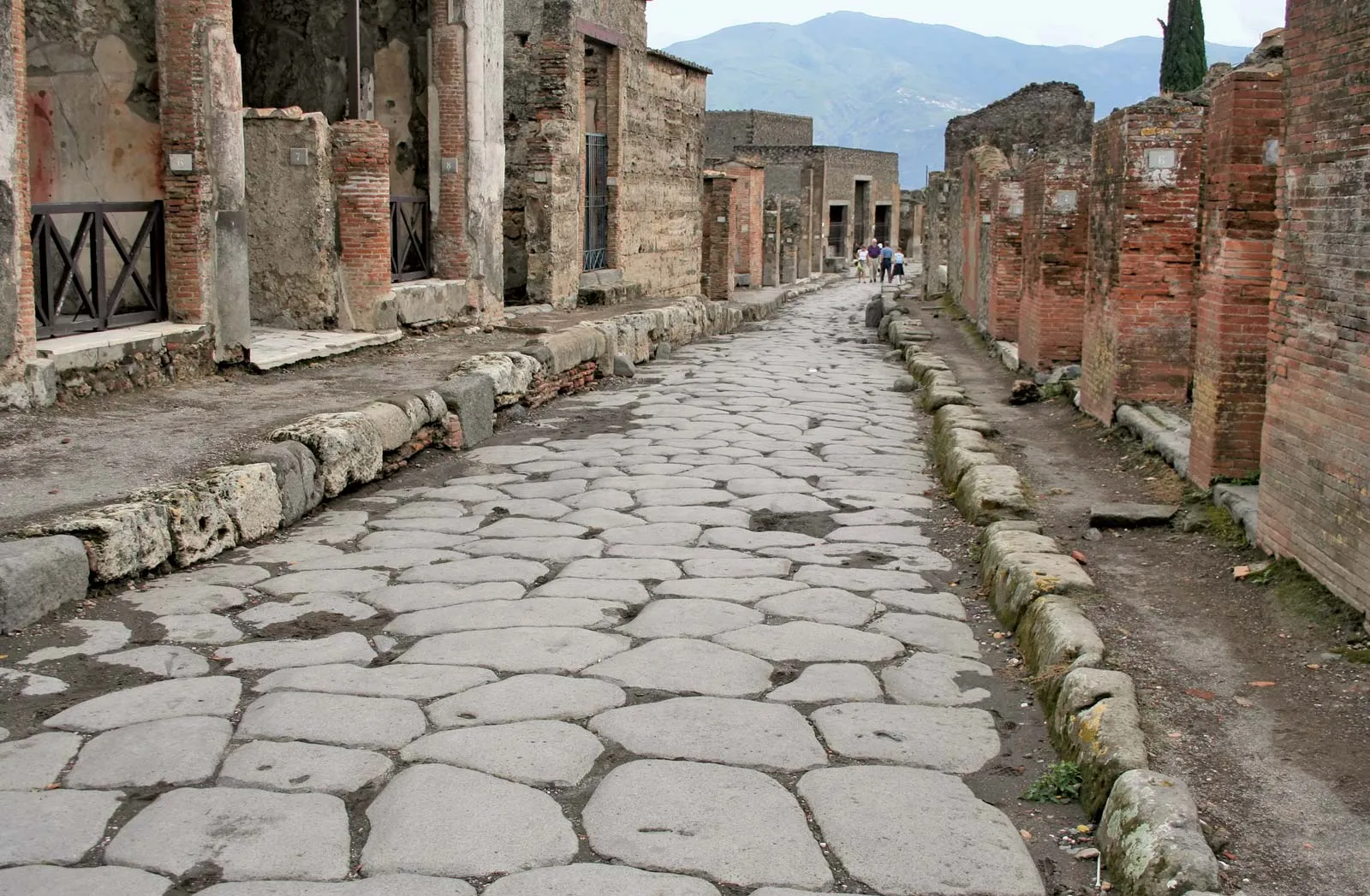
- Pompeii had advanced civic infrastructure, including a structured water supply system, an amphitheatre, and public recreational spaces.
- The population of the city is estimated to have been around 10,000–12,000, with a notable presence of slaves.
- In 79 CE, the eruption of Mount Vesuvius buried the city under ash, preserving buildings and daily life in remarkable detail.
- The site remained hidden for centuries until its rediscovery in 1748 brought it back into historical focus.
- Today, Pompeii is recognised as a UNESCO World Heritage Site for its exceptional archaeological value.
- It offers one of the most comprehensive insights into the everyday life of an ancient Roman city.