Important questions for UPSC Pre/ Mains/ Interview:
|
Context
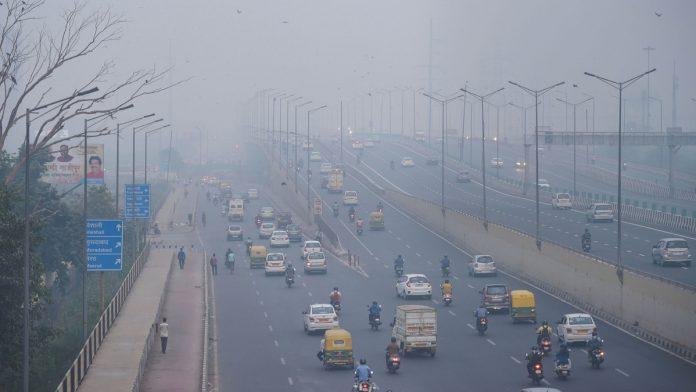
The 128th meeting of the Enforcement Task Force (ETF) of the Commission for Air Quality Management was recently held, highlighting ongoing efforts to tackle air pollution in Delhi-NCR and adjoining regions through coordinated and statutory mechanisms.
Q1. What is the Commission for Air Quality Management (CAQM)?
- Statutory body established under CAQM Act, 2021
- Objective: Address air pollution in Delhi-NCR and adjoining areas
- Focus: Coordination, monitoring, and resolution of air quality issues
- Coverage: Delhi + Punjab, Haryana, Rajasthan, Uttar Pradesh
Q2. What is the mandate of CAQM?
- Improve: Air quality management and coordination
- Functions:
- Identify pollution sources
- Conduct research and analysis
- Frame policies and guidelines
- Goal: Prevent and control air pollution effectively
Q3. What are the powers of CAQM?
- Regulatory Powers: Restrict polluting activities
- Investigative Powers: Conduct studies and research
- Directive Powers: Issue binding directions to authorities
- Enforcement Authority: Orders are legally binding on individuals and government bodies.
Q4. How does CAQM ensure coordination?
- Works with State governments of NCR and adjoining areas
- Aligns monitoring and enforcement actions
- Mechanism: Multi-state coordination platform
- Ensures unified response to pollution issues
Q5. What is the composition of CAQM?
- Chairperson
- Rank: Secretary/Chief Secretary
- Tenure: 3 years or up to 70 years
- Members
- 5 ex-officio members (state representatives)
- 3 full-time technical members
- 3 NGO representatives
- Technical institutions
- Central Pollution Control Board
- Indian Space Research Organisation
- NITI Aayog
Q6. What is the role of the Enforcement Task Force (ETF)?
- Monitors implementation of CAQM directions
- Ensures compliance with pollution control measures
- Conducts regular review meetings (e.g., 128th meeting)
- Acts as operational enforcement arm
Q7. What are the challenges and way forward?
- Challenges
- Multi-state coordination complexity
- Seasonal pollution (stubble burning, winter smog)
- Enforcement gaps at local level
- Way Forward
- Strengthen real-time monitoring systems
- Improve inter-state coordination
- Enhance accountability and enforcement
- Promote long-term pollution control strategies
Conclusion
The CAQM represents a centralised and legally empowered mechanism to tackle air pollution in India’s most affected region. Its effectiveness depends on strong enforcement, inter-state coordination, and sustained policy implementation to achieve long-term air quality improvement.