Context
A recent report by the World Meteorological Organization (WMO) warns that climate change is already locked in. Even if emissions stop today, the Earth will continue to warm due to past pollution.
Q1. What is the basic concept behind global warming?
- Normally, Earth maintains a balance: Energy received from the Sun = Heat sent back to space.
- This keeps the global temperature stable (~15°C).
- But today: Greenhouse gases trap extra heat. So, more heat is retained than released. This imbalance leads to global warming
Q2. What does the report say about the current situation?
- The period 2015-2024 is the hottest decade ever recorded
- Greenhouse gases are at record levels:
- CO₂ is ~50% higher than pre-industrial levels
- Methane and nitrous oxide are also increasing
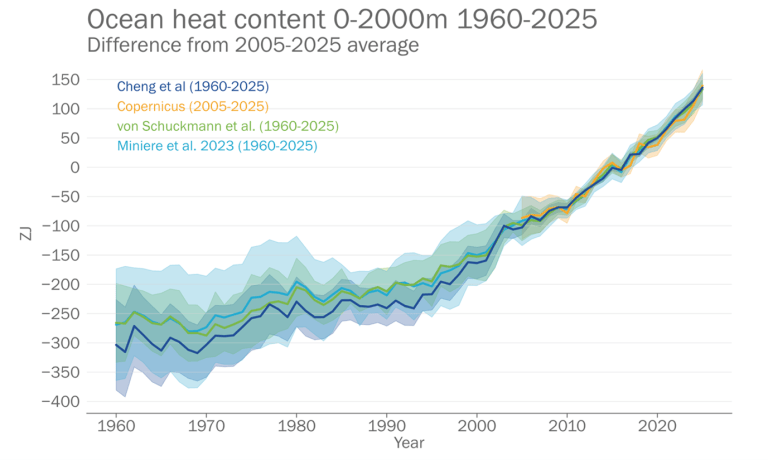
- A large amount of heat is being stored in oceans (about 90%), leading to marine heatwaves and stronger cyclones.
Q3. Why will warming continue in the future?
The report highlights the idea of “committed warming” (warming already guaranteed)
- Past emissions still remain in the atmosphere
- Greenhouse gases stay for a long time:
- CO₂: hundreds of years
- Methane: much more powerful than CO₂
- Nitrous oxide: even more potent
- Oceans store heat & release it slowly: This delays full impact → warming continues over time
- Ice melting worsens warming (albedo effect): Ice reflects sunlight and water absorbs heat. More melting → more heat absorbed → further warming.
Q4. What are the broader impacts?
- Environment: Melting glaciers, rising sea levels, ocean damage
- Economy: Loss in GDP, especially in countries like India; agriculture affected
- Society: More people exposed to heatwaves; migration from vulnerable regions
- Disasters: Increase in extreme events like floods, cyclones, and heatwaves
Q5. What are the major challenges in tackling climate change, and what measures can address them?
| Challenges | Way Forward |
| 1. Heavy dependence on fossil fuels (cheap & widely used) | Shift to renewable energy & promote green hydrogen |
| 2. High cost of green transition | Increase climate finance and investment support |
| 3. Technology gap in developing countries | Promote technology transfer and global cooperation |
| 4. Policy inconsistency across countries | Ensure stable and long-term climate policies |
| 5. Excess carbon already in atmosphere | Use carbon capture and storage (CCS) technologies |
| 6. Vulnerability of farmers & coastal communities | Promote climate-resilient livelihoods & support systems |