Context
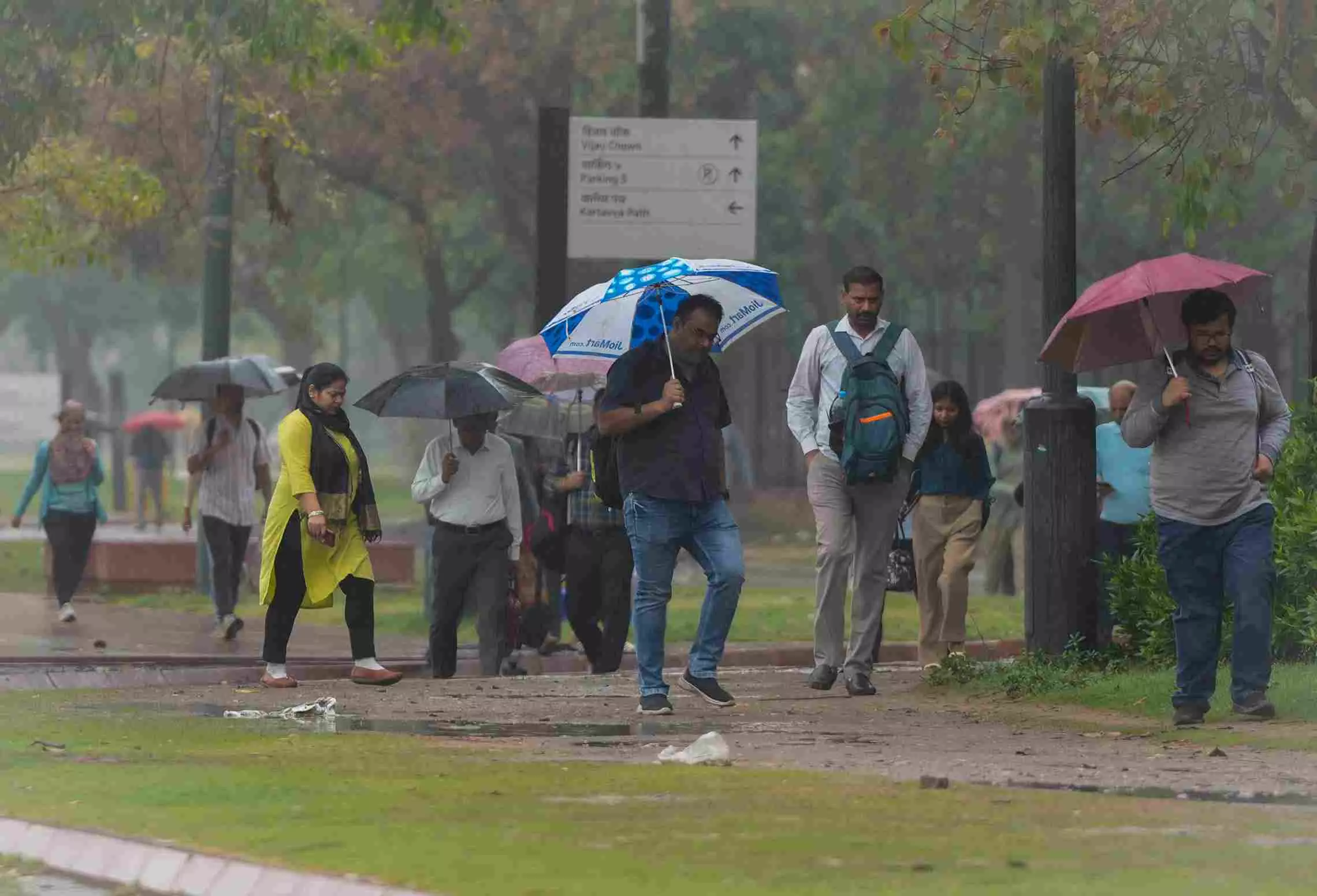
India experienced unusual weather in March 2026, shifting rapidly from heatwaves to thunderstorms, hailstorms, and rainfall, raising concerns about climate variability and extreme weather patterns.
Q1. What was the unusual weather pattern?
- March is a transition month (winter → summer), naturally prone to instability.
- However, this year showed high variability within a short period:
- Early heatwaves in north and west India
- Followed by sudden cooling, rainfall, and hailstorms
- This reflects intense atmospheric interactions.
Q2. Why did such extreme weather occur?
- Western Disturbances (Primary Factor): These are the moisture laden winds from Mediterranean, Black and Caspian Sea. These were weak earlier which caused dry heat but became strong mid–march triggering rainfall and storms.
- Cyclonic Circulation: Low-pressure systems in lower atmosphere increased instability and storm formation.
- Moisture Influx: Winds from Bay of Bengal and Arabian Sea raised humidity levels.
- Wind Convergence: Interaction of warm moist winds and cold winds led to thunderstorms and hailstorms
- Seasonal Transition Effect: Rising heat + leftover winter cold → ideal for convection (storm development)
- Nor’westers (Kalbaisakhi): Local storms in eastern India causing heavy rain, strong winds, and lightning.
Q3. Why were hailstorms widespread?
- Strong upward air currents (updrafts): Warm air near the surface rises rapidly, carrying water droplets high into the atmosphere.
- Freezing at higher altitudes: At higher levels, temperatures are very low, so these droplets freeze into ice particles.
- Growth of hailstones: These ice particles move up and down repeatedly in the cloud, adding more layers of ice and becoming larger.
- Heavy and widespread fall: Once they become too heavy, they fall as hailstones over large areas, especially where moisture and instability are high.
Q4. What are the implications of such weather events?
- Agriculture: Crop damage due to hailstorms
- Disaster risks: Lightning and strong winds
- Health impacts: Sudden temperature fluctuations
- Climate signal: Increasing weather unpredictability and variability
Conclusion
The shift from heatwaves to hailstorms highlights rising climate variability and complex atmospheric interactions, making it essential to improve forecasting, preparedness, and resilience systems.