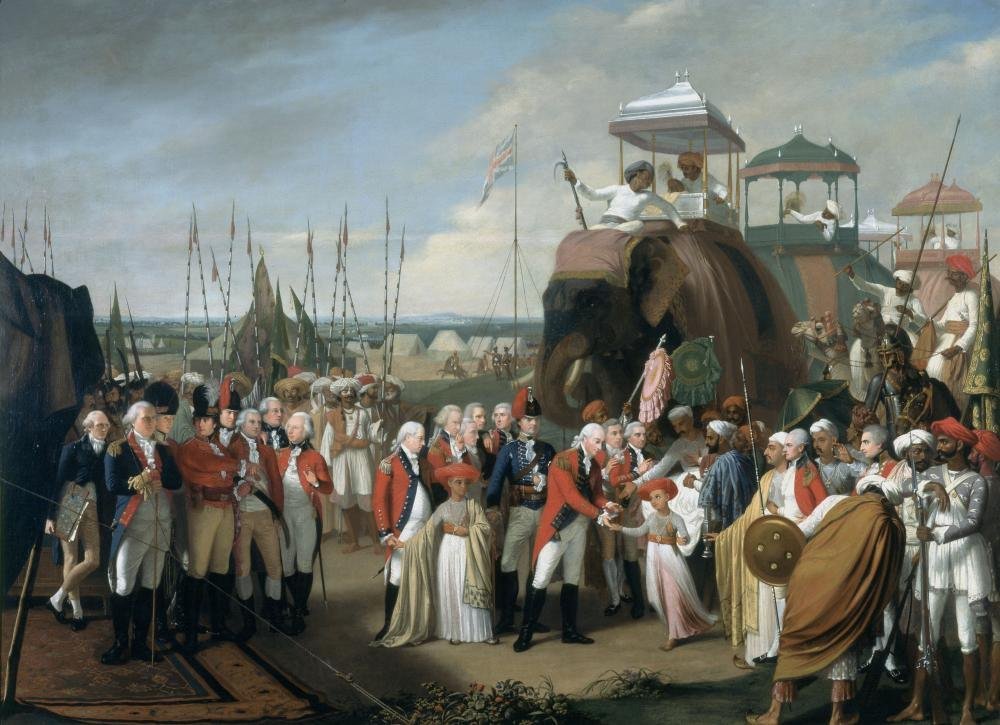
The Permanent Settlement, also widely known as the Zamindari System, was a landmark land revenue arrangement introduced by the British East India Company in 1793. Orchestrated by Governor-General Lord Cornwallis, this system fundamentally redefined the relationship between the colonial state, the landed aristocracy (Zamindars), and the peasantry. While it successfully stabilized the Company’s finances, it triggered profound socio-economic shifts that echoed through Indian history for over a century.
Historical Background: The Crisis of Revenue
Following the Battle of Buxar (1764), the East India Company obtained the Diwani rights (the right to collect revenue) for Bengal, Bihar, and Odisha. However, the Company lacked the administrative machinery to collect taxes efficiently.
- Administrative Chaos: Initial attempts at revenue collection were plagued by corruption and a lack of oversight, contributing to the devastating Bengal Famine of 1770.
- The Philip Francis Proposal: In 1776, Philip Francis suggested a permanent settlement to ensure financial stability.
- The Cornwallis Committee: Lord Cornwallis, influenced by the English landed gentry system, formed a committee with Sir John Shore and James Grant. Cornwallis believed that granting hereditary ownership to Zamindars would incentivize them to improve the land, much like landlords in Britain.
- Territorial Reach: The system eventually covered approximately 19% of British India, spanning Bengal, Bihar, Odisha, the Varanasi region, and parts of Northern Madras.
Salient Features of the Permanent Settlement
The system was characterized by its rigidity and the complete overhaul of traditional agrarian rights.
- Fixed Revenue Demand: The land tax was fixed in 1790 for ten years and made permanent in 1793. The state’s demand would never increase, regardless of agricultural growth or inflation.
- Revenue Sharing Formula: The total collection was divided such that the Company received 10/11th of the revenue, while the Zamindar retained 1/10th as a commission for their services.
- Hereditary Ownership: Zamindars were recognized as the absolute owners of the land. They held the right to sell, mortgage, or transfer the property.
- The Sunset Clause (1794): This was a draconian provision. If a Zamindar failed to pay the fixed amount by sunset on the specified date, the government would immediately confiscate and auction the estate to the highest bidder.
- Tenant Status (Ryots): The actual cultivators were reduced to the status of tenants. Zamindars were supposed to issue Pattas (lease agreements), though this was rarely enforced.
- Draconian Powers: Regulations passed in 1793, 1799, and 1812 allowed Zamindars to seize a tenant’s property for non-payment of rent without needing a court order.
Merits: The Company’s Perspective
From the viewpoint of the British administration, the system offered several strategic advantages:
- Financial Predictability: It provided the British with a fixed and certain income, essential for planning their military expansions and administrative costs.
- Political Loyalty: By creating a class of wealthy hereditary landlords, the British secured a loyal social base that supported colonial rule during crises (like the 1857 Revolt).
- Reduced Administrative Burden: It was far simpler to collect revenue from a few thousand Zamindars than from millions of individual farmers.
- Theoretical Improvement: Cornwallis hoped that “security of property” would encourage Zamindars to invest in irrigation and modern farming techniques.
Demerits: The Human and Economic Cost
The system is widely criticized for its oppressive impact on the rural economy and the peasantry.
- Exploitation of Peasants: Since the Company’s demand was fixed but the Zamindar’s demand from the peasant was not, Zamindars frequently hiked rents. Peasants were often pushed into a cycle of debt and serfdom.
- Absentee Landlordism: Many original Zamindars lost their lands due to the Sunset Clause. The new buyers were often urban merchants who had no interest in farming and lived in cities, becoming absentee landlords who only cared about rent extraction.
- Sub-infeudation: To manage high demands, Zamindars leased parts of their estates to middle-men (Patnidars), who further sub-leased them. This created a long chain of intermediaries, all of whom extracted a share from the poor farmer.
- Neglect of Land: Instead of improving the land as Cornwallis envisioned, Zamindars focused on maximum extraction. Consequently, agricultural productivity remained stagnant.
Impact : Farmers, Zamindars, and the State
| Stakeholder | Impact |
| Farmers (Ryots) | Lost traditional rights to the land; became tenants-at-will; suffered from high rents and frequent evictions. |
| Zamindars | Faced high initial pressure (Sunset Clause); later became a wealthy, loyal class of “intermediaries.” |
| The Company | Secured immediate financial stability but lost out on long-term revenue gains as land values increased. |
FAQs
WHO INTRODUCED THE PERMANENT SETTLEMENT IN INDIA?
The Permanent Settlement was introduced by Lord Cornwallis in 1793.
WHICH AREAS WERE COVERED UNDER THE ZAMINDARI SYSTEM?
It primarily covered Bengal, Bihar, and Odisha, and was later extended to the Varanasi region and Northern Madras.
WHAT WAS THE ‘SUNSET CLAUSE’ IN THE PERMANENT SETTLEMENT?
The Sunset Clause mandated that if a Zamindar failed to pay the revenue by sunset on the due date, their land would be confiscated and auctioned by the Company.
WHAT PERCENTAGE OF REVENUE DID THE ZAMINDARS KEEP?
Under the system, the Zamindars kept 1/11th of the total revenue collected, while the Company received 10/11th.
HOW DID THE PERMANENT SETTLEMENT AFFECT THE PEASANTS?
Peasants lost their customary rights to the land and were reduced to tenants who could be evicted by the Zamindar for non-payment of high rents.
WAS THE PERMANENT SETTLEMENT INSPIRED BY ANY OTHER SYSTEM?
Yes, it was inspired by the landed aristocracy system of Britain, where landlords owned large estates and managed them through tenants.
WHAT IS ‘SUB-INFEUDATION’ IN THE CONTEXT OF THIS SYSTEM?
It refers to the process where Zamindars created several layers of middlemen (sub-landlords) to collect rent, which increased the burden on the actual cultivators.
WHO PROPOSED THE IDEA OF A PERMANENT SETTLEMENT BEFORE CORNWALLIS?
The idea was first proposed by Philip Francis in 1776 as a solution to the Company’s revenue collection problems.
WHY DID THE COMPANY EVENTUALLY DISLIKE THE PERMANENT NATURE OF THE SETTLEMENT?
Because the revenue was fixed forever, the Company could not benefit from the increase in land value or agricultural prices in the later years.
WHICH COMMITTEE ASSISTED LORD CORNWALLIS IN FORMULATING THIS SYSTEM?
Cornwallis was assisted by Sir John Shore and James Grant, though Shore and Cornwallis differed on whether the settlement should be made permanent immediately.