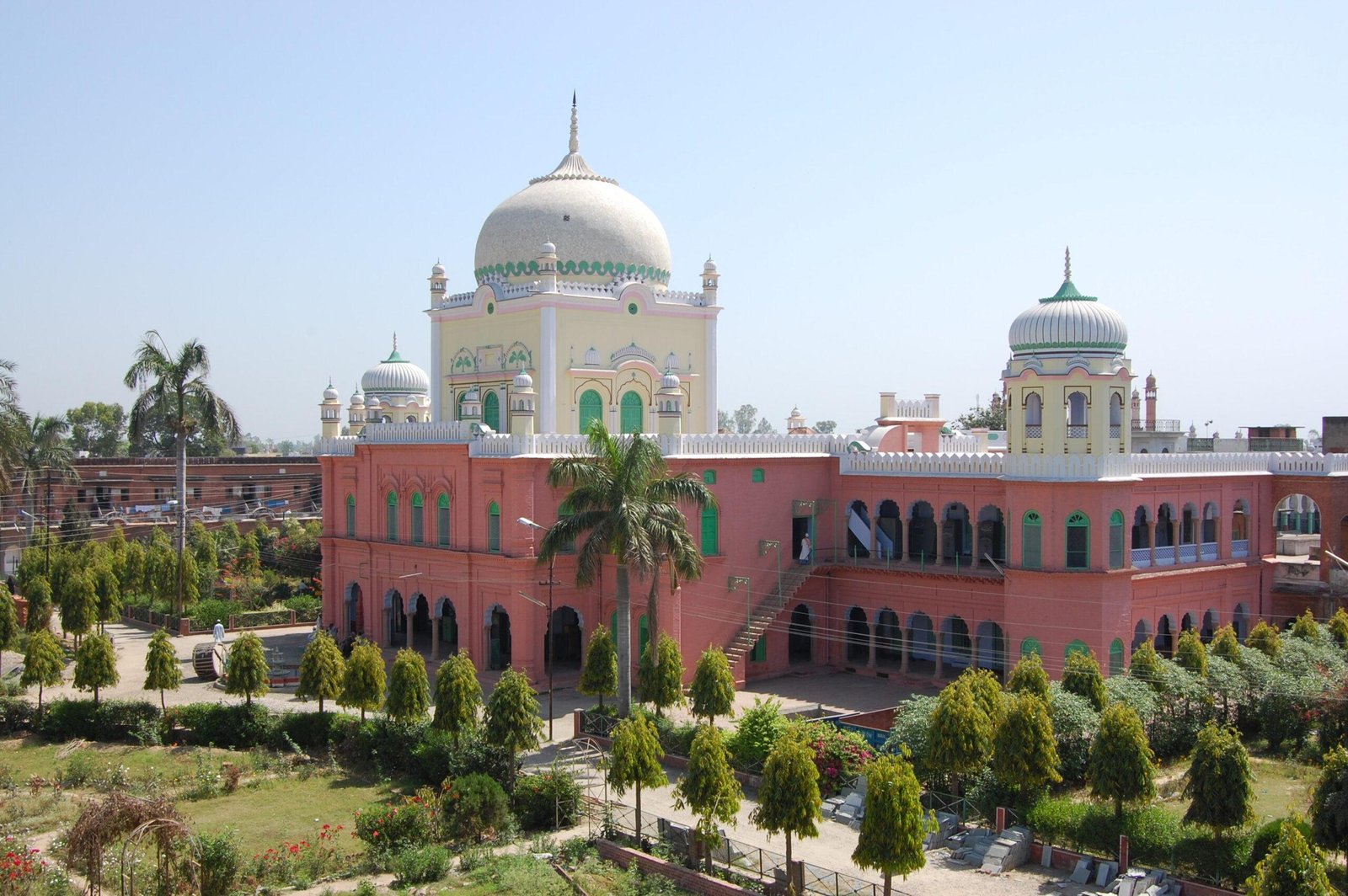
The Deoband Movement stands as one of the most influential Islamic revivalist and educational efforts in the history of South Asia. Emerging in the late 19th century, it was a profound response to the tectonic shifts in the Indian socio-political landscape following the formal establishment of British colonial rule. Centered around the Darul Uloom Deoband, this movement sought to navigate the crisis of identity faced by the Muslim community by championing a return to orthodox religious purity, traditional education, and a firm stance against Western cultural assimilation.
1 Historical Background: The Post-1857 Landscape
The genesis of the Deoband Movement is inextricably linked to the aftermath of the Revolt of 1857. The failure of the uprising led to the collapse of the Mughal vestige and the solidifying of British imperial authority.
- Crisis of Authority: With the loss of political power, the Muslim ulama (scholars) felt a deep-seated anxiety regarding the decline of Islamic traditions and the potential erosion of their religious identity under a Christian colonial administration.
- Rise of Western Influence: The spread of Western education and English-medium schools was viewed by many traditionalists as a vehicle for proselytization and cultural dilution.
- Establishment (1866): In response, Maulana Muhammad Qasim Nanautavi and Maulana Rashid Ahmad Gangohi founded the Darul Uloom Deoband (an Islamic seminary) in 1866. It began modestly in a small mosque in the Saharanpur district of Uttar Pradesh.
- Institutional Autonomy: A defining feature of the seminary was its refusal to accept government grants. This ensured the movement remained free from British influence, relying entirely on public donations from the Muslim community.
2 Core Beliefs and Ideological Pillars
The Deoband Movement is characterized by its dedication to the Hanafi school of Sunni jurisprudence and its emphasis on moral and spiritual reform.
Orthodoxy and Sharia Compliance
The movement demands strict adherence to Shariat (scriptural law). It bridges the gap between Shariat and Tariqah (the spiritual path), suggesting that true spirituality is impossible without a foundation in legalistic religious conduct.
Rejection of Bid’ah (Innovations)
Deobandi scholars are staunch opponents of Bid’ah—any religious innovation that was not practiced by the first three generations of Muslims (Salaf). This includes a strong rejection of saint worship, elaborate tomb rituals, and shrine-based practices, which they argue border on violating Tawhid (the Oneness of God).
Anti-Colonialism and Identity Preservation
Unlike the Aligarh Movement, which encouraged the adoption of Western education to stay relevant, the Deobandis urged Muslims to preserve their unique religious identity. They viewed British rule as a direct threat to the Islamic way of life and advocated for a “return to the purity of early Islam.”
3 The Visionaries: Founders of the Movement
The movement was steered by two towering intellectual and spiritual figures who aimed to create a cadre of scholars capable of guiding the community through colonial challenges.
- Maulana Muhammad Qasim Nanautavi (1833–1877): A brilliant theologian, Nanautavi was the primary architect of the Deoband curriculum. He focused on creating an organized educational system that could replicate the traditional sciences on a large scale.
- Maulana Rashid Ahmad Gangohi (1826–1905): A specialist in Hadith (Prophetic traditions) and Fiqh (Jurisprudence), Gangohi provided the movement with its rigorous legal framework. He was instrumental in spreading Deobandi thought across North India, emphasizing piety and strict legalism.
4 The Lasting Impact on Education and Politics
The Deoband Movement did not remain confined to a single mosque; it evolved into a global network of thought and social action.
Educational Transformation
The “Deoband Model” of the madrasa became a blueprint for Islamic schools across South Asia. While the core focus remained on the Quran and Hadith, some associates like Shibli Numani later advocated for the inclusion of European sciences, leading to the establishment of the Nadwatal Ulama in Lucknow.
Political Alignment and Indian Nationalism
Historically, the Deoband Movement has had a significant political dimension:
- Opposition to Sir Syed Ahmed Khan: The Deobandi leaders largely opposed the pro-British stance of the Aligarh Movement and its organizations.
- Alliance with Congress: Deobandis frequently aligned with the Indian National Congress. Under the leadership of Mahmud-ul-Hasan, the movement integrated Islamic principles with Indian nationalist aspirations, viewing the expulsion of the British as a religious and national duty.
Global Reach
By the 20th and 21st centuries, the influence of Deoband had spread internationally. Deobandi madrasas today are prominent in Pakistan, Bangladesh, Afghanistan, and even the United Kingdom, shaping the religious discourse of millions of Muslims worldwide.
FAQs
WHAT WAS THE PRIMARY GOAL OF THE DEOBAND MOVEMENT?
The primary goal was to revitalize Islamic teachings, preserve orthodox Sunni (Hanafi) traditions, and provide a moral and religious education that would protect Muslim identity from British colonial and Western cultural influences.
IN WHICH YEAR WAS THE DARUL ULOOM DEOBAND FOUNDED?
The Darul Uloom Deoband was formally established in 1866 in the town of Deoband, located in present-day Uttar Pradesh.
WHO WERE THE TWO MAIN FOUNDERS OF THE DEOBAND MOVEMENT?
The movement was co-founded by Maulana Muhammad Qasim Nanautavi and Maulana Rashid Ahmad Gangohi.
HOW DID THE DEOBAND MOVEMENT DIFFER FROM THE ALIGARH MOVEMENT?
While the Aligarh Movement advocated for Western education and cooperation with the British, the Deoband Movement focused on traditional Islamic sciences and maintained a staunchly anti-colonial and nationalistic stance.
WHAT IS THE DEOBANDI STANCE ON BID’AH (INNOVATIONS)?
Deobandis strongly reject Bid’ah, advocating for a return to the pristine practices of early Islam and rejecting rituals like saint-worship or shrine-veneration.
DID THE DEOBAND MOVEMENT SUPPORT THE INDIAN NATIONAL CONGRESS?
Yes, historically, the Deoband leadership aligned with the Indian National Congress and supported the cause of a united India against British rule.
WHAT SUBJECTS WERE EMPHASIZED IN THE DEOBAND CURRICULUM?
The curriculum focused heavily on Quranic study, Hadith (sayings of the Prophet), Fiqh (Islamic jurisprudence), and Arabic grammar.
WHAT ROLE DID MAHMUD-UL-HASAN PLAY IN THE MOVEMENT?
He was a later leader who gave the movement a stronger political and revolutionary edge, integrating the religious training of students with the struggle for Indian independence.
IS THE DEOBAND MOVEMENT STILL RELEVANT TODAY?
Absolutely; it remains one of the most significant influences on Sunni Islam in South Asia and has established thousands of affiliated madrasas across the globe, including in the West.
WHY DID DARUL ULOOM DEOBAND REFUSE GOVERNMENT GRANTS?
To maintain total institutional autonomy and ensure that their religious curriculum and spiritual path remained entirely free from colonial interference or agendas.
Would you like me to prepare a UPSC-style comparison between the different 19th-century reform movements (Brahmo Samaj, Aligarh, Deoband, etc.), or should we focus on the Silk Letter Conspiracy involving Deobandi leaders?