Context
After a gap of nearly 15 years, a pair of Dusky Eagle Owl has been sighted in the Phato tourism zone of the Terai West Forest Division, which lies adjacent to Jim Corbett Tiger Reserve.
What is the Dusky Eagle Owl?
- It is a large owl species belonging to the family Strigidae.
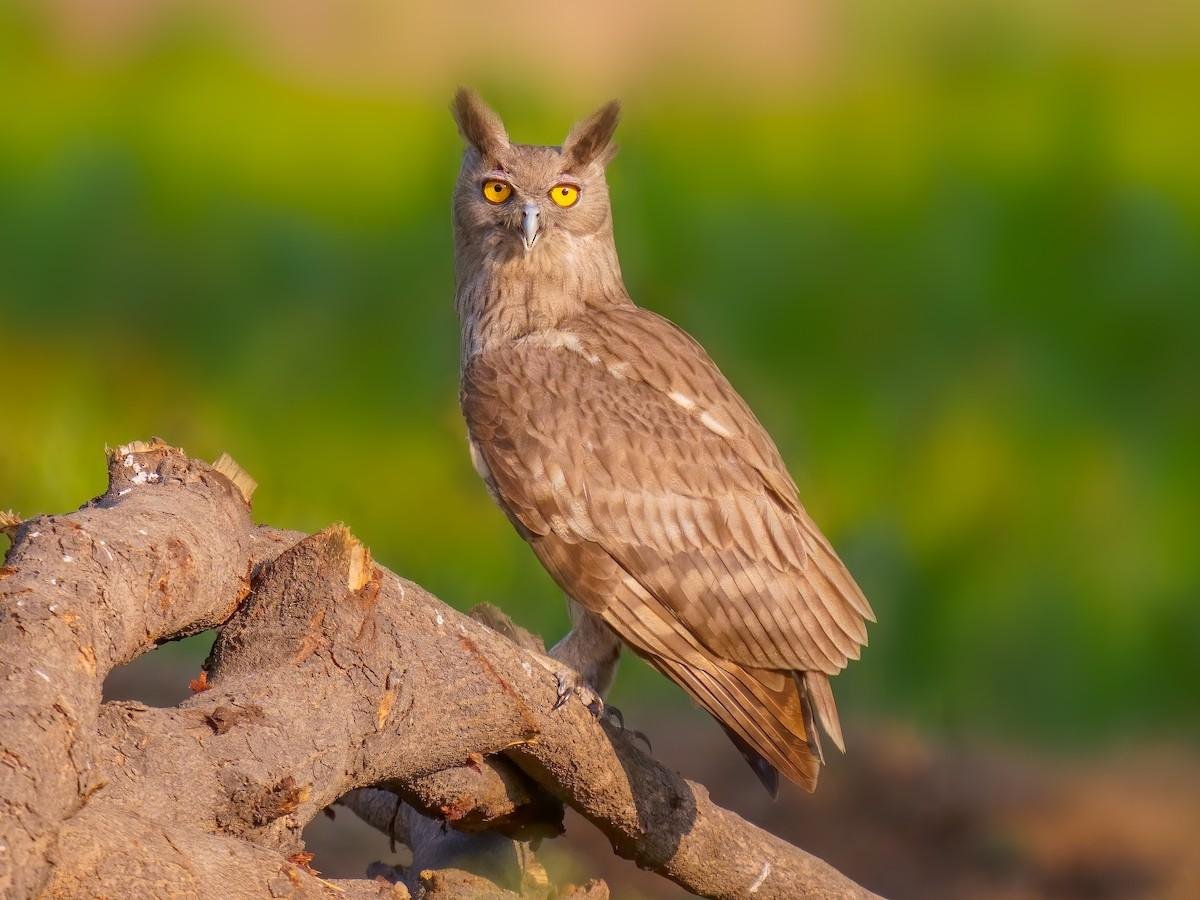
- Physical Appearance: It is a large greyish-brown owl. The bird has prominent ear tufts, which give it a characteristic appearance.
- Plumage
- Underparts: Greyish-white with dark brown streaks.
- Wings: Dark brown with noticeable whitish streaks.
- Habitat: It prefers dense forest environments, particularly near water sources. Typical habitats include thick riverside forests and areas with old and large trees. These habitats provide ideal locations for roosting, nesting, and hunting. The owl mainly feeds on small mammals and birds.
- Geographic Distribution: The species has a wide distribution across South and Southeast Asia (Pakistan, India, Nepal, Bangladesh, Myanmar, Thailand, Malaysia and parts of China)
- Behaviour and Key Features
- Size: About 48–53 cm in length. Females are generally larger than males.
- Activity Pattern: It usually spends the day resting quietly in shaded branches or dense foliage. The bird becomes active roughly an hour before sunset.
- Daytime Activity: During cloudy weather, the Dusky Eagle Owl may also remain active during the day.
- Hunting Ability: It has powerful feet and strong flight, enabling it to capture prey effectively.
- Nesting Behaviour: It generally does not build its own nest. Instead, it uses old stick nests built by other large birds, such as kites, vultures and eagles.
- Conservation Status: Least Concern (IUCN Red List)
FAQs
Q1. What is the Dusky Eagle Owl?
The Dusky Eagle Owl is a large owl species belonging to the family Strigidae, known for its greyish‑brown plumage and prominent ear tufts.
Q2. What does the Dusky Eagle Owl look like?
It has a greyish‑brown body, lighter underparts with dark streaks, black tail feathers, and white wing markings visible in flight. Its ear tufts give it a distinctive appearance.
Q3. Where is the Dusky Eagle Owl found?
This owl is widely distributed across South and Southeast Asia, including Pakistan, India, Nepal, Bangladesh, Myanmar, Thailand, Malaysia, and parts of China.
Q4. What type of habitat does the Dusky Eagle Owl prefer?
It thrives in dense riverside forests and semi‑evergreen areas with large old trees, often near water sources. These habitats provide ideal conditions for roosting, nesting, and hunting.
Q5. What is the conservation status of the Dusky Eagle Owl?
According to the IUCN Red List, the Dusky Eagle Owl is classified as Least Concern, though habitat protection remains important for its survival.