Important questions for UPSC Pre/ Mains/ Interview:
|
Context
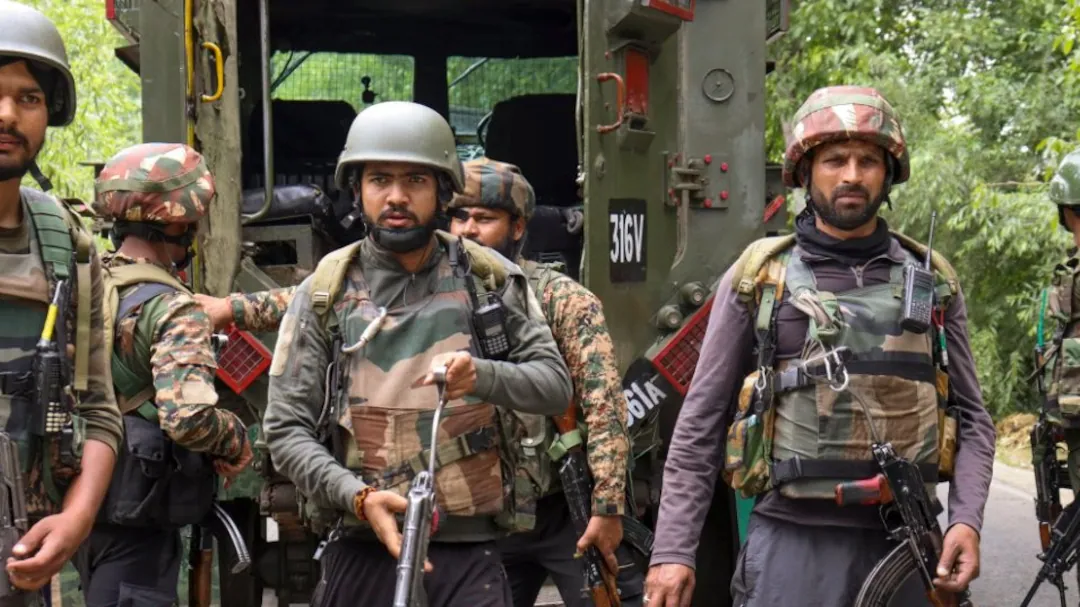
The Union Government has launched Prahaar, India’s first comprehensive counter-terrorism policy. It formalises a zero-tolerance doctrine against terrorism and seeks to create a coordinated, intelligence-driven national framework to dismantle terror ecosystems, including financiers, enablers, and cross-border handlers.
Q1. What is the Prahaar Counter-Terrorism Policy and why was it introduced?
- India has faced cross-border terrorism, radicalisation networks, and technology-enabled extremist threats.
- Fragmented approach: Counter-terror mechanisms previously operated through multiple laws and agencies without a unified doctrine.
- Need for a unified national doctrine: Increasing use of drones, encrypted communication, and dark web financing required structured response reform.
- Structured Framework: Prahaar provides a doctrinal framework integrating prevention, response, resilience, and international cooperation.
- It moves from reactive counter-terrorism to proactive intelligence-led disruption.
Q2. What are the core objectives and guiding principles of Prahaar?
- Core Objectives
- Criminalise all terrorist acts without ambiguity.
- Cut off funding, weapons supply, logistics, cyber resources, and safe havens.
- Target financiers, facilitators, overground workers, and digital enablers.
- Ensure coordination between central and state agencies.
- Guiding Principles
- Zero tolerance: No justification under any ideology.
- Victim-centric approach: Justice and support systems prioritised.
- No religious attribution: Terrorism not linked to religion or ethnicity.
- Recognition of state-sponsored terrorism in the region.
- Commitment to rule of law and due process.
Q3. What are the key pillars of Prahaar’s operational framework?
Prahaar is built on seven strategic pillars (PRAHAAR):
- P – Prevention: Intelligence-led proactive disruption, Monitoring sleeper cells and cyber radicalisation and Targeting logistics and funding networks.
- R- Response: Swift, graded, proportionate counter-terror action. Uniform Standard Operating Procedures (SOPs). Strengthened inter-agency crisis coordination.
- A- Aggregating Internal Capacities: Whole-of-government approach. Modernisation of Law Enforcement Agencies (LEAs). Advanced surveillance and forensic tools.
- H- Human Rights & Rule of Law: Safeguarding due process. Multiple appeal and review mechanisms. Legal reforms where required.
- A- Attenuating Enabling Conditions: Graded response to radicalisation. Community de-radicalisation initiatives. Youth engagement and socio-economic inclusion.
- A- Aligning International Efforts: Use of extradition, treaties, UN conventions. Counter-terror financing cooperation. Prevent misuse of ICT platforms.
- R- Recovery & Resilience: Rehabilitation support for victims. Community rebuilding initiatives. Strengthening social cohesion post-attack.
Q4. What threat perceptions does Prahaar identify?
- Cross-Border & State-Sponsored Terror: Sponsorship of jihadist and proxy outfits. Use of drones for arms trafficking in border states. Coordination between foreign handlers and local operatives.
- Technology-Driven Terrorism: Encrypted messaging and dark web coordination. Cryptocurrency- based terror financing. Use of AI, drones, robotics, and cyber tools. CBRNED (Chemical, Biological, Radiological, Nuclear, Explosive, Digital) risks.
- Organised Crime Nexus: Terror groups leveraging criminal syndicates. Recruitment through transnational networks. Logistics and illegal arms supply chains.
Q5. What are the governance and administrative implications of Prahaar?
- Standardisation of anti-terror structures across Centre and States.
- Enhanced role of intelligence coordination mechanisms.
- Investment in cyber forensics and drone interception systems.
- Strengthening district-level preparedness.
- Integration with international counter–terror platforms.
- Federal dimension: State police modernisation aligned with national doctrine.
Q6. What are the benefits and concerns associated with Prahaar?
Security and Governance Benefits
- Unified doctrinal clarity.
- Reduced inter-agency duplication.
- Proactive radicalisation prevention.
- Better tech readiness against emerging threats.
- Stronger international counter-terror credibility.
Legal and Ethical Concerns
- Risk of excessive surveillance.
- Potential misuse of broad terror definitions.
- Federal tensions in operational control.
- Balancing national security and civil liberties.
The government asserts multi-layered review and due-process safeguards.
Q7. What safeguards and oversight mechanisms are built into Prahaar?
- Due process and judicial oversight provisions.
- Multi-level grievance redressal mechanisms.
- Proportionate graded response protocols.
- Legal scrutiny before designation and prosecution.
- Alignment with constitutional rights and international obligations.
Conclusion
Prahaar institutionalises India’s counter-terrorism doctrine through intelligence-led prevention, technological preparedness, coordinated governance, and international alignment. While it strengthens operational capacity against evolving terror threats, its long-term legitimacy will depend on maintaining rule of law, federal coordination, and civil liberties alongside national security objectives.