Context
Recently, a tour bus carrying eight Chinese tourists broke through Lake Baikal’s frozen surface in Siberia, killing seven people – an incident that renewed global attention on this unique freshwater ecosystem.
10 Key Features of the Lake
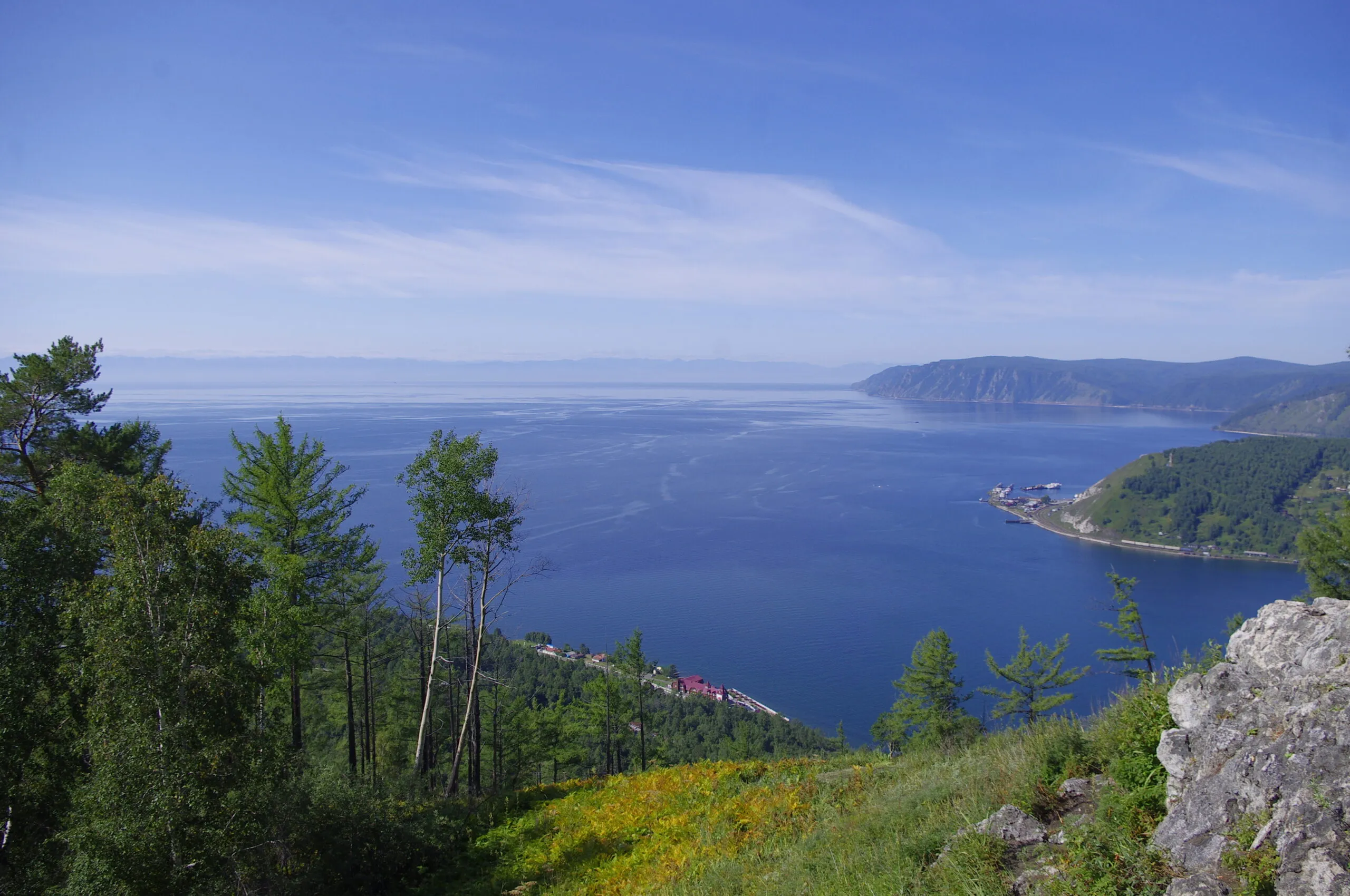
- Location: Situated in the southern part of eastern Siberia, in south-central Russia. Lies close to the international border with Mongolia.
- Lake Baikal was declared a UNESCO World Heritage Site in 1996.
- Oldest existing (20-25 million years ago) and world’s largest (area ~ 31000 sq km, length = 636 km and average width = 48 km) freshwater lake on earth containing roughly 20% of the world’s surface fresh water.
- Also world’s deepest lake (maximum depth = 1,642 meters below water surface)
- Beneath the lake lie sediment layers about 7 km thick, making Baikal the deepest continental rift on Earth, with the rift floor reaching nearly 8–11 km below the surface.
- Islands – 45 islands with Olkhon as the largest.
- Rivers: Nearly 330 rivers drain into it (like Barguzin, Selenga, Upper Angara, Sarma and Turka) but Baikal has only one outlet – Angara River.
- Climate: It has moderate temperature than the surrounding regions (harsh climate). Freezes in January but thaws in May-June.
- Indigenous Communities: Buryat People – follow Tibetan Buddhism and livelihood depends on rearing goats, camels, cattle, and sheep.
- Also called “Galapagos of Russia” as its great age and isolation have produced extraordinary freshwater biodiversity.
FAQs
Q1. Where is Lake Baikal located?
It lies in southern Siberia, Russia, near the border with Mongolia.
Q2. Why is Lake Baikal globally significant?
It is the world’s oldest (20–25 million years) and largest freshwater lake by volume, containing ~20% of Earth’s surface freshwater.
Q3. How deep is Lake Baikal?
It is the deepest lake in the world, with a maximum depth of 1,642 meters. Beneath it lies ~7 km of sediment, marking the deepest continental rift.
Q4. What are the key geographical features of Lake Baikal?
Key Geographical Features include:
- 45 islands, with Olkhon Island as the largest
- Fed by ~330 rivers (e.g., Selenga, Barguzin, Upper Angara)
- Single outlet: Angara River
Q5. What makes Lake Baikal unique?
Nicknamed the “Galapagos of Russia”, its age and isolation have produced extraordinary freshwater biodiversity. It was declared a UNESCO World Heritage Site in 1996.