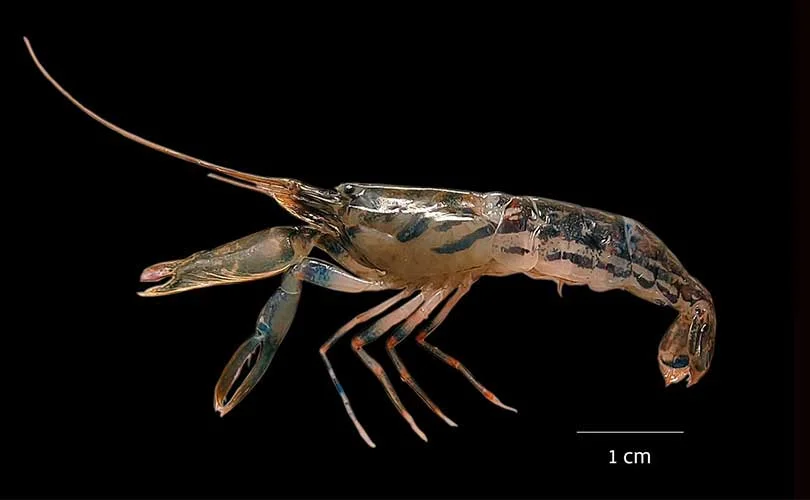
- A new pistol shrimp / snapping shrimp species named Alpheus madhusoodanai was discovered in Kochi backwaters (estuarine ecosystem – where freshwater mixes with seawater) of Kerala which belongs to the Alpheidae family.
- This is the first alpheid shrimp species recorded from an estuary in this region, making the discovery scientifically significant.
- Habitat: In local waters, the shrimp exists in small numbers. It is sometimes caught unintentionally in stake nets used by fishermen. It shows a burrowing behaviour, meaning it digs into muddy or swampy soil.
- Ecological Role: Because it burrows into swampy soil, it helps release toxic gases trapped in mangrove sediments. This improves soil aeration and indirectly supports the health of mangrove ecosystems.
- The Extraordinary Claw Mechanism:
- Pistol shrimps are famous for their oversized snapping claw. This claw closes at extremely high speed and creates a powerful underwater bubble.
- This is not a normal bubble, it is produced through a physical process called sonoluminescence, where energy vibrations cause bubbles to emit light.
- When the bubble collapses, it produces temperatures up to 4,400°C, nearly equal to the surface temperature of the Sun. The sound generated can reach 218 decibels.
- Thus, the pistol shrimp produces one of the loudest biological sounds in the ocean.
- Hunting Strategy: The shrimp uses this powerful claw mainly for hunting:
- It hides inside its burrow.
- Waits for prey to approach.
- Fires its snapping claw with precision.
- The shockwave can stun or kill small prey instantly.
- Global Distribution of Pistol Shrimps
- There are hundreds of species worldwide.
- Most are found in coral reefs and seagrass beds.
- They are common in tropical and temperate marine environments.
FAQs
Q1. Where was Alpheus madhusoodanai discovered?
It was found in the Kochi backwaters of Kerala, an estuarine ecosystem.
Q2. Why is the Alpheus madhusoodanai discovery significant?
It is the first alpheid shrimp species recorded from an estuary in this region.
Q3. What ecological role does Alpheus madhusoodanai play?
By burrowing into swampy soil, it releases trapped gases and improves mangrove soil aeration.
Q4. What is special about Alpheus madhusoodanai’s claws?
Its oversized snapping claw creates a bubble through sonoluminescence, producing light, extreme heat (~4,400°C), and sound up to 218 decibels.
Q5. How does Alpheus madhusoodanai hunt its prey?
It hides in burrows and uses shockwaves from its claw snap to stun or kill small prey instantly.