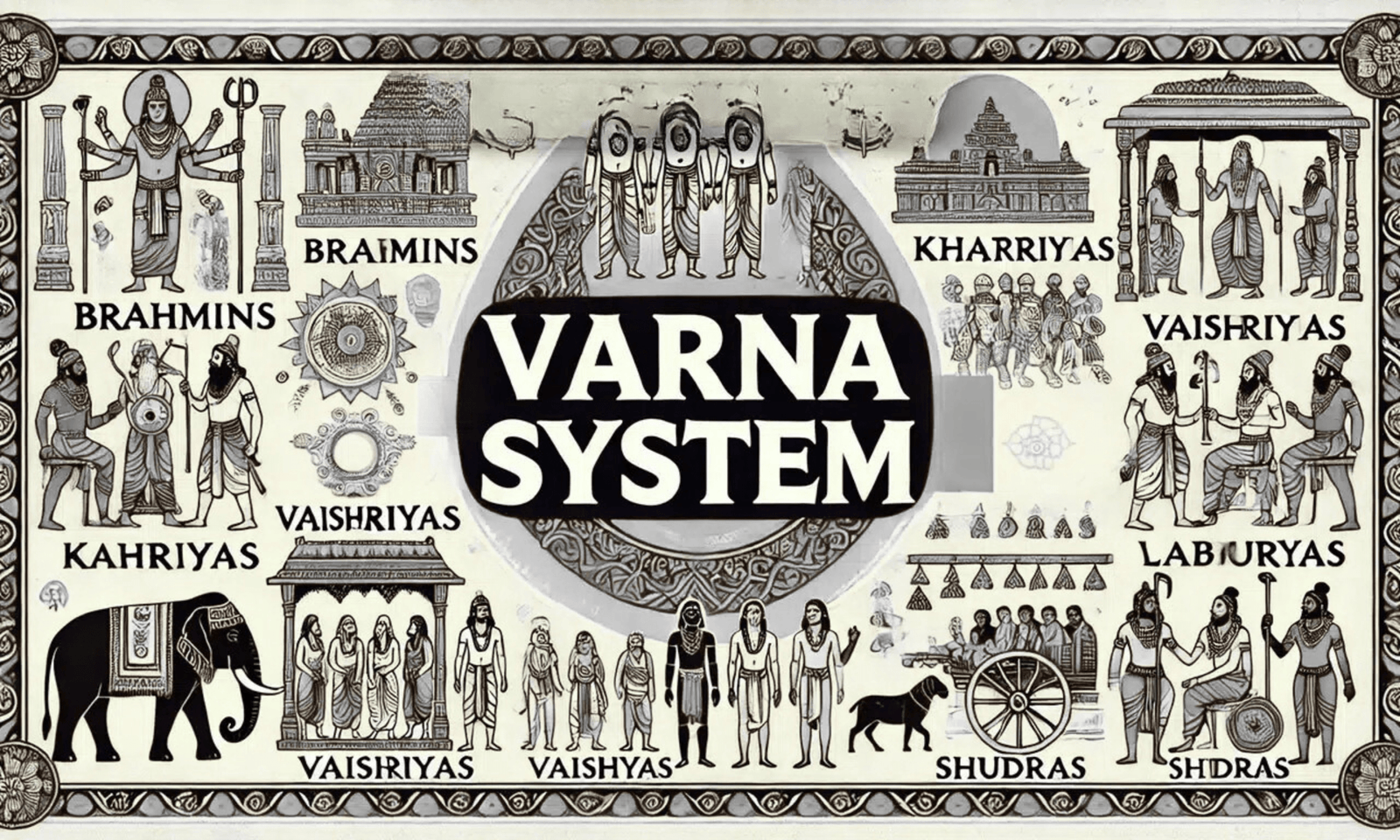
The Varna system is an ancient social classification in Indian history that originated during the Vedic period around 1500 BCE. While often misunderstood as a synonym for the modern caste system, the Varna system was initially a functional framework designed to organize society based on roles, duties, and aptitudes (Guna and Karma). Over millennia, this system transitioned from a flexible, merit-based structure into a rigid, birth-based hierarchy. Understanding the Varna system is essential to grasping the socio-political dynamics of ancient India and the subsequent emergence of the Jati (Caste) system.
What is Varna? Etymology and Meaning
The term Varna is derived from the Sanskrit root vṛ, meaning “to classify,” “to cover,” or “to choose.”
- Literal Meaning: It translates to “colour” or “class.”
- The Color Theory: In the mid-20th century, some scholars theorized that Varna represented skin pigmentation differences between “Aryans” and “Indigenous” peoples. However, modern historical research has largely discredited this racial theory.
- Symbolic Classification: Instead, “colour” served as a symbolic classification device—similar to how the Yajurveda is divided into “White” and “Black” sections.
The Evolution of the Varna System
The Varna system was not a static entity; it underwent significant transformations across different historical epochs.
The Vedic Origins (c. 1500 BCE)
The first textual reference to the four-fold division is found in the Purusha Sukta hymn of the Rigveda (10.90). It metaphorically describes the creation of society from the cosmic being, Purusha:
- Brahmins: From the Mouth (Teachers/Priests).
- Kshatriyas: From the Arms (Warriors/Protectors).
- Vaishyas: From the Thighs (Providers/Merchants).
- Shudras: From the Feet (Service providers).
Early vs. Later Vedic Phases
- Early Vedic Period: The system was fluid and meritocratic. Status was determined by an individual’s actions and skills. Social mobility was high; one was not necessarily born into a Varna but could achieve it through conduct.
- Later Vedic Period (1000–500 BCE): As society became more sedentary and complex, the system became rigid and hereditary. The introduction of texts like the Manusmriti codified these divisions, making birth the sole determinant of social standing and introducing concepts of ritual purity and pollution.
The Four Varnas: Roles and Responsibilities
Each category was assigned specific Dharmas (duties) to ensure the stability and prosperity of the collective.
| Varna | Symbolic Part | Key Roles & Duties |
| Brahmins | Mouth | Priests, scholars, and custodians of the Vedas. They emphasized spiritual wisdom and moral discipline. |
| Kshatriyas | Arms | Rulers, warriors, and administrators. Tasked with the protection of the kingdom and the enforcement of justice. |
| Vaishyas | Thighs | Merchants, agriculturists, and cattle-rearers. They formed the economic backbone of society. |
| Shudras | Feet | Artisans, laborers, and service providers. They supported the operational needs of the other three Varnas. |
Note: A fifth category, the Panchamas (including outcasts and slaves), existed outside this four-fold framework, leading to deep social stratification and the eventual concept of “untouchability.”
Philosophical and Religious Perspectives
The Varna system was not universally accepted in its rigid form, leading to significant internal and external reform movements.
- Buddhism & Jainism: Both religions emerged as a challenge to the birth-based Varna system. The Buddha rejected the divine origin of Varnas, teaching that enlightenment was a matter of character and ethical conduct, not lineage.
- The Bhagavad Gita: Lord Krishna emphasized that Varna is based on Guna (qualities) and Karma (actions). He highlighted that duty toward society is a spiritual path, regardless of one’s social standing.
- The Upanishads: These texts shifted the focus from external ritualism to inner spiritual merit, advocating for a more egalitarian understanding of the soul (Atman).
Varna System vs. Caste System (Jati)
While often used interchangeably, these two systems represent different layers of social organization.
| Feature | Varna System | Caste System (Jati) |
| Definition | A four-fold broad classification. | Thousands of tiny, birth-based sub-divisions. |
| Basis | Occupational role and aptitude. | Birth, lineage, and endogamy. |
| Flexibility | Historically more fluid (Early Vedic). | Highly rigid with restricted mobility. |
| Scope | Pan-Indian, scriptural framework. | Regional, local, and socio-economic. |
FAQs
WHAT IS THE ORIGINAL SANSKRIT MEANING OF THE WORD VARNA?
The word Varna primarily means “to classify,” “to choose,” or “to cover.”
WHERE IS THE FIRST MENTION OF THE VARNA SYSTEM FOUND?
The earliest reference is found in the Purusha Sukta hymn of the Rigveda (Book 10).
WAS THE VARNA SYSTEM ALWAYS HEREDITARY?
No. In the Early Vedic period, Varna was flexible and based on an individual’s merit, skills, and conduct. It only became hereditary in the Later Vedic period.
WHO ARE THE “PANCHAMAS” IN THE SOCIAL HIERARCHY?
The Panchamas (meaning “fifth”) refers to those who fell outside the four-fold Varna system, historically including outcasts, slaves, and conquered peoples.
HOW DID BUDDHISM CHALLENGE THE VARNA SYSTEM?
Buddhism rejected the idea of birth-based superiority and taught that a person’s worth is determined by their ethical actions (Karma) and wisdom.
WHAT IS THE DIFFERENCE BETWEEN VARNA AND JATI?
Varna is a broad four-fold classification based on occupation, while Jati (Caste) refers to thousands of regional, endogamous groups determined strictly by birth.
WHAT IS THE CONCEPT OF “DHARMA” WITHIN THE VARNA SYSTEM?
In this context, Dharma refers to the specific duties and moral responsibilities assigned to each Varna to maintain social order and spiritual progress.
WHICH TEXT CODIFIED THE RULES OF VARNA INTO A RIGID SYSTEM?
The Manusmriti is the primary legal text that reinforced the hereditary nature of Varna and established strict social codes for each group.