Sustainable development is the organizing principle for meeting human development goals while simultaneously sustaining the ability of natural systems to provide the natural resources and ecosystem services upon which the economy and society depend. It is a holistic approach that seeks to harmonize three core elements: economic growth, social inclusion, and environmental protection.
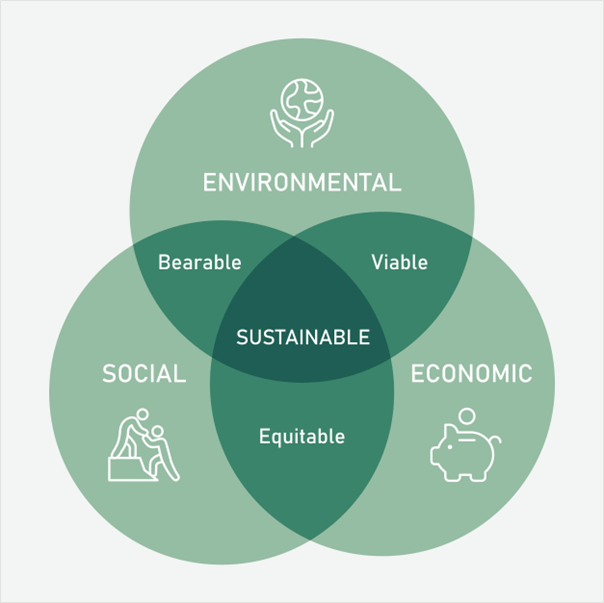
The Meaning and Core Pillars of Sustainability
According to the Brundtland Report (1987), titled “Our Common Future,” sustainable development is defined as:
“Development that meets the needs of the present without compromising the ability of future generations to meet their own needs.”
The Three Interconnected Pillars
- Economic Sustainability: Ensuring that economic growth is equitable and benefits all segments of society without depleting the natural resources that future growth depends on.
- Environmental Sustainability: Protecting the integrity of the environment by using natural resources wisely, reducing pollution, and mitigating the effects of climate change.
- Social Sustainability: Promoting social justice, inclusivity, and equity, ensuring universal access to basic necessities, education, and healthcare.
Historical Milestones in Global Sustainability
The journey toward a global framework for sustainability has evolved through several key international conferences and agreements:
- Stockholm Conference (1972): The first global meeting to address environmental issues, leading to the establishment of the UNEP (United Nations Environment Programme).
- The Brundtland Commission (1987): Formally introduced the concept of sustainable development to the international community.
- Rio Earth Summit (1992): Produced Agenda 21, the UNFCCC, and the Convention on Biological Diversity (CBD), integrating environment and development.
- The 2030 Agenda (2015): The adoption of the 17 Sustainable Development Goals (SDGs) provided a comprehensive global blueprint for prosperity and planet protection.
Key Features and Principles
Sustainable development is guided by specific principles that ensure policies are balanced and long-term:
- Intergenerational Equity: The ethical responsibility to ensure current progress does not steal from future generations.
- Precautionary Principle: Taking proactive measures to prevent environmental damage, even if some cause-and-effect relationships are not yet fully established scientifically.
- Polluter Pays Principle: Ensuring that those who cause environmental damage bear the costs of management and restoration.
- Resource Efficiency: Maximizing the utility of finite resources such as water and minerals to prevent waste.
- Integration: Recognizing that environmental health and economic prosperity are mutually dependent.
Major Challenges to Sustainability
Achieving global sustainability is hindered by several complex barriers:
- War and Political Instability: Conflicts displace populations and destroy the infrastructure needed for sustainable growth (e.g., the impact of the Ukraine war on global food security).
- Population Growth: Rapid increases in population put immense pressure on land, water, and food resources.
- The Finance Gap: Developing nations often lack the capital and technology to transition to green energy without international support.
- Environmental Degradation: Persistent issues like deforestation, overfishing, and loss of biodiversity threaten ecological stability.
Indian Initiatives for Sustainable Development
India has aligned its national policies with the Global SDGs through several high-impact missions:
- Swachh Bharat Mission (2014): Aims for universal sanitation and effective solid waste management to improve hygiene and health.
- Jal Jeevan Mission (2019): Targeted to provide functional household tap connections to all rural homes by 2024.
- Atal Bhujal Yojana (2018): Focuses on sustainable groundwater management through community participation.
- PM-JAY (Ayushman Bharat): The world’s largest health assurance program, promoting social sustainability by providing health coverage to vulnerable families.
- National Clean Air Programme (NCAP): A strategy to reduce air pollution levels across Indian cities through monitoring and control measures.
The Way Forward: Strategies for a Greener Future
To ensure long-term resilience, India and the world must adopt a multifaceted approach:
- Transition to Renewables: Massive investment in Solar and Wind energy to reduce the carbon footprint.
- Sustainable Agriculture: Promoting organic fertilizers, biopesticides, and efficient irrigation (e.g., drip irrigation).
- Green Transportation: Incentivizing Electric Vehicles (EVs) and expanding the use of CNG in public transport.
- Nature-Based Solutions: Reforestation and the restoration of traditional water bodies (e.g., Amrit Sarovars).
Frequently Asked Questions (FAQs)
WHO DEFINED SUSTAINABLE DEVELOPMENT FOR THE FIRST TIME?
The concept was formally defined in the Brundtland Report (1987), also known as “Our Common Future.”
WHAT ARE THE THREE PILLARS OF SUSTAINABLE DEVELOPMENT?
The three pillars are Economic Growth, Environmental Protection, and Social Equity.
HOW MANY SUSTAINABLE DEVELOPMENT GOALS (SDGs) ARE THERE?
There are 17 global goals adopted by the United Nations in 2015 to be achieved by 2030.
WHAT IS THE “POLLUTER PAYS PRINCIPLE”?
It is a principle stating that those who produce pollution should bear the costs of managing it to prevent damage to human health or the environment.
WHAT IS INTERGENERATIONAL EQUITY?
It refers to the idea that the current generation should use resources in a way that leaves a healthy and resourceful planet for future generations.
HAS INDIA LAUNCHED ANY PROGRAM FOR CLEAN WATER?
Yes, the Jal Jeevan Mission was launched in 2019 to provide piped water to every rural household.
WHAT IS THE PURPOSE OF THE PARIS AGREEMENT?
The Paris Agreement (2015) aims to strengthen the global response to climate change by keeping the global temperature rise this century well below 2 degrees Celsius.
HOW DOES WAR IMPACT SUSTAINABLE DEVELOPMENT?
Conflicts divert resources from development to defense, destroy ecosystems, and create humanitarian crises that hinder progress toward the SDGs.
WHAT IS THE ROLE OF CNG IN SUSTAINABLE DEVELOPMENT?
CNG (Compressed Natural Gas) is a cleaner alternative to petrol and diesel that helps reduce air pollution in urban areas.
WHAT IS THE “CARRYING CAPACITY” OF AN ECOSYSTEM?
It is the maximum population size of a species that an ecosystem can sustain indefinitely without being degraded.