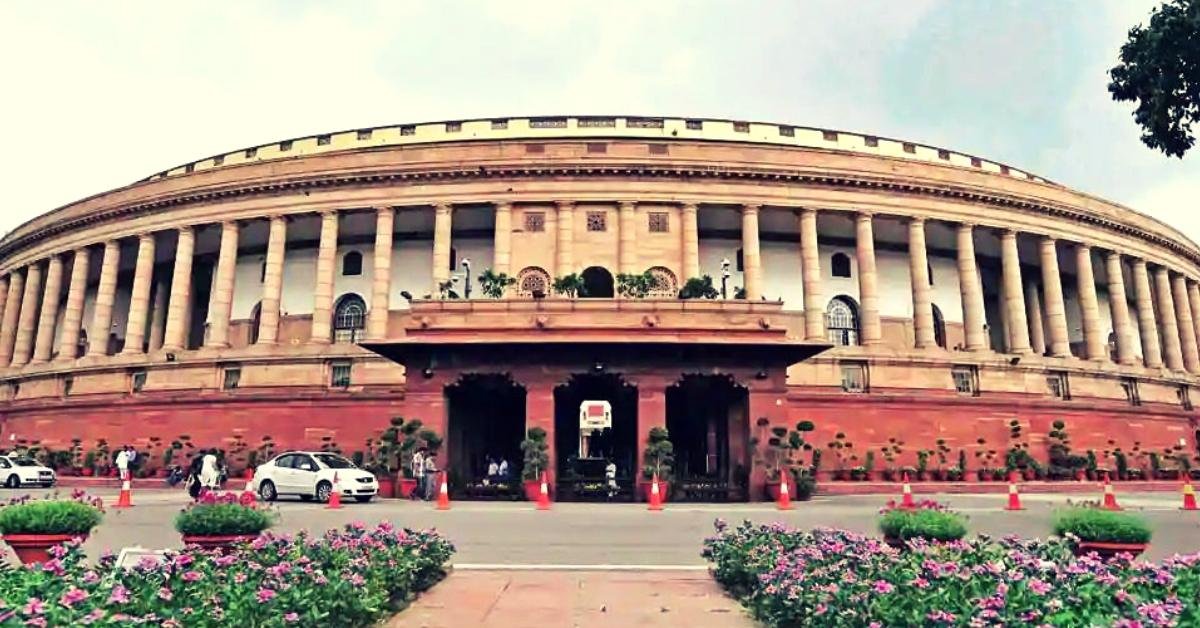
A Parliamentary Form of Government is a democratic system where the executive branch derives its democratic legitimacy from its ability to command the confidence of the legislative branch. In this system, the head of state and the head of government are typically two different individuals. India’s choice of this model was a deliberate decision to ensure accountability and representative governance, drawing significant inspiration from the British “Westminster” model.
As a central institution of Indian democracy, the Parliament serves as the forum where the executive is held responsible for its actions through constant scrutiny, debates, and legislative oversight.
Historical Evolution of the Parliamentary System
The concept of representative councils dates back to ancient tribal societies where village elders guided decisions. However, the formal structural evolution followed a distinct path:
1 Early European Roots: In 1188, King Alfonso IX of León convened the Cortes of León, one of the first documented parliaments. Later, during the Dutch Revolt (1581), the States-General assumed sovereign powers.
2 The Modern Framework: Developed primarily in the United Kingdom (1707–1800) and Sweden (1721–1772), the system gained global traction after World War I.
3 Adoption in India: The Constituent Assembly chose the parliamentary model over the Presidential system after extensive debate. Leaders like Dr. B.R. Ambedkar argued that while a Presidential system offers more stability, a Parliamentary system offers more responsibility, which was vital for a newly independent India.
Notable Opinions: Professor K.T. Shah viewed it as an effective link between the three branches, while Shri K. Hanumanthaiya believed it best met India’s unique socio-political needs.
Salient Features of the Parliamentary System
The Indian parliamentary system is defined by several core principles that distinguish it from other democratic forms:
1 Nominal and Real Executives: The President is the formal (De Jure) head of state, while the Prime Minister is the actual (De Facto) head of government who exercises real power.
2 Dual Membership: Ministers are members of both the legislature and the executive. A minister who is not a member of Parliament must become one within six months.
3 Collective Responsibility: This is the bedrock of the system. The Council of Ministers is collectively accountable to the Lok Sabha. A defeat for the government on a major policy or a no-confidence motion necessitates the resignation of the entire cabinet.
4 Majority Party Rule: The party securing the majority of seats in the lower house forms the government, with its leader becoming the Prime Minister.
5 Leadership of the Prime Minister: The PM acts as the captain of the ship, playing a pivotal role in the functioning of the council and the formulation of national policy.
6 Political Homogeneity: Generally, members of the council share the same political ideology (belonging to the same party or a cohesive coalition).
7 Dissolution of the Lower House: The executive has the power to recommend the dissolution of the lower house (Lok Sabha) to the President before the expiry of its term.
Constitutional Provisions: A Legal Framework
The following table outlines the specific articles that anchor the parliamentary system at both the Union and State levels:
| Article | Level | Key Provision | Core Accountability |
| 74 | Central | Council of Ministers (CoM) to aid and advise the President. | Advice is binding after one reconsideration. |
| 75 | Central | Appointment and responsibility of the CoM. | Collectively responsible to the Lok Sabha. |
| 163 | State | CoM to aid and advise the Governor. | The Governor has wider discretionary powers than the President. |
| 164 | State | Appointment and responsibility of State Ministers. | Collectively responsible to the State Legislative Assembly. |
Advantages vs. Disadvantages
Merits (Advantages)
1 Cooperation Between Branches: Since the executive is a part of the legislature, there is a reduced likelihood of friction or deadlock between the two branches.
2 Responsible Government: Continuous oversight through Question Hour, adjournment motions, and debates ensures the government remains responsive to public needs.
3 Prevents Despotism: Authority is vested in a group (Council) rather than an individual, creating an inherent system of internal checks.
4 Wide Representation: The system allows for a diverse cabinet that represents various regions, castes, and religious groups.
Demerits (Disadvantages)
1 Instability: Governments are vulnerable to the “politics of defection” or the withdrawal of support by coalition partners, leading to frequent mid-term elections.
2 No Strict Separation of Powers: The executive often dominates the legislature, especially when the ruling party has a massive majority.
3 Lack of Expertise: Ministers are often chosen based on political clout rather than technical expertise in their specific portfolios.
4 Bureaucratic Influence: Constant political shifting often results in career civil servants holding more real power than the transient political heads.
Parliamentary vs. Presidential System: Key Differences
| Feature | Parliamentary System (India/UK) | Presidential System (USA) |
| Executive | Dual (Head of State & Head of Government) | Single (Both roles held by the President) |
| Accountability | Executive is accountable to the Legislature | Executive is independent of the Legislature |
| Tenure | Not fixed (depends on confidence) | Fixed tenure |
| Membership | Dual membership (Leg + Exec) | Single membership |
| Stability | Lower (risk of dissolution) | Higher (fixed term) |
FAQs on the Parliamentary Form of Government
WHICH COUNTRY’S SYSTEM IS THE INDIAN PARLIAMENTARY MODEL BASED ON?
The Indian model is largely based on the Westminster system of the United Kingdom.
WHAT IS THE MEANING OF “COLLECTIVE RESPONSIBILITY”?
It means that the entire Council of Ministers “swims or sinks together.” If the Lok Sabha passes a no-confidence motion, all ministers must resign.
CAN A NON-MEMBER OF PARLIAMENT BECOME A MINISTER?
Yes, but they must be elected to either house of Parliament within six months of their appointment.
WHO IS THE REAL EXECUTIVE IN INDIA?
The Prime Minister is the real (de facto) executive, while the President is the nominal (de jure) executive.
WHAT HAPPENS IF THE GOVERNMENT LOSES A NO-CONFIDENCE MOTION?
The Prime Minister and the entire Council of Ministers must submit their resignation to the President.
WHY DID INDIA PREFER THE PARLIAMENTARY SYSTEM OVER THE PRESIDENTIAL ONE?
The framers preferred it because it offered greater accountability and prevented the potential for an authoritarian executive.
WHAT IS “POLITICAL HOMOGENEITY”?
It refers to the practice where all ministers in the cabinet belong to the same political party or follow a common minimum program in a coalition.
WHICH ARTICLE DEALS WITH THE COLLECTIVE RESPONSIBILITY OF THE UNION CABINET?
Article 75(3) explicitly states that the Council of Ministers shall be collectively responsible to the House of the People (Lok Sabha).
WHAT IS THE ROLE OF THE OPPOSITION IN THIS SYSTEM?
The Opposition acts as a “Shadow Government,” highlighting failures, providing alternative policies, and ensuring executive accountability through parliamentary tools.
IS THE INDIAN PRESIDENT BOUND BY THE ADVICE OF THE CABINET?
Yes, under Article 74, the President must act in accordance with the advice of the Council of Ministers, though they can ask for one reconsideration.