Important questions for UPSC Pre/ Mains/ Interview:
|
Context
A recent breakthrough by the CSIR-Indian Institute of Integrative Medicine has shown that Apis mellifera can survive sub-zero temperatures, reducing the need for seasonal hive migration.
Q1. What is Apis mellifera, and why is it significant in agriculture and ecology?
- Apis mellifera, also known as the Western or European honey bee, is the most widely distributed domesticated insect species.
- It is extensively used for honey, beeswax, and propolis production.
- Its most critical role is pollination, which supports agricultural productivity and biodiversity.
- It is essential for crops like fruits, vegetables, and oilseeds, making it vital for food security.
Q2. What is the natural habitat and global distribution of Apis mellifera?
- It is native to Europe, Western Asia and Africa.
- Introduced globally since the 17th century, it is now found in Asia, Australia, and the Americas.
- Prefers areas with abundant flowering plants, such as:
- Meadows
- Forest edges
- Agricultural fields and gardens
- Can survive in diverse environments like grasslands, wetlands and deserts, provided there is food, water, and shelter.
- Requires cavities (e.g., hollow trees or artificial hives) for nesting.
Q3. What are the key physical and behavioural features of Apis mellifera?
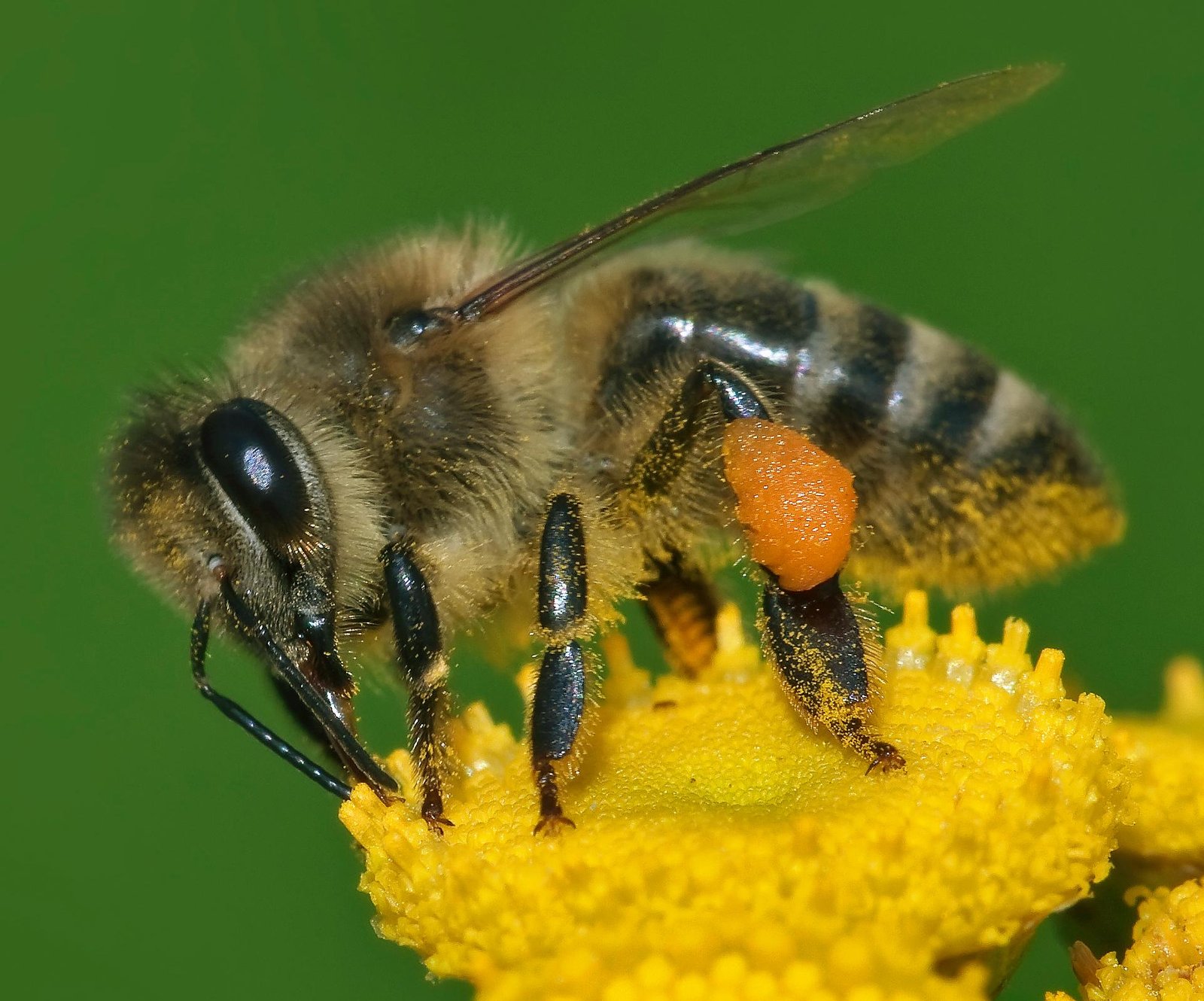
- Typically reddish-brown to yellow with black bands and orange-yellow rings.
- Possesses two pairs of wings and a slender body structure.
- The body is covered with fine hairs, aiding in pollen collection.
- It is a eusocial insect, living in highly organised colonies with:
- One queen (reproductive female)
- Worker bees (non-reproductive females)
- Drones (males)
- Colonies can consist of tens of thousands of individuals.
Q4. What is the recent scientific breakthrough related to Apis mellifera?
- Researchers have demonstrated that Apis mellifera can survive sub-zero temperatures.
- This challenges the earlier belief that these bees require warmer climates during winter.
- It enables stationary beekeeping in colder regions instead of migrating hives.
- The breakthrough has practical implications for cold-region apiculture.
Q5. Why is this discovery important for beekeeping and rural livelihoods?
- Reduces the need for costly seasonal migration of beehives.
- Lowers operational costs and logistical challenges for beekeepers.
- Enhances income stability for rural and hill-region farmers.
- Expands the potential for beekeeping in colder climates, boosting local economies.
Q6. What are the major uses and economic importance of Apis mellifera?
- Production of honey, a widely consumed natural product.
- Production of beeswax, propolis, and royal jelly used in various industries.
- Crucial role in crop pollination, increasing yield and quality.
- Supports sectors like agriculture, horticulture, and pharmaceuticals.
- Contributes to ecosystem services and biodiversity conservation.
Q7. What are the future implications and challenges related to Apis mellifera conservation and use?
- Opportunities:
- Expansion of beekeeping in cold regions.
- Improved pollination services for agriculture.
- Growth of apiculture-based rural livelihoods.
- Challenges:
- Threats from climate change, pesticides, and habitat loss.
- Risk of diseases and colony collapse disorder.
- Need for scientific management and conservation strategies.
Conclusion
Apis mellifera plays a crucial role in agriculture and ecosystems, and recent research expands its adaptability. Sustainable management will be key to maximising its economic and ecological benefits.