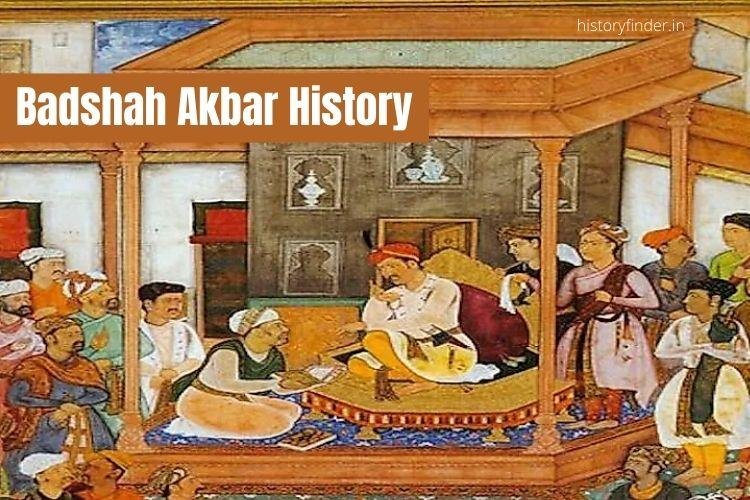
Akbar (1556–1605), the third ruler of the Mughal Dynasty, is widely regarded as one of the most influential leaders in Indian history. Ascending the throne at the age of 13, Akbar transformed a fledgling kingdom into a vast empire through military brilliance, centralized administrative reforms, and a unique policy of religious tolerance. His reign fostered a stable economy and a flourishing culture that integrated diverse traditions into a distinct Indo-Islamic style.
Life and Accession of Abu’l-Fath Jalal-ud-din Muhammad
- Birth and Lineage: Born on October 15, 1542, in Umarkot (now in Sindh, Pakistan), he was the son of Humayun and Hamida Banu Begum, and the grandson of Babur, the founder of the Mughal Empire.
- Accession: Following the sudden death of Humayun in 1556, the 13-year-old Akbar was enthroned by his guardian, Bairam Khan, who proclaimed him Shehanshah (King of Kings).
- Vision: Akbar’s governance was defined by conciliating conquered rulers and gaining support from non-Muslim subjects through progressive Rajput and Religious policies.
Military Conquests and Territorial Expansion
Akbar’s military campaigns were the bedrock of the Mughal Empire’s consolidation across the Indian subcontinent.
Conquests in Northern and Central India
- Second Battle of Panipat (1556): Akbar defeated Hemu to secure his throne and solidify Mughal control over Delhi and Agra.
- Jaunpur and Gwalior: In 1559–60, an expedition led by Khan Zaman annexed Afghan-ruled Jaunpur, while Ram Shah Tomar surrendered the Gwalior Fort.
- Malwa and Gondwana: Malwa was conquered in 1561 after defeating Baz Bahadur. In 1564, the Mughal forces conquered Garh Katanga (Gondwana), then ruled by Rani Durgawati.
Expansion into Western and Eastern India
- Rajputana: Akbar conducted the siege of Chittorgarh in 1567 and captured Ranthambore in 1568. Most Rajput kingdoms, except for Maharana Pratap of Mewar, eventually joined the Mughal nobility.
- Gujarat (1573): This conquest was critical for securing lucrative maritime trade routes.
- Bengal and Bihar (1576): Akbar defeated Daud Khan Karrani to bring Bengal under Mughal control and suppressed revolts sparked by Afghans and strict land reforms.
The North-West and Deccan Campaigns
- North-West Frontier: Akbar defeated the Roshanais in 1585, securing the Kabul-Hindustan route, and annexed Kashmir in 1586 after defeating Yusuf Khan.
- Deccan Policy (1590s): To subjugate Ahmednagar, Bijapur, and Golconda, Akbar besieged Ahmednagar in 1595. By 1600, he had captured Ahmednagar, Burhanpur, Asirgarh, and Berar.
Military Innovations and the Mansabdari System
- Professionalization: Akbar formed an army from various ethnic groups, including Mughals, Afghans, Rajputs, and Iranians.
- Weaponry: He introduced the matchlock musket (bandook) and significantly improved the use of cannons in warfare.
- The Mansabdari System: This administrative-military framework classified officers into 66 grades, ranging from a commander of ten (dehbhasi) to ten thousand (dahhazari). Each Mansabdar was responsible for maintaining a specific number of cavalrymen, ensuring a disciplined and well-organized force.
Administrative Structure and Governance
Akbar’s administration was divided into several hierarchical levels to ensure efficient revenue collection and law enforcement.
Central and Provincial Administration
- Central Level: The sovereign was at the center, assisted by key officials: the Wazir, Diwan (finance), Mir Bakshi (military), and Qazi-ul-Qujat (judiciary).
- Provincial Level: The empire was divided into 15 Subahs (provinces), each headed by a Subedar (or Sipahsalar).
- Local Level: Subahs were further divided into Sarkars (Districts), Parganas, and Villages. Key local officials included the Fauzdar (administrative head), Kotwal (law and order), and Patwari (village accountant).
Land Revenue and the Dahshala System
- Zabti System: Required land measurement and fixed cash revenue rates (dastur) for each crop.
- Dahshala System: Introduced by Finance Minister Todarmal, this system calculated revenue based on a ten-year average of crop yields. It used the Bamboo Jarid System (bamboo pieces with iron rings) for precise measurement.
- Land Classification: Land was divided into four categories based on cultivation frequency: Polaj (annual), Parauti (fallow 1–2 years), Chachar (fallow 3–4 years), and Banjar (uncultivated for 5+ years).
Religious Policy and Cultural Integration
- Sulh-i-Kul: This policy of “universal tolerance” aimed at the political and spiritual unification of the country.
- Abolition of Taxes: Akbar abolished the Jizya (poll tax on non-Muslims) in 1564 and ended the forced conversion of prisoners of war.
- Ibadat Khana: Established at Fatehpur Sikri, this “House of Worship” hosted debates between scholars of various faiths.
- Din-i-Ilahi (1582): A new syncretic faith introduced by Akbar that blended elements of Islam, Hinduism, and other religions.
- Rajput Policy: Through matrimonial alliances (e.g., with Harkha Bai) and granting high Mansabs to Rajput chiefs, Akbar ensured their loyalty and non-interference in their internal territories.
Art, Literature, and the Navratnas
Akbar’s reign saw an unprecedented growth in Indo-Islamic art and literature.
The Nine Jewels (Navratnas)
| Navratna | Role and Contributions |
| Abul Fazl | Chief advisor; author of the Akbarnama and Ain-i-Akbari. |
| Faizi | Persian poet laureate; translated the mathematical text Lilavati. |
| Tansen | Renowned musician; composed Dhrupads for gods and patrons; invented new ragas. |
| Birbal | Wise and witty advisor; poet and singer. |
| Raja Todar Mal | Finance Minister; architect of the revenue systems. |
| Raja Man Singh | Trusted military commander and Mansabdar. |
| Abdul Rahim | Poet; translated the Babarnama into Persian. |
| Mulla Do-Pyaza | Minister of Home Affairs; in charge of internal security. |
| Fakir Aziao-Din | Chief religious advisor. |
Intellectual and Artistic Contributions
- Translations: The Maktab Khana (Translation House) translated the Mahabharata into Persian (as the Razmnama) and the Yogavasistha (translated by Nizamuddin Panipati).
- Paintings: Mughal painting emerged as a distinct style blending Persian and Indian traditions, exemplified by the Hamzanama. Famous painters included Daswant and Basawan.
- Currency: Akbar issued standardized coins in gold (Muhar), silver (Rupiya), and copper (Dam/Falus).
Architecture: The Synthesis of Styles
Akbar’s buildings primarily utilized red sandstone and showcased a fusion of Islamic and indigenous Indian styles.
- Agra Fort: A UNESCO World Heritage site known as Qila-i-Akbari.
- Fatehpur Sikri: The imperial capital, which includes:
- Buland Darwaza: A massive gateway built to commemorate the conquest of Gujarat.
- Panch Mahal: A unique five-story building with diminishing levels.
- Diwani-Khas: Notable for its central column and connecting railed bridges.
- Tomb of Salim Chisti: Famous for its intricate white marble work.
- Nilkanth Temple (Mandu): Built in 1574 for his Hindu wife, Empress Mariam-uz-Zamani.
Death and Succession
Akbar passed away on October 25, 1605, due to dysentery in Agra. By the time of his death, he had brought two-thirds of the subcontinent under Mughal rule and was acclaimed as the “Lord of the Universe”. He was buried in Sikandra, northwest of Agra, and was succeeded by his son, Jahangir.
Frequently Asked Questions
What was the real name of Mughal Emperor Akbar?
His real name was Abu’l-Fath Jalal-ud-din Muhammad.
What was the significance of the Second Battle of Panipat?
It occurred in 1556, where Akbar defeated Hemu to secure the Mughal throne in Delhi and Agra.
How did the Dahshala system categorize land?
Land was divided based on cultivation frequency into Polaj (annual), Parauti (1–2 years fallow), Chachar (3–4 years fallow), and Banjar (5+ years uncultivated).
What was the Ibadat Khana used for?
It was a hall at Fatehpur Sikri where Akbar held religious discussions with scholars of various faiths.
Who were the famous painters in Akbar’s court?
Daswant and Basawan were among the most renowned artists in the royal atelier.
What is Razmnama?
It is the Persian translation of the Hindu epic, the Mahabharata, commissioned by Akbar.
Why was the Buland Darwaza built?
It was constructed at Fatehpur Sikri to commemorate Akbar’s military conquest of Gujarat.
What was the “Zarrin Qalam” title?
The title, meaning “Golden Pen,” was awarded by Akbar to the renowned calligrapher Muhammad Husayn al-Katib Kashmiri.
What was Akbar’s policy of Sulh-i-Kul?
It was a policy of “universal tolerance” aimed at harmonizing the diverse religious and spiritual beliefs within the empire.
Where is Akbar’s tomb located?
His tomb is located in Sikandra, northwest of Agra.