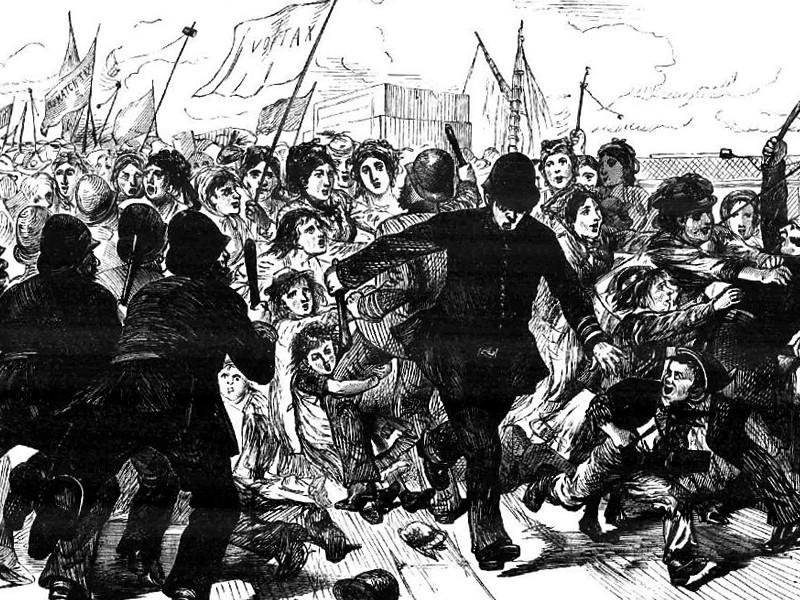
The Meerut Conspiracy Case stands as one of the most significant and protracted judicial battles in the history of the Indian national liberation struggle. Commencing in March 1929 and concluding in 1933, this controversial trial involved the arrest and prosecution of 31 prominent trade unionists and communist leaders. Charged with “conspiring to deprive the King-Emperor of his sovereignty over India,” the accused transformed a repressive colonial courtroom into a powerful stage for political propaganda. The case not only highlighted the British government’s fear of rising socialist ideologies but also galvanized the Indian working class against imperial rule.
Historical Background: The Global and Domestic Context
The late 1920s was a period of intense global and domestic turbulence, providing the backdrop for the British crackdown on labor leaders.
The Rise of Global Socialism
While the capitalist world was spiraling into the Great Depression of 1929, the newly formed Soviet Russia was showcasing rapid industrial and social progress. This contrast fueled the spread of communist ideology through the Communist International (Comintern), which aimed to support anti-colonial movements worldwide.
Militant Working-Class Struggles in India
- Resurgence of Strikes: After a brief lull following the Non-Cooperation Movement, strike activity in India peaked again in the late 1920s. Workers were becoming increasingly politically conscious.
- Formation of the WPP: The Workers’ and Peasants’ Party (WPP) emerged as a formidable force, organizing labor unions and demanding radical political freedom and economic rights.
- British Anxiety: Fearing a socialist revolution similar to the one in Russia, the British authorities decided to strike at the heart of the movement by arresting its intellectual and organizational core.
Key Features of the Meerut Trial
The trial was unique in its duration, its international composition, and the strategic response of the prisoners.
The Arrests and Charges
In March 1929, the British government arrested 31 leaders under Section 121-A of the Indian Penal Code (IPC). The primary charge was an attempt to establish a branch of the Comintern in India to overthrow British rule.
Prominent Figures Involved
The accused represented a mix of Indian revolutionaries and British supporters:
- Indian Leaders: Muzaffar Ahmed, S.A. Dange, Shaukat Usmani, P.C. Joshi, and R.S. Nimbkar.
- British Communists: Philip Spratt and Benjamin Bradley, whose involvement highlighted the international solidarity of the movement.
Strategic Courtroom Tactics
Unlike previous cases where the accused sought quick acquittals, the Meerut prisoners utilized the Sessions Court as a propaganda platform.
- Political Statements: On the advice of Muzaffar Ahmed, the leaders made lengthy political speeches to disseminate communist ideals to the public.
- The General Statement:S. Nimbkar introduced a collective statement on behalf of all the accused, outlining their vision for a socialist India.
The Choice of Location
The British strategically chose Meerut, a small garrison town in Uttar Pradesh, as the trial venue. This was done specifically to avoid a jury trial in a major city like Bombay or Calcutta, where a jury might have been sympathetic to the labor cause.
The Verdict and Judicial Outcome
The trial lasted for over three years, concluding in January 1933.
- Initial Sentence: The Sessions Court handed down severe punishments, including transportation for life and rigorous imprisonment.
- The Appeal: All 27 convicted individuals appealed to the Allahabad High Court.
- Final Decision (August 1933): The High Court significantly reduced the sentences, dismissing nine of the charges. Considering the time already served, all prisoners were released by November 1933.
Profound Impacts on the Independence Movement
The Meerut Conspiracy Case failed in its British objective of crushing communism; instead, it acted as a catalyst for political awakening.
Strengthening the Communist Party of India (CPI)
The trial provided the CPI with much-needed publicity. By articulating their goals in open court, the leaders gained widespread popular support and successfully established communism as a credible alternative to moderate nationalism.
Cross-Ideological Solidarity
The trial bridged gaps between different factions of the freedom struggle:
- Revolutionary Support: Bhagat Singh and his comrades in the Lahore Conspiracy Case expressed open solidarity with the Meerut detainees.
- Congress Condemnation: Even Mahatma Gandhi and other Congress leaders visited the prisoners in jail, condemning the British for their repressive tactics.
- The Self-Respect Movement: Periyar E.V. Ramaswamy in Madras voiced strong support for the labor leaders.
International Outcry
The case drew global attention. Socialist and communist organizations in Europe and the US highlighted the plight of the Indian workers, putting the British government on the defensive on the international stage.
Evaluation and Historical Legacy
The Meerut Conspiracy Case was a watershed moment that redefined the role of the working class in Indian politics.
- Rise of Labor Power: It demonstrated that the Indian working class was a potent, organized force capable of challenging colonial structures through strikes and civil disobedience.
- Criticism of the Judicial System: The prolonged, biased nature of the trial brought the fairness of the British Indian judicial system into question, further delegitimizing colonial rule.
- Long-term Influence: The strategies and organizational structures solidified during the trial influenced Indian left-wing politics for decades in the post-independence era.
FAQs
WHAT WAS THE MAIN CHARGE IN THE MEERUT CONSPIRACY CASE?
The accused were charged under Section 121-A of the IPC for conspiring to deprive the British King-Emperor of his sovereignty over India by attempting to establish a socialist state.
WHICH BRITISH COMMUNISTS WERE ARRESTED IN THIS CASE?
Two British communists, Philip Spratt and Benjamin Bradley, were among the 31 arrested, showcasing the international nature of the labor movement.
WHY DID THE BRITISH CONDUCT THE TRIAL IN MEERUT INSTEAD OF CALCUTTA OR BOMBAY?
The British chose Meerut to prevent a trial by jury, fearing that a jury in a major industrial hub would be too sympathetic toward the trade union leaders.
WHO IS CONSIDERED A PRIMARY LEADER OF THE DEFENSE DURING THE TRIAL?
Muzaffar Ahmed was a central figure who encouraged the accused to use the courtroom as a platform for political propaganda rather than just a legal defense.
HOW DID BHAGAT SINGH SHOW SUPPORT FOR THE MEERUT PRISONERS?
Bhagat Singh and his fellow revolutionaries, who were themselves undergoing the Lahore Conspiracy Case trial, sent messages of solidarity and organized hunger strikes in sympathy.
WHAT WAS THE OUTCOME OF THE APPEAL IN THE ALLAHABAD HIGH COURT?
The High Court significantly reduced the sentences of the convicts and ordered their release by November 1933, taking into account the time they had already spent in custody.
WHAT WAS THE ROLE OF THE COMINTERN IN THIS CASE?
The British alleged that the accused were secret agents of the Communist International (Comintern) based in Moscow, sent to incite a violent revolution in India.
WHICH POLITICAL PARTY WAS THE PRIMARY TARGET OF THE ARRESTS?
The British targeted the Workers’ and Peasants’ Party (WPP), which was the main vehicle for communist and labor organizing in India at the time.
DID MAHATMA GANDHI SUPPORT THE MEERUT CONSPIRACY PRISONERS?
Yes, while he did not agree with their ideology of violent revolution, Gandhi condemned the arrests as an act of colonial tyranny and visited the leaders in jail.
HOW DID THE TRIAL IMPACT THE INDIAN TRADE UNION MOVEMENT?
It led to a massive increase in political consciousness among workers and prompted organizations like the All India Trade Union Congress (AITUC) to become more militant in their demands.