Context
- The newly introduced hit and run law falls under the Bharatiya Nyaya Sanhita (BNS), which was enacted in December 2023 to replace the colonial-era Indian Penal Code (IPC).
- Prior to this, incidents of hit and run were addressed under both the Motor Vehicles Act, 1988, and the IPC, which imposed a maximum punishment of two years.
- However, under Section 106(2) of the BNS, 2023, any driver who causes an accident and absconds without informing the police is now liable to face up to 10 years of imprisonment along with a monetary fine.
- On the other hand, Section 106(1) provides a reduced penalty of up to 5 years imprisonment for drivers who voluntarily report the incident to the nearest police station.
- This legal framework is intended to deter drivers from fleeing accident scenes and to encourage prompt reporting, thereby enhancing accountability.
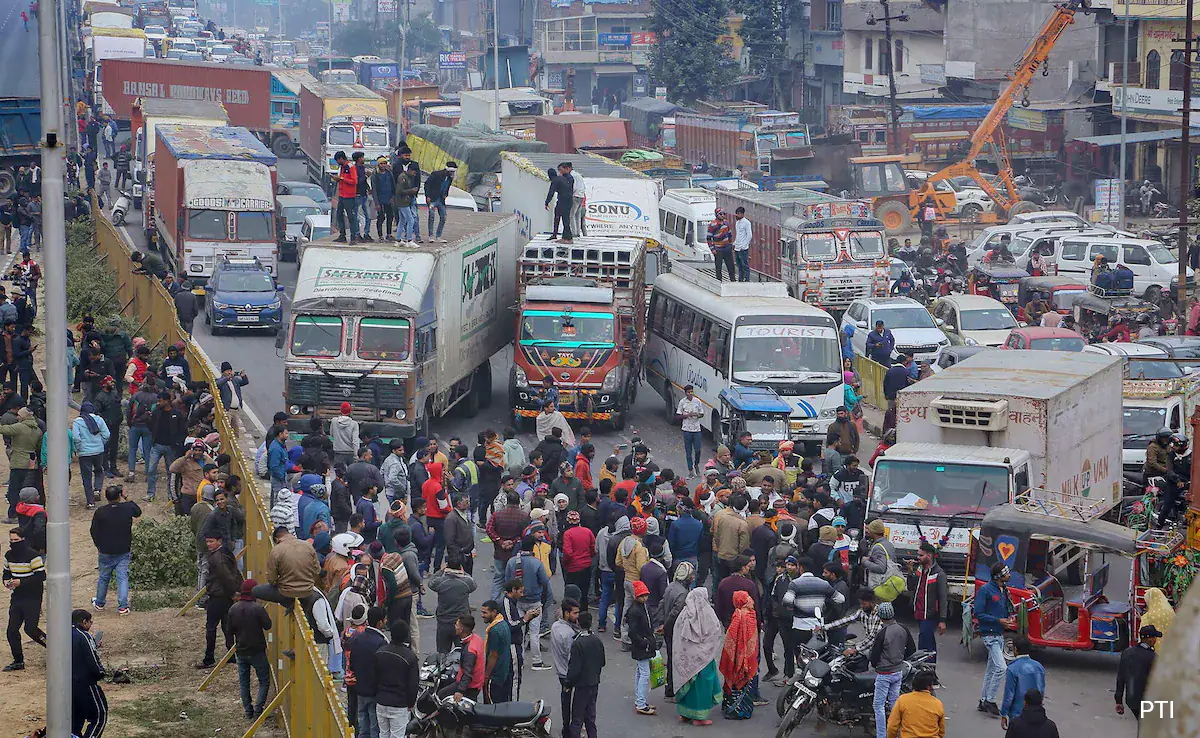
- Nevertheless, the law has sparked widespread protests among the driving community, leading the government to suspend its implementation temporarily until a consensus is achieved through broader stakeholder consultations.
What Is a Hit and Run Accident?
- A hit and run accident is defined as an incident where a motorist hits a person, vehicle, or property and then leaves the scene without stopping to provide help to the injured or reporting the incident to law enforcement.
- Such behavior not only violates legal obligations but also denies victims timely medical assistance.
What Are the Penalties Under the New Hit and Run Law?
- The penalties introduced under the new hit and run law are significantly more stringent:
- Section 106(2) of the Bharatiya Nyaya Sanhita, 2023: Imposes a punishment of up to 10 years of imprisonment and a fine on drivers who leave the scene without reporting the incident.
- Section 106(1) of the BNS, 2023: Prescribes a lesser punishment of up to 5 years in prison for drivers who report the accident to the police.
- These provisions are designed to incentivize responsible behavior among drivers.
Background of the Hit and Run Law
- India has a high incidence of road accidents, many of which are classified as hit and run.
- In such cases, victims are often denied immediate medical care due to the driver’s escape, resulting in avoidable fatalities.
- Prior to BNS 2023, such cases were governed by:
- Motor Vehicles Act, 1988: Required drivers to stop, offer help, and inform the police.
- IPC Section 279: Penalized rash driving with imprisonment up to 6 months or fine.
- IPC Section 304A: Penalized causing death by negligence with imprisonment up to 2 years or fine.
- However, due to rising accident rates and perceived leniency of existing laws, the government felt the need for a stronger legal deterrent.
Introduction of the Hit and Run New Law
- The Bharatiya Nyaya Sanhita, introduced in December 2023 with 358 sections, replaced the outdated IPC.
- Among its reforms was a more punitive framework for hit and run accidents, particularly targeting those who flee without aiding victims.
- States like Maharashtra, Punjab, West Bengal, and Chhattisgarh have seen massive protests by drivers against these changes.
Status of Hit and Run Law Before the New Legislation
- Under the Motor Vehicles Act, 1988
- Before the introduction of the Bharatiya Nyaya Sanhita (BNS), hit and run cases were primarily dealt with under the Motor Vehicles Act, 1988, which focused on the procedural and civil liabilities of drivers involved in road accidents.
- The Act made it legally binding for a driver, involved in any accident that resulted in injury, death, or damage to property, to:
- Immediately stop the vehicle at the site of the accident.
- Extend necessary assistance to the injured, which includes taking them to the nearest hospital or providing first aid.
- Report the incident promptly to the nearest police station or a designated official.
- Failure to fulfill these obligations could lead to penal consequences such as suspension of the driving license, monetary fines, and in some instances, imprisonment.
- However, the law lacked strong criminal deterrents and was considered more regulatory than punitive.
- This often allowed offenders, especially in hit and run cases, to escape with minor penalties or evade the legal process entirely.
- Moreover, the compensation structure for victims under the Act was often inadequate and delayed, making justice elusive for many families affected by road crashes.
- Under the Indian Penal Code (IPC)
- Prior to the enactment of the Bharatiya Nyaya Sanhita, 2023, criminal liability in hit and run cases was also addressed under specific provisions of the Indian Penal Code (IPC).
- Section 279 – Rash Driving or Riding on a Public Way
- This section penalized anyone who drove or rode a vehicle in a manner that was rash or negligent and likely to endanger human life or cause injury to others.
- The punishment prescribed was imprisonment up to six months, or a fine, or both.
- However, this provision did not consider the severity of the accident’s outcome (such as death or permanent disability), making it inadequate to deal with grave consequences of hit and run incidents.
- Section 304A – Causing Death by Negligence:
- This section applied when a person caused the death of another individual due to a rash or negligent act not amounting to culpable homicide.
- In the context of road accidents, it was invoked when a driver caused death but did not intend to kill.
- The punishment under this section was imprisonment up to two years, or a fine, or both.
- Despite addressing fatalities, this section was widely criticized for being too lenient, especially when the accused fled the scene without providing help or reporting the incident.
- In many cases, offenders would get bail quickly or settle the matter monetarily without facing the full extent of justice.
- Limitations of the Previous Legal Framework:
- Inadequate deterrent: Short prison terms and nominal fines failed to discourage irresponsible or negligent driving behavior.
- Lack of differentiation: The law did not clearly distinguish between accidents with minor injuries and those resulting in death.
- Victim disempowerment: The process for claiming compensation was often long-drawn, poorly enforced, and disheartening for victims’ families.
- No moral accountability: The law focused more on penalizing the act rather than encouraging the moral responsibility of helping victims.
- Absence of driver responsibility: There were no strong provisions that compelled drivers to stay at the scene or report the incident to law enforcement.
- These limitations created a need for a more stringent and morally grounded legal structure—leading to the framing of the new hit and run law under the Bharatiya Nyaya Sanhita, 2023.
Why Was There a Need for a New Hit and Run Law?
The introduction of the new hit and run law under the Bharatiya Nyaya Sanhita was driven by a combination of statistical realities, rising public concern, and the inadequacy of existing laws to deliver justice in road accident cases.
- Alarming Increase in Road Accidents:
- India has witnessed a steady and worrying rise in road accidents, with hit and run cases forming a large and deadly subset.
- The National Crime Records Bureau (NCRB) data for 2022 reveals:
- A staggering 47,806 cases of hit and run incidents were reported across the country.
- These accidents resulted in the tragic loss of 50,815 lives in a single year.
- India records one death every 3.5 minutes, translating to nearly 19 fatalities per hour due to road accidents.
- The year-on-year growth rate of road accidents stands at 12%, while deaths due to such accidents are increasing at 9.4% annually.
- These grim statistics underscore the pressing need for stronger legal intervention to deter reckless and negligent driving.
- Disproportionate Fatalities on Highways
- Although national and state highways comprise just 5% of India’s total road network, they contribute to more than 50% of all road accident-related deaths.
- This is largely due to:
- High-speed traffic on poorly maintained roads.
- Inadequate signages and road engineering.
- Long driving hours without rest breaks for commercial drivers.
- These conditions not only endanger drivers but also heighten the risk to pedestrians and smaller vehicles.
- India’s Global Share in Road Fatalities
- India’s road safety crisis is not only a domestic concern but also a global anomaly:
- India accounts for just 1% of the global vehicle population.
- Yet, the country contributes to nearly 10% of global road accident deaths, making it one of the worst performers globally in terms of road safety.
- This disproportionate burden highlights systemic gaps in enforcement, legal frameworks, and public awareness.
- India’s road safety crisis is not only a domestic concern but also a global anomaly:
- Economic Impact of Road Accidents
- The financial toll of road accidents on the national economy is massive:
- Road accidents are estimated to cause an annual loss of 5–7% of India’s GDP.
- This includes costs related to emergency care, hospitalisation, insurance claims, litigation, and loss of livelihood for victims’ families.
- A more stringent legal structure was necessary not only to protect human lives but also to reduce the socio-economic burden on the nation.
- The financial toll of road accidents on the national economy is massive:
- Need to Increase Driver Accountability
- Under the previous IPC provisions, a driver causing death due to rash or negligent driving could face a maximum punishment of only two years.
- This leniency did not match the gravity of the consequences, especially in cases where the driver willfully escaped the scene and left victims unattended.
- The new law was introduced to:
- Impose stricter consequences on such negligent and unethical behavior.
- Encourage responsible driving and ethical post-accident conduct.
- Ensure that drivers do not escape accountability by merely fleeing or paying compensation.
- Empowering Victims and Their Families
- One of the core objectives of the new hit and run law is to empower road accident victims and their families by:
- Deterring offenders from escaping without helping.
- Creating a legal basis for more timely compensation and emergency medical support.
- One of the core objectives of the new hit and run law is to empower road accident victims and their families by:
- Recognizing the moral and ethical obligation of the driver towards the injured or deceased.
- The law shifts the focus from mere punishment to restorative justice by ensuring timely intervention and better legal recourse for the victims.
Significance of the New Hit and Run Law
The introduction of the new hit and run law under the Bharatiya Nyaya Sanhita (BNS), 2023, marks a significant shift in India’s legal approach to road safety and driver accountability. It has several important implications for both public safety and legal deterrence.
- Differentiated Punishment Based on Driver Conduct
- One of the most notable features of the new law is that it establishes graded punishment depending on the driver’s conduct following an accident:
- Section 106(1) provides for up to 5 years imprisonment for those who report the incident to the police, even if their driving caused death due to negligence.
- Section 106(2), in contrast, prescribes a harsher penalty of up to 10 years imprisonment and a fine for drivers who flee the scene without reporting.
- This differentiation serves a dual purpose—it imposes accountability while also incentivizing responsible behavior.
- It recognizes that not all accidents occur due to malicious intent and that the driver’s reaction in the aftermath of an accident is critical.
- One of the most notable features of the new law is that it establishes graded punishment depending on the driver’s conduct following an accident:
- Promotes Ethical and Responsible Post-Accident Conduct
- The law seeks to instill a sense of ethical responsibility among drivers by compelling them to act in the interest of the victim’s life and well-being.
- Many past incidents have shown that delay in medical treatment due to drivers fleeing the scene has led to preventable fatalities.
- By offering reduced punishment for self-reporting, the law nudges drivers to take prompt action rather than act in self-interest.
- Enhances Moral Accountability
- Besides legal compliance, the law also attempts to enforce moral accountability.
- It treats fleeing the scene as not just a procedural lapse but a breach of humanitarian duty.
- The legal provision emphasizes that causing harm and then failing to help is more blameworthy than the act of causing the harm itself through negligence.
- Acts as a Strong Deterrent Against Negligence
- Previously, the penalty under the Indian Penal Code (IPC) was limited to a mere two years of imprisonment, which did little to deter reckless and irresponsible behavior on the roads.
- The stricter punishment now introduced—up to 10 years—acts as a strong deterrent against rash and negligent driving, especially when drivers contemplate fleeing to avoid legal consequences.
- Aligns with Victim-Centric Justice
- The law focuses on the rights and needs of the victims rather than the convenience of the offenders.
- It emphasizes that victims of road crashes have a right to timely medical assistance, justice, and fair compensation.
- By compelling drivers to remain on the scene and report incidents, it helps in ensuring that emergency services reach the victims on time and that offenders do not escape the law.
- Addresses the Gap in Previous Legal Frameworks
- The earlier laws failed to clearly distinguish between the act of causing an accident and the subsequent decision to escape without reporting.
- By creating distinct categories of punishment, the new law addresses this legal loophole.
- It introduces much-needed clarity and strengthens the legal infrastructure governing road safety in India.
Concerns Regarding the New Hit and Run Law
While the intentions behind the new hit and run law under BNS are commendable, it has faced substantial criticism from various stakeholders, especially commercial drivers and transport associations. These concerns highlight the practical challenges and constitutional ambiguities in implementing such a stringent law.
- Excessive and Disproportionate Punishment
- A key concern is the severity of the 10-year imprisonment outlined in Section 106(2).
- Drivers argue that this punishment is too harsh, especially in cases where the accident was unintentional or circumstances were beyond their control.
- Unlike criminal acts committed with intent, most road accidents occur due to human error or systemic issues like poor road conditions or lack of signage.
- Presumption of Guilt and Unfair Stereotyping
- Many commercial vehicle drivers feel that the law operates under an implicit presumption of guilt, wherein they are assumed to be at fault in any accident involving their vehicle.
- There is a widespread belief that heavy vehicle drivers are often blamed, regardless of the actual cause of the accident.
- This negative perception, coupled with a harsh legal framework, may lead to unjust outcomes.
- Conflict with Article 20(3) of the Indian Constitution
- The new law has also been criticized for potentially violating Article 20(3), which protects individuals from self-incrimination.
- Critics argue that compelling an accused to report an accident they caused could be interpreted as forcing them to act as a witness against themselves—something that the Constitution explicitly forbids.
- This raises serious legal and constitutional questions about how the law would be enforced without infringing fundamental rights.
- Scope for Misuse and Harassment
- There is apprehension that law enforcement authorities or accident victims may misuse the new law to coerce compensation or harass innocent drivers.
- Given the absence of protective checks and balances, there is potential for fabricated charges or exaggerated claims that exploit the threat of a long prison term.
- No Protection Against Mob Violence
- In many hit and run cases, the driver flees the scene not to escape legal liability but to protect themselves from mob violence.
- Incidents of lynching or physical assault by bystanders following an accident are not uncommon in India.
- However, the new law fails to address this critical safety concern.
- It punishes the act of fleeing but does not provide any provisions to ensure the physical safety of drivers who choose to stay at the scene.
- Contradiction with the Motor Vehicles (Amendment) Act, 2019
- Another point of contention is the inconsistency between the new law and the Motor Vehicles (Amendment) Act, 2019.
- As per Section 161 of the 2019 Act, the government is required to provide compensation of ₹2 lakh in the event of death and ₹50,000 for grievous injury in hit and run cases.
- Critics argue that this compensation structure is incompatible with the much harsher criminal penalties now introduced, creating confusion in legal application and judicial interpretation.
- Ignorance of Difficult Work Conditions of Drivers
- Transport workers point out that the law fails to consider the harsh and often dangerous conditions under which commercial drivers operate.
- Long driving hours, poor road infrastructure, inadequate lighting, unpredictable weather, and fatigue contribute significantly to accidents.
- Holding the driver singularly responsible in such situations, without considering these external factors, is seen as unjust and overly punitive.
- Discriminatory Clause for Medical Professionals
- Perhaps the most controversial aspect is the exception carved out for doctors.
- Under Section 106(2), medical practitioners who cause accidents due to rash or negligent driving are liable for only up to 2 years of imprisonment and a fine, unlike other drivers who face a 10-year sentence.
- This clause is viewed as violating the constitutional principle of equality before law, and has led to widespread anger among commercial drivers and unions.
Suggestions for Improvement in the New Hit and Run Law
Given the number of valid concerns raised by stakeholders, there is a clear need for revisiting and refining the new law to ensure it is fair, effective, and constitutionally sound. Some key suggestions include:
- Introduce Legal Nuance Between Rash and Negligent Driving
- The current legal language does not clearly differentiate between degrees of culpability.
- It is essential to define terms like “rash” and “negligent” driving more precisely.
- Rash driving, which involves willful disregard for safety, should be treated more severely than negligent driving, which may be unintentional or circumstantial.
- Clarity in Reporting Procedure and Evidentiary Requirements
- The law should include a detailed and transparent procedure for drivers who wish to report accidents.
- This must include:
- Time frame within which the report must be made
- Acceptable modes of reporting (in-person, helpline, mobile apps)
- Types of evidence a driver can submit to prove that they did not flee with mala fide intent
- Such clarity would prevent unnecessary criminalization of drivers who intend to comply with the law.
- Differentiate Penalties Based on Outcomes
- Not all accidents have the same consequences.
- The law should distinguish between:
- Fatal accidents
- Grievous injuries
- Minor injuries
- Each outcome should have graded punishments and compensations, ensuring proportionality and fairness.
- Introduce Legal Protection Against Mob Violence
- The government must acknowledge and address the genuine fear of mob violence that compels many drivers to leave the scene.
- The law should incorporate:
- Emergency helplines and rapid response units
- Legal immunity in case of self-defense
- State responsibility for protecting individuals from mob retaliation
- This will encourage more drivers to stay at the scene and assist victims without fearing for their own safety.
- Focus on Infrastructure and Preventive Measures
- Rather than focusing solely on punishment, the government must invest in:
- Better road design
- Adequate signage
- Rather than focusing solely on punishment, the government must invest in:
- Lighting and surveillance cameras
- Rest stops for long-distance drivers
- This preventive approach would tackle the root causes of road accidents.
- Separate Provisions for Minor Cases
- Not all accidents warrant criminal prosecution under serious charges.
- The law should contain less severe provisions for minor accidents, especially where drivers have shown intent to help or report the incident promptly.
Conclusion
The new hit and run law under the Bharatiya Nyaya Sanhita holds the promise of deterring reckless driving and increasing driver accountability through its stricter punishments. It can potentially save countless lives by compelling drivers to act responsibly. However, the law’s implementation has sparked genuine concerns among the driving community, who argue it is harsh, impractical, and discriminatory. In response, the government has assured that consultations with all stakeholders, especially drivers, will precede its enforcement. This step toward participatory legislation is essential for crafting a law that is both just and effective.
FAQs
- What is the new hit and run law introduced under the Bharatiya Nyaya Sanhita (BNS), 2023?
The new law under Section 106 of the BNS punishes drivers who flee accident scenes without informing authorities. It allows up to 10 years’ imprisonment and a fine for non-reporting, and 5 years for self-reporting.
- How is this law different from the previous laws under IPC and Motor Vehicles Act?
Earlier laws under IPC and MV Act imposed lighter penalties (maximum 2 years). The BNS introduces stricter, graded punishments and focuses more on driver accountability and ethical conduct.
- What happens if a driver voluntarily reports the accident to the police?
Under Section 106(1), such drivers may face up to 5 years’ imprisonment, showing the law rewards responsible behavior post-accident.
- Why was there a need for a new hit and run law?
India has a high number of hit and run deaths. Previous laws were too lenient and lacked moral accountability. The new law aims to reduce fatalities and increase driver responsibility.
- Why are commercial drivers protesting this law?
They argue that the 10-year penalty is excessive, doesn’t consider poor road conditions or human error, and may result in unfair blame and harassment.
- Does the law account for drivers fleeing out of fear of mob violence?
No, the current version does not offer protection to drivers who flee to avoid physical harm, a concern raised by many stakeholders.
- Is there a contradiction between this law and existing compensation rules under the MV Amendment Act, 2019?
Yes, critics point out a mismatch between harsh criminal penalties and fixed compensation limits, leading to legal ambiguity.
- How does the law promote ethical and moral driver conduct?
By imposing reduced penalties for self-reporting, the law pushes drivers to help victims and stay accountable, rather than escape responsibility.
- Are there concerns regarding constitutional rights under this law?
Yes, some believe it may violate Article 20(3) by forcing self-incrimination when drivers are legally required to report accidents they caused.
- Has the law been implemented yet?
No. Due to nationwide protests and concerns, its implementation has been put on hold until further consultations with stakeholders are completed.