| Important Questions for UPSC Prelims / Mains / Interview
1. How has the India-Brazil bilateral relationship evolved since independence, and what are its core pillars today? 2. What is the significance of trade and economic engagement between India and Brazil in the broader Global South context? 3. How does defence and strategic cooperation strengthen the India-Brazil partnership? 4. Why is the rare earth and critical minerals agreement strategically important for India? 5. How can steel and mining cooperation enhance India’s industrial and infrastructure ambitions? 6. What is the significance of the India-Brazil digital partnership in emerging technologies? 7. How does expanding trade and visa facilitation contribute to long-term bilateral economic integration? 8. What broader geopolitical and strategic implications does the India-Brazil engagement carry in an uncertain global trade environment? |
Context
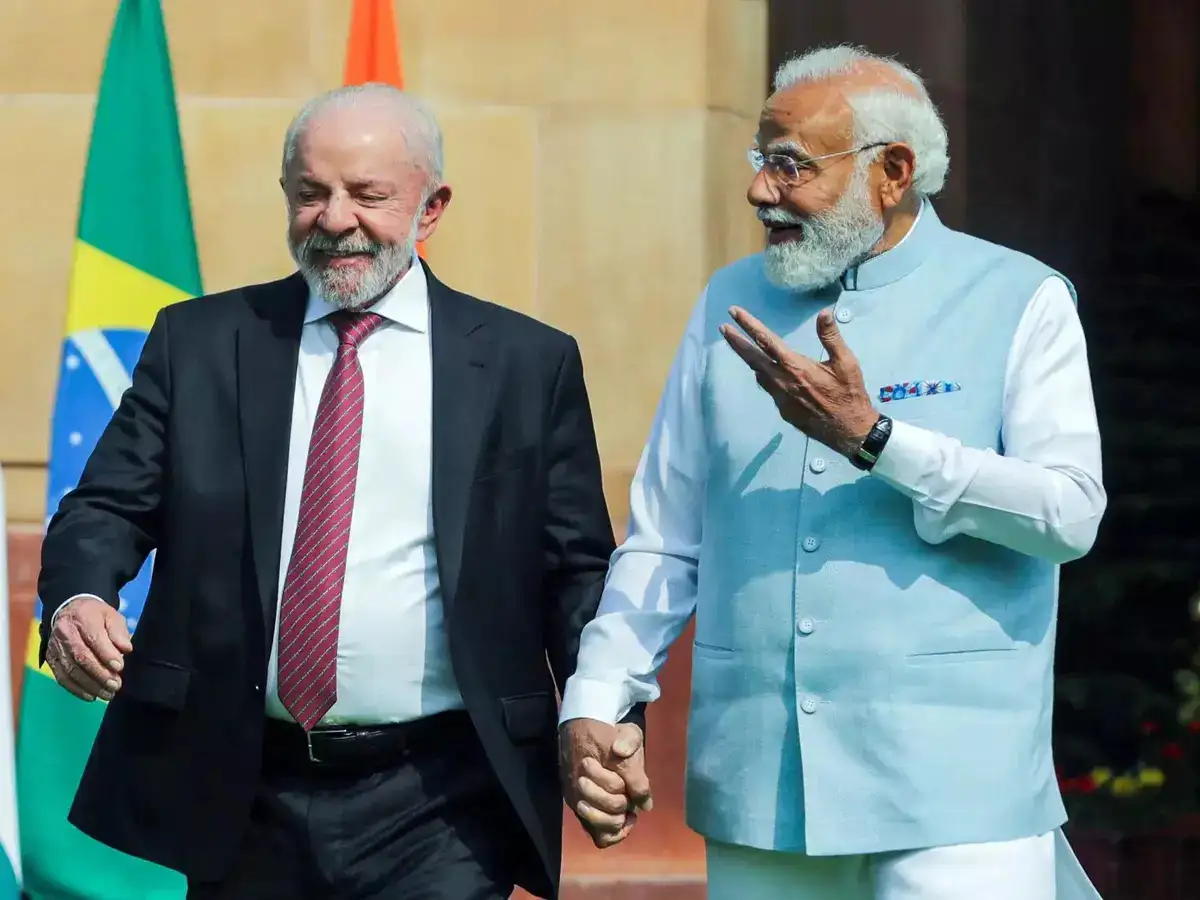
During President Luiz Inácio Lula da Silva’s visit to New Delhi, India and Brazil signed multiple agreements covering rare earth minerals, steel mining, defence, and digital cooperation. The visit reinforced a long-standing strategic partnership rooted in South-South cooperation and multilateral coordination. The rare earth agreement, in particular, holds strategic importance as countries seek to diversify supply chains away from concentrated global processing hubs.
Q1. How has the India-Brazil bilateral relationship evolved since independence, and what are its core pillars today?
- Diplomatic relations between India and Brazil were established in 1948, shortly after India’s independence.
- The relationship has evolved into a strategic partnership grounded in shared democratic values and development priorities.
- Both countries are major voices of the Global South and advocate multipolarity in global governance.
- Institutional cooperation is reflected in joint membership in multilateral forums such as:
- BRICS
- G20
- IBSA (India-Brazil-South Africa Dialogue Forum)
- BASIC (climate grouping)
- Both nations support reform of global institutions, particularly expansion of the United Nations Security Council.
- The partnership spans across sectors including trade, defence, energy, climate cooperation, and digital innovation.
- India and Brazil coordinate positions in WTO negotiations and climate change
- The relationship reflects a broader strategy of strengthening South-South cooperation beyond traditional Western-led alliances.
Q2. What is the significance of trade and economic engagement between India and Brazil in the broader Global South context?
- Brazil is India’s largest trading partner in Latin America, indicating the depth of economic engagement.
- Bilateral trade has ranged between approximately $12-15 billion in recent years.
- India exports:
- Organic chemicals
- Pharmaceuticals
- Engineering goods
- Textile and steel products
- India imports:
- Crude oil
- Soya oil
- Gold
- Iron ore and agricultural commodities
- Trade diversification reduces overdependence on traditional markets in North America and Europe.
- The India-MERCOSUR Preferential Trade Agreement provides a foundation for expanded market access.
- Expanding trade strengthens South-South economic corridors.
- Economic engagement contributes to greater resilience amid global trade uncertainties.
Q3. How does defence and strategic cooperation strengthen the India-Brazil partnership?
- India and Brazil cooperate in defence technology sharing and military production.
- Both nations support peaceful dispute resolution and adherence to international law.
- As maritime nations, they share interests in securing sea lanes and ensuring maritime stability.
- Defence collaboration may include:
- Joint exercises
- Exchange of defence expertise
- Indigenous technology development
- Coordination in multilateral forums enhances diplomatic leverage.
- Shared democratic frameworks facilitate institutional trust.
- Strategic dialogue strengthens South Atlantic and Indo-Pacific linkages.
- Defence cooperation reinforces the broader strategic partnership beyond trade.
Q4. Why is the rare earth and critical minerals agreement strategically important for India?
- Rare earth elements are essential for advanced technologies including electronics, renewable energy systems, and defence applications.
- Global processing supply chains are heavily concentrated in a few countries, creating vulnerability.
- Diversifying mineral sourcing enhances supply chain resilience.
- Brazil possesses substantial rare earth reserves, of which a significant portion remains underexplored.
- Access to Brazilian minerals can support:
- Electric vehicle manufacturing
- Clean energy technology production
- Semiconductor development
- Defence systems manufacturing
- The agreement reduces overdependence on single-country supply chains.
- It strengthens India’s strategy of resource security.
- Critical mineral cooperation enhances long-term industrial competitiveness.
Q5. How can steel and mining cooperation enhance India’s industrial and infrastructure ambitions?
- Brazil is one of the world’s largest producers of iron ore.
- India’s expanding infrastructure and manufacturing sectors require steady mineral inputs.
- Collaboration in mining strengthens supply chain reliability.
- Steel sector cooperation may include:
- Technology transfer
- Sustainable mining practices
- Joint ventures in processing
- Reliable mineral access supports infrastructure expansion such as railways and highways.
- Industrial growth benefits from diversified raw material sources.
- Cooperation may also improve environmental compliance in mining operations.
- Mining collaboration strengthens economic interdependence.
Q6. What is the significance of the India-Brazil digital partnership in emerging technologies?
- India and Brazil signed a joint declaration on digital cooperation and emerging technologies.
- Areas of collaboration include:
- Artificial Intelligence
- Semiconductors
- Blockchain
- Supercomputing
- Digital cooperation reflects India’s emergence as a global technology hub.
- Brazil seeks to accelerate digital transformation in the public and private sectors.
- Collaboration can promote knowledge exchange and joint research initiatives.
- Digital partnerships strengthen technological sovereignty.
- Emerging technologies contribute to economic competitiveness.
- The digital dimension adds future-oriented depth to the bilateral partnership.
Q7. How does expanding trade and visa facilitation contribute to long-term bilateral economic integration?
- Both countries have committed to significantly increasing bilateral trade
- A proposed target of $30 billion by 2030 reflects ambition for deeper integration.
- Expanding India-MERCOSUR PTA could unlock new sectors for trade.
- Brazil’s extension of business visas for Indian passport holders enhances ease of doing business.
- Long-term visa facilitation encourages sustained commercial presence.
- Trade expansion diversifies export markets for both economies.
- Enhanced people-to-people contact strengthens economic partnerships.
- Greater integration builds resilience against global supply disruptions.
Q8. What broader geopolitical and strategic implications does the India-Brazil engagement carry in an uncertain global trade environment?
- The agreements were signed amid global trade volatility linked to shifting tariff policies.
- India and Brazil share concerns about protectionism and trade unpredictability.
- Strengthening bilateral cooperation enhances economic autonomy.
- Rare earth diversification aligns with broader global efforts to reduce supply chain concentration.
- Coordinated positions in BRICS and G20 amplify Global South voices.
- Strategic mineral cooperation reflects long-term geopolitical planning.
- The partnership reinforces multipolarity in international relations.
- Overall, the engagement signals a maturing South-South alliance capable of shaping global economic governance.
Conclusion
The India-Brazil agreements mark a significant deepening of a long-standing strategic partnership rooted in democratic values and Global South solidarity. The rare earth cooperation pact strengthens supply chain resilience and industrial security, while expanded trade, digital collaboration, and mining partnerships broaden economic integration. In an era of global uncertainty and shifting power balances, India and Brazil’s engagement underscores the growing importance of South-South cooperation in shaping a multipolar and resilient world order.