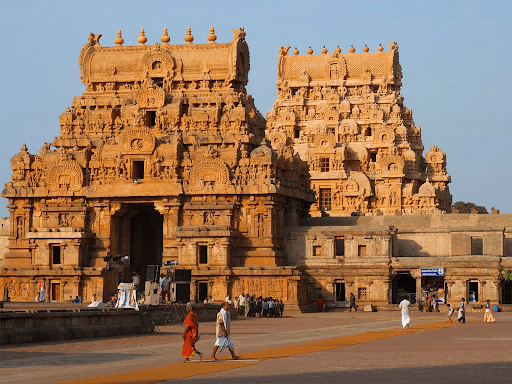
The Chola Dynasty was one of the longest-ruling and most influential Tamil dynasties in Southern India. Renowned for its sophisticated administration, breathtaking architecture, and unrivaled maritime prowess, the Chola Empire transformed the Bay of Bengal into a “Chola Lake.” Emerging from the fertile Kaveri River valley, the dynasty reached its imperial zenith between the 9th and 13th centuries CE, leaving a legacy that shaped the cultural and political landscape of South and Southeast Asia.
1. The Origin and Early Ancestry of the Cholas
The Chola lineage is steeped in ancient Tamil tradition and historical inscriptions.
1 Early References: The earliest historical mentions appear in the Ashokan Edicts (3rd century BCE), where they are listed as friendly southern neighbors of the Mauryan Empire.
2 Lineage Names: Medieval Cholas claimed descent from an ancient solar lineage, using names like Killi, Valavan, Sembiyan, and Cenni. The title “Valavan” signifies their rule over prosperous, fertile lands.
3 The Three Crowned Kings: Along with the Cheras and Pandyas, the Cholas were one of the Muventar (Three Crowned Kings) of ancient Tamilakam.
2. Historical Phases of the Chola Dynasty
The Chola timeline is divided into four distinct phases, reflecting their journey from Sangam-era chieftains to imperial masters.
Early Cholas (Sangam Period: c. 600 BCE–300 CE)
1 Prominent Kings: Includes legendary figures like Karikala Chola, who built the Kallanai dam.
2 Capitals: The early power centers were Urayur (inland) and Kaveripattinam (port).
3 Conquests: The Buddhist text Mahāvaṃsa records that Prince Ellalan conquered Sri Lanka in 235 BCE.
The Interregnum (c. 300–848 CE)
1 Decline: The Kalabhra invasion displaced the dynasty, forcing them into temporary obscurity.
2 Migration: Cholas survived as minor chieftains under the Pallavas in the Rayalaseema region, often referred to as the Telugu-Chodas.
Imperial Cholas (848–1070 CE)
1 Founder: Vijayalaya Chola revived the dynasty by capturing Thanjavur in 848 CE.
2 Expansion: Under Rajaraja I and Rajendra I, the empire expanded to include Sri Lanka, the Maldives, and territories as far as the Ganges and Southeast Asia.
Later Cholas (1070–1279 CE)
1 Lineage Union: Established by Kulothunga Chola I, who united the Eastern Chalukya and Chola dynasties.
2 Dissolution: The dynasty gradually weakened due to the resurgence of the Pandyas and Hoysalas, finally dissolving by 1279 CE.
3. Administration and Local Governance
The Chola administration was a unique blend of centralized monarchy and highly autonomous local self-governance.
Central and Territorial Structure
1 Monarchy: The King was the supreme authority, often adopting divine titles like “Deva.” He was assisted by the Council of Ministers.
2 Hierarchy: Officials were divided into Perundanam (higher) and Sirudanam (lower) cadres.
3 Territorial Units: The empire was divided into Mandalam (Provinces), further subdivided into Valanadu, Nadu (Counties), and Kurram (Groups of villages).
Village Self-Governance (The Sabha)
1 Uthiramerur Inscription: Provides a detailed blueprint of village administration.
2 Kudavolai System: A unique democratic “lot” system used to elect members of the village assembly (Sabha).
3 Variyams (Committees): The Sabha operated through specialized committees for irrigation (Tank Committee), justice, and revenue.
4. The Chola Economy: Trade and Taxation
The prosperity of the empire was built on a foundation of advanced agriculture and transoceanic commerce.
1 Agricultural Heartland: The Kaveri delta supported intense paddy cultivation.
2 Irrigation: The Cholas built complex networks of tanks and canals. The Eriayam tax was dedicated solely to tank maintenance.
3 Revenue System: The Puravuvarithinaikkalam (Revenue Department) meticulously managed land surveys and taxes like Irai (land tax) and Kudimai (tenant tax).
4 Merchant Guilds: Powerful guilds like Anjuvannam and Manigramam managed international trade. Chola ports like Nagapattinam traded with China, Arabia, and Rome.
5. Maritime Supremacy and Military Might
The Chola military was a formidable force characterized by a permanent standing army and an invincible navy.
1 Land Forces: Comprised of infantry (Kaikkolaperumpadai), cavalry, and war elephants. The Velaikkarar were the king’s elite personal guards.
2 The Chola Navy: Under Rajaraja I and Rajendra I, the navy became the most powerful in Asia.
3 The 1025 CE Expedition: Rajendra I launched a massive naval raid on the Srivijaya Empire (Indonesia/Malaysia), capturing 14 strategic ports to secure trade routes to China.
6. Art, Culture, and Religious Contributions
The Chola period is often called the “Golden Age of Tamil Culture.”
Temple Architecture
1 Dravidian Excellence: Characterized by high Vimanas and ornate Gopurams.
2 Brihadeeswarar Temple: Built by Rajaraja I in Thanjavur, it is a UNESCO World Heritage site and a masterpiece of stone engineering.
Bronze Sculptures
1 Lost Wax Process: Chola bronze casters created world-famous icons, most notably the Nataraja (Dancing Shiva), representing the cosmic cycle of creation and destruction.
Literature
1 Tamil Classics: Works like Kamban’s Ramavataram, the Periapuranam, and the grammar text Nannul were produced.
2 Foreign Influence: The Malay chronicle Sejarah Melayu claims the royalty of Malacca descended from Chola kings.
7. Major Chola Rulers and Their Legacies
| Ruler | Reign | Significant Contribution |
| Vijayalaya | 848–871 CE | Founded the Medieval Chola line; captured Thanjavur. |
| Rajaraja I | 985–1014 CE | Built Brihadeeswarar Temple; conquered Northern Sri Lanka. |
| Rajendra I | 1014–1044 CE | Reached the Ganges; Srivijaya naval raid; built Gangaikonda Cholapuram. |
| Kulothunga I | 1070–1122 CE | Abolished tolls (Sungam Thavirtha Cholan); sent trade missions to China. |
| Kulothunga III | 1178–1218 CE | The last great warrior king; built the Kampaheswarar Temple. |
Frequently Asked Questions (FAQs)
WHO FOUNDED THE MEDIEVAL CHOLA DYNASTY?
Vijayalaya Chola founded the Medieval Chola Empire in 848 CE by capturing Thanjavur from the Muttaraiyars.
WHICH RULER BUILT THE BRIHADEESWARAR TEMPLE?
Rajaraja Chola I commissioned the construction of the Brihadeeswarar Temple in Thanjavur, which was completed in 1010 CE.
WHAT WAS THE CAPITAL OF THE CHOLA EMPIRE?
The primary capitals were Thanjavur and later Gangaikonda Cholapuram, though early capitals included Urayur and Kaveripattinam.
WHAT WAS THE MAIN SOURCE OF THE CHOLA ECONOMY?
The economy was primarily driven by agriculture (paddy cultivation in the Kaveri delta) and extensive maritime trade with Southeast Asia and China.
WHEN DID THE CHOLA EMPIRE DECLINE?
The empire began to weaken in the 13th century and was finally absorbed by the Pandya Kingdom by 1279 CE.
WHAT WAS THE KUDAVOLAI SYSTEM?
It was a unique method of village administration where representatives for the village assembly were chosen by drawing names (lots) from a pot (Kudam).
WHO WAS THE CHOLA KING KNOWN AS “GANGAIKONDA”?
Rajendra Chola I earned this title (The Chola who conquered the Ganges) after his successful military expedition to North India.
WHICH NAVAL EXPEDITION IS RAJENDRA I MOST FAMOUS FOR?
He is most famous for the 1025 CE naval raid on the Srivijaya Empire (modern-day Sumatra and Malaysia).
WHAT IS THE SIGNIFICANCE OF THE UTHIRAMERUR INSCRIPTION?
It is a 10th-century inscription that provides the most detailed evidence of local self-government and electoral processes in ancient India.
WHO WAS THE LAST RULER OF THE CHOLA DYNASTY?
Rajendra Chola III (reigned 1246–1279 CE) was the last significant ruler before the dynasty’s collapse.