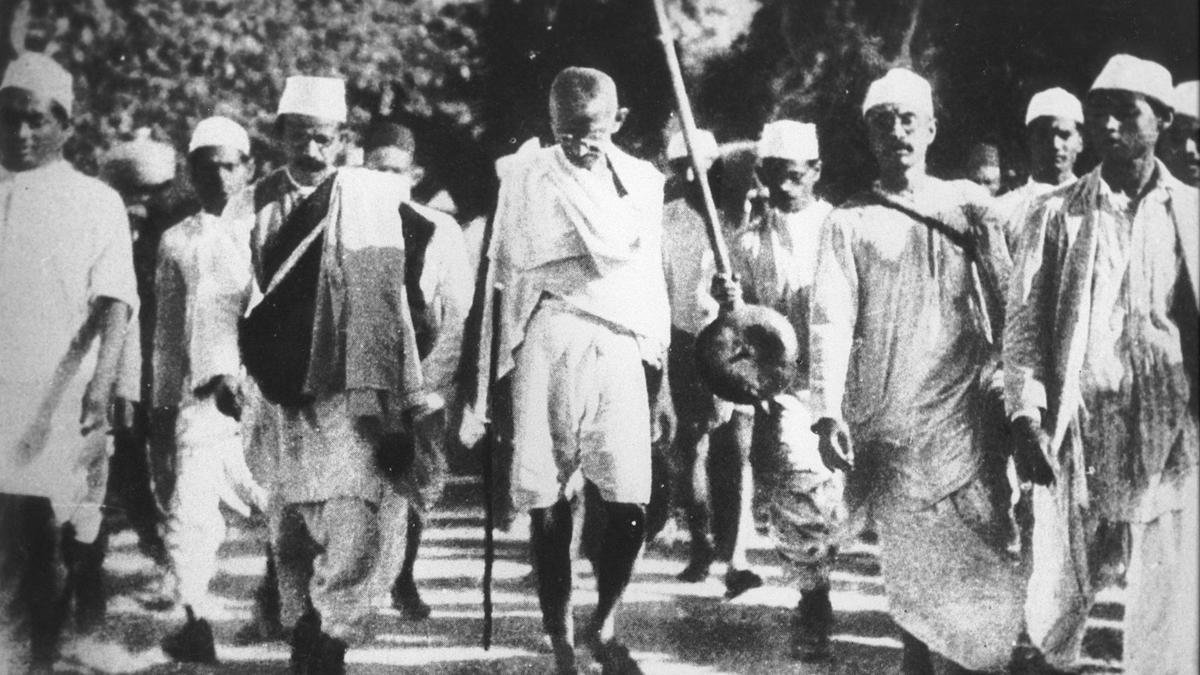
The Chauri Chaura incident, occurring on February 4, 1922, stands as one of the most consequential events in the history of the Indian National Movement. Located in the Gorakhpur district of the United Provinces (modern-day Uttar Pradesh), this violent confrontation between the police and Satyagrahis led to a radical shift in Mahatma Gandhi’s strategy.
The incident resulted in the tragic death of 22 policemen and the subsequent withdrawal of the Non-Cooperation Movement (NCM). For many historians, Chauri Chaura represents the fundamental tension between mass revolutionary fervor and Gandhi’s strict adherence to the principle of Ahimsa (Non-violence).
Historical Background: The Peak of Non-Cooperation
To understand Chauri Chaura, one must look at the momentum of the Non-Cooperation Movement launched in 1920.
1 Objectives of NCM: Gandhi envisioned a peaceful withdrawal of support from British institutions, including schools, courts, and foreign goods, to achieve Swaraj within a year.
2 Rising Tensions: By early 1922, the movement had reached a fever pitch. While the masses were mobilized, the British authorities responded with heavy-handedness, leading to a volatile atmosphere across the country.
3 The Local Context: In Chauri Chaura, volunteers had been picketing liquor shops and protesting against high food prices. On February 2, 1922, police had beaten several volunteers, further inciting local resentment.
The Events of February 4, 1922
The day began as a peaceful protest but quickly spiraled into a historic tragedy.
1 The Gathering: A crowd of approximately 2,000 to 3,000 protesters gathered to picket a local liquor shop at the Chauri Chaura market.
2 Police Intervention: The police fired warning shots into the air to disperse the crowd. When the crowd refused to back down, the police opened fire directly, killing three protesters and injuring many others.
3 The Retaliation: Infuriated by the deaths, the mob chased the out-numbered police force back to their station. The protesters locked the building and set it on fire. 22 policemen trapped inside were killed in the blaze.
4 Legal Aftermath: The British government declared martial law and arrested hundreds. Madan Mohan Malaviya famously led the legal defense for many of the accused, successfully saving several from the gallows.
Causes of the Outbreak
The violence at Chauri Chaura was not an isolated event but a culmination of several systemic factors:
1 Oppressive Colonial Policies: High taxes and forced labor had already pushed the peasantry to their limits.
2 Economic Post-War Strain: The aftermath of World War I brought severe inflation and food shortages, making the rural population more susceptible to radical action.
3 Police Brutality: Repeated instances of the local police using excessive force against peaceful volunteers created a “tinderbox” ready to ignite at the slightest provocation.
4 The Immediate Trigger: The arrest and physical abuse of non-cooperation activists just days prior served as the final spark for the mob’s anger.
Gandhi’s Decision
Shocked by the news of the violence, Mahatma Gandhi took a decision that stunned the nation.
1 Suspension of NCM: On February 12, 1922, the Congress Working Committee met at Bardoli and formally suspended the Non-Cooperation Movement.
2 The Philosophy of Ahimsa: Gandhi maintained that the Indian people were “not yet ready” for a non-violent struggle. He believed that continuing the movement would only lead to a cycle of state-sponsored violence and mob retaliation.
3 Internal Backlash: High-ranking leaders like Jawaharlal Nehru, Subhas Chandra Bose, and C.R. Das were shocked. They felt the movement should not have been stopped when it was at its zenith. This dissatisfaction eventually led to the formation of the Swaraj Party by Motilal Nehru and C.R. Das.
Significance and Long-term Impact
The Chauri Chaura incident left a permanent mark on the trajectory of India’s freedom struggle:
1 Shift to Constructive Work: Following the withdrawal, Gandhi pivoted toward his “Constructive Programme,” focusing on Khadi, rural sanitation, and the removal of untouchability.
2 Reinforcement of Discipline: The incident established that the Indian National Congress would not tolerate violence, ensuring that future movements like the Civil Disobedience Movement were better disciplined.
3 Rise of Revolutionary Nationalism: The sudden halt of the NCM left many young nationalists disillusioned, leading them toward revolutionary paths and organizations like the Hindustan Republican Association (HRA).
4 A Milestone in Judicial History: The subsequent trials highlighted the legal struggle of Indians against the British judicial system, with leaders like Malaviya showcasing the power of organized legal resistance.
FAQs on the Chauri Chaura Incident
WHAT WAS THE DATE OF THE CHAURI CHAURA INCIDENT?
The incident occurred on February 4, 1922.
WHERE IS CHAURI CHAURA LOCATED?
It is a small town in the Gorakhpur district of present-day Uttar Pradesh.
WHY DID THE MOB SET THE POLICE STATION ON FIRE?
The mob retaliated after the police opened fire on a peaceful protest, killing three people.
HOW MANY POLICEMEN DIED IN THE INCIDENT?
A total of 22 policemen lost their lives in the fire at the police station.
WHAT WAS THE BARDOLI RESOLUTION?
The Bardoli Resolution of February 12, 1922, was the official decision by the Congress to suspend the Non-Cooperation Movement following the violence at Chauri Chaura.
WHO DEFENDED THE ACCUSED IN THE CHAURI CHAURA TRIAL?
Pandit Madan Mohan Malaviya was the prominent leader who defended the protesters in court.
HOW DID SUBHAS CHANDRA BOSE DESCRIBE THE WITHDRAWAL OF THE MOVEMENT?
Bose described the suspension of the movement at its peak as a “national calamity.”
WHICH POLITICAL PARTY WAS FORMED AS A RESULT OF THE DISCONTENT OVER THE WITHDRAWAL?
The Swaraj Party was formed in 1923 by C.R. Das and Motilal Nehru, who favored entering the legislative councils.
WAS GANDHI ARRESTED AFTER CHAURI CHAURA?
Yes, shortly after the movement was suspended, Gandhi was arrested in March 1922 and sentenced to six years in prison for sedition.
WHAT IS THE SYMBOLIC SIGNIFICANCE OF CHAURI CHAURA IN THE FREEDOM STRUGGLE?
It serves as a reminder of Gandhi’s uncompromising stance on Non-Violence (Ahimsa) and the difficulty of controlling mass movements.