Context
On the occasion of World Wildlife Day, the Prime Minister reaffirmed India’s commitment to wildlife conservation and sustainable environmental practices.
What is World Wildlife Day?
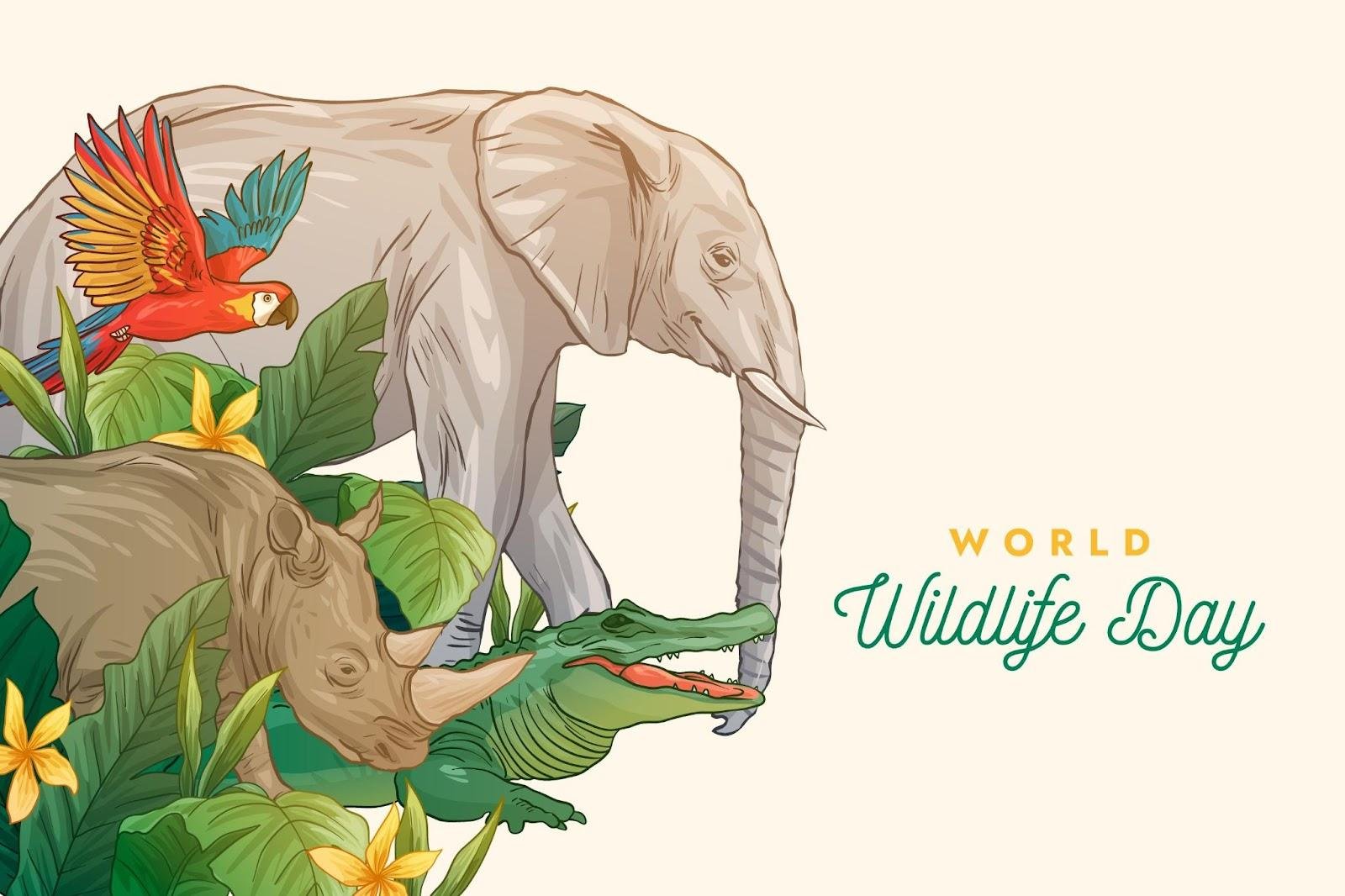
- It is an international observance celebrated every year on March 3.
- Purpose: The day aims to celebrate wild animals and plant species across the planet, highlight the ecological, cultural, and economic importance of wildlife and raise awareness about conservation challenges and biodiversity protection.
- It emphasizes that wildlife plays a vital role in maintaining healthy ecosystems and supporting human livelihoods.
Historical Background
- The origin of World Wildlife Day is linked to international conservation efforts.
- Proposal: The idea was first proposed by Thailand, which suggested dedicating a day to raise awareness about wildlife protection.
- Official Declaration: On 20 December 2013, the United Nations General Assembly officially declared March 3 as World Wildlife Day.
- First Celebration: The first global celebration took place in 2014.
- Why March 3 Was Chosen: On March 3, 1973, the Convention on International Trade in Endangered Species of Wild Fauna and Flora (CITES) was signed.
- CITES is an international agreement among governments. Its main goal is to ensure that international trade in wild animals and plants does not threaten their survival.
Theme of World Wildlife Day 2026
- Theme: “Medicinal and Aromatic Plants: Conserving Health, Heritage and Livelihoods”
- This theme highlights three key aspects:
- Health – Many medicines are derived from plant-based resources.
- Heritage – Medicinal plants are deeply connected with traditional cultural practices.
- Livelihoods – Local communities depend on these plants for economic income.
Importance of Medicinal and Aromatic Plants
Medicinal plants play a crucial role in healthcare systems worldwide.
- Dependence on Traditional Medicine: Around 70–95% of people in developing countries rely on traditional medicine for basic healthcare.
- Source of Modern Medicines: Many modern pharmaceutical drugs originate from plant-based compounds.
- Role in Cultural Traditions: Medicinal plants form the foundation of traditional medical systems, including herbal medicine and indigenous healing practices.
India’s Importance in Medicinal Plant Diversity
- India is recognized as one of the major global centres of biodiversity.
- It is among the 17 megabiodiversity countries of the world.
- The country has approximately 15,000 species of medicinal plants.
- Around 8,000 species are used in traditional Indian medicine systems.
- Because of this rich diversity, India is considered one of the most important global hubs for medicinal and aromatic plants.
FAQs
Q1. What is World Wildlife Day and when is it celebrated?
World Wildlife Day is an international observance held every year on March 3. It celebrates wild animals and plants, raises awareness about biodiversity conservation, and emphasizes the ecological, cultural, and economic importance of wildlife.
Q2. Why was March 3 chosen as World Wildlife Day?
March 3 marks the signing of the Convention on International Trade in Endangered Species of Wild Fauna and Flora (CITES) in 1973. CITES ensures that international trade in wild animals and plants does not threaten their survival.
Q3. Who proposed the idea of World Wildlife Day?
The idea was first proposed by Thailand, and on 20 December 2013, the United Nations General Assembly officially declared March 3 as World Wildlife Day. The first celebration took place in 2014.
Q4. What is the theme of World Wildlife Day 2026?
The theme for 2026 is “Medicinal and Aromatic Plants: Conserving Health, Heritage and Livelihoods.” It highlights the role of medicinal plants in healthcare, their deep cultural connections, and their importance for local community livelihoods.
Q5. Why are medicinal and aromatic plants important for India?
India is one of the 17 megabiodiversity countries and home to about 15,000 species of medicinal plants, with nearly 8,000 used in traditional medicine systems. This rich diversity makes India a global hub for medicinal and aromatic plants, vital for healthcare, heritage, and sustainable agriculture.