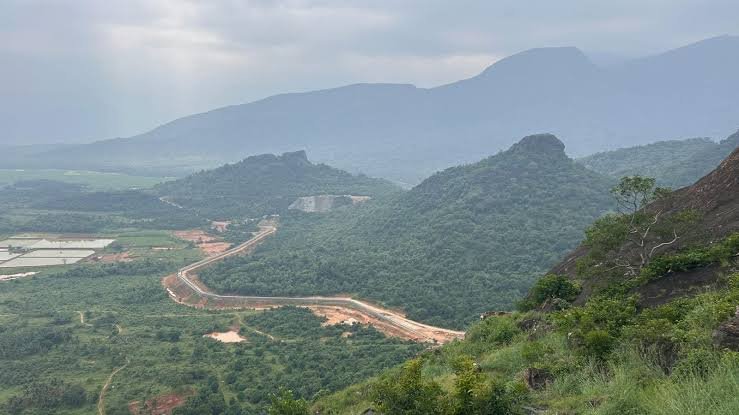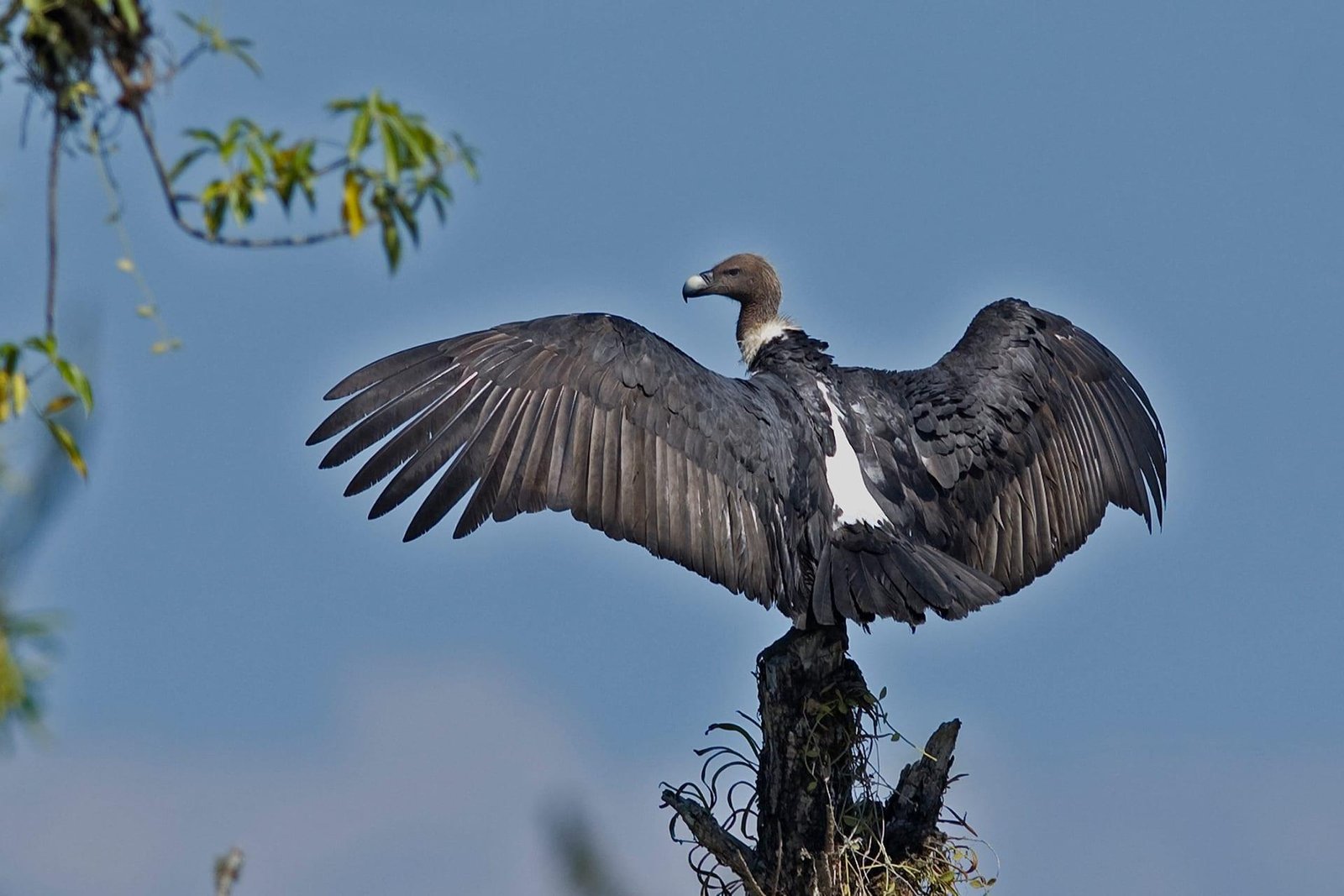
- Recently, a critically endangered (IUCN Red List) White-rumped vulture was rescued by forest officials at Mampad near Nilambur, Kerala.
- Also called Indian White-backed Vulture or Oriental White-backed Vulture (Scientific name: Gyps bengalensis), it is a small Old World vulture native to South and Southeast Asia.
- It is a scavenger, feeding mainly on carcasses, which it locates by soaring on thermals and observing other scavengers.
- Found in: Pakistan, India, Bangladesh, Nepal, Bhutan, Myanmar, Thailand, Laos, Cambodia, and southern Vietnam.
- Habitat: Mainly Plains (less in hilly areas), near villages and cities close to cultivation areas.
- Key Features:
- Bare head and neck, very broad wings, and short tail.
- Size: 75–85 cm tall; wingspan 180–210 cm; weight 3.5–7.5 kg.
- Sexes: Similar in size.
- Adults: Darker than juveniles; blackish plumage with a white neck ruff and a distinct white patch on lower back and upper tail (basis of its common name).
- Pale grey patch on folded upper wings; underside appears dark slate to brownish.
- Population Decline: Its population was abundant till the 1980s but started to decline and was estimated at fewer than 6,000 mature individuals globally in 2021. This was due to a diclofenac medicine used in livestock which causes kidney failure in vultures when they consume these dead livestock.