| Important Questions for UPSC Prelims / Mains / Interview
1. Why is World Wetlands Day 2026 significant, and what does its theme highlight in the Indian context? 2. How does traditional knowledge shape the relationship between communities and wetlands in India? 3. Why should wetlands be understood as socio-ecological systems rather than vacant land? 4. What policy frameworks exist for wetland conservation in India, and where do they fall short? 5. How do development pressures contribute to wetland degradation in India? 6. What institutional and governance gaps weaken wetland protection efforts? 7. What pragmatic and integrated solutions are needed for effective wetland conservation? 8. Why should wetlands be treated as a national public good in India’s development strategy? |
Context
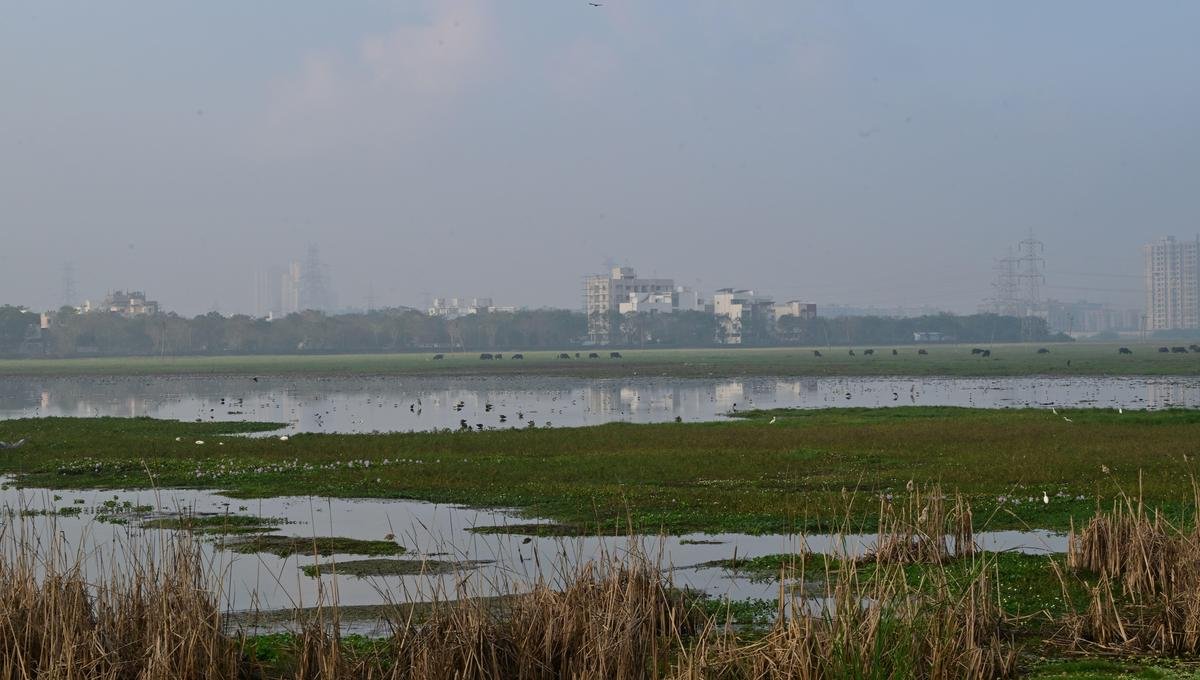
World Wetlands Day 2026, observed under the theme “Wetlands and traditional knowledge: Celebrating cultural heritage”, highlights the deep link between people, culture, and water bodies.
In India, wetlands have supported livelihoods, social institutions, and ecological balance for centuries.
However, rapid development, weak implementation of laws, and climate stress are accelerating wetland loss, raising urgent concerns about sustainability and governance.
Q1. Why is World Wetlands Day 2026 significant, and what does its theme highlight in the Indian context?
- World Wetlands Day 2026 draws attention to wetlands as living landscapes shaped by people and nature together.
- The theme highlights traditional knowledge as a key pillar of wetland conservation.
- In India, wetlands have cultural, religious, and economic significance beyond ecology.
- The theme recognises community wisdom developed over generations.
- It shifts focus from purely technical conservation to people-centred approaches.
- The observance reminds policymakers that heritage and sustainability are interconnected.
- It strengthens the idea that wetland protection is a shared social responsibility.
Q2. How does traditional knowledge shape the relationship between communities and wetlands in India?
- Traditional knowledge guided sustainable use of wetlands long before modern laws.
- In Tamil Nadu, interconnected tanks managed water for agriculture and drought resilience.
- In Kerala, wells and ponds supported daily life and ritual practices.
- Fishing communities followed seasonal rules to protect fish stocks.
- These systems were governed collectively by local communities.
- Conservation was embedded in culture and everyday practices.
- Such knowledge offers valuable lessons for modern wetland management.
Q3. Why should wetlands be understood as socio-ecological systems rather than vacant land?
- Wetlands support both ecological functions and human livelihoods.
- They provide water, food, cultural identity, and social cohesion.
- Community management shaped wetland sustainability over time.
- Treating wetlands as empty land leads to misuse and encroachment.
- Their value lies in interaction between people and ecosystems.
- Ignoring social dimensions weakens conservation outcomes.
- Recognising wetlands as socio-ecological systems ensures inclusive governance.
Q4. What policy frameworks exist for wetland conservation in India, and where do they fall short?
- India has several policies for wetland protection.
- These include the Wetlands Rules, Ramsar commitments, and coastal regulations.
- Policies cover inland, coastal, and aquatic ecosystems.
- However, implementation remains weak and uneven.
- Delays in notification reduce legal protection.
- Institutional fragmentation creates coordination problems.
- Protection often exists only on paper, not on the ground.
Q5. How do development pressures contribute to wetland degradation in India?
- Rapid urbanisation has destroyed many wetlands.
- Infrastructure projects alter natural water flows.
- Sand mining and groundwater extraction damage hydrology.
- Pollution from sewage and industries degrades water quality.
- Agricultural runoff causes eutrophication and biodiversity loss.
- Coastal wetlands face sea-level rise and erosion.
- Development often ignores ecological limits of wetlands.
Q6. What institutional and governance gaps weaken wetland protection efforts?
- State wetland authorities lack staff and funding.
- Technical expertise for monitoring is limited.
- Enforcement of rules is weak.
- Responsibilities are spread across multiple agencies.
- Coordination between departments is poor.
- Community participation is often neglected.
- Without accountability, conservation efforts lose effectiveness.
Q7. What pragmatic and integrated solutions are needed for effective wetland conservation?
- Wetlands must be clearly identified and legally notified.
- Transparent mapping should involve local communities.
- Pollution inflows must be strictly controlled.
- Wetlands should not replace sewage treatment systems.
- Catchments and water connectivity must be restored.
- Coastal wetlands should be treated as natural disaster buffers.
- Long-term institutional capacity building is essential.
Q8. Why should wetlands be treated as a national public good in India’s development strategy?
- Wetlands provide benefits to society as a whole.
- They support water security, biodiversity, and climate resilience.
- Their loss affects cities, villages, and future generations.
- Markets alone cannot protect wetlands adequately.
- Public investment and regulation are necessary.
- Community stewardship strengthens long-term protection.
- Treating wetlands as public goods ensures sustainable development.
Conclusion
Wetlands in India are not wastelands but shared national assets shaped by culture, ecology, and community wisdom.
Aligning traditional knowledge with modern policy, strengthening institutions, and recognising wetlands as public goods are essential for their survival.
By restoring wetlands as living systems, India protects water security, biodiversity, and social resilience, laying a strong foundation for sustainable and inclusive development.