|
Important questions for UPSC Pre/ Mains/ Interview: 1. Why is the Government introducing Vehicle-to-Vehicle (V2V) technology in India? 2. What is Vehicle-to-Vehicle (V2V) Communication Technology? 3. How does V2V technology work in practice? 4. What institutional and policy developments support V2V in India? 5. What is the proposed rollout strategy for V2V technology? 6. What are global experiences with V2V communication systems? 7. What challenges and concerns are associated with V2V adoption in India? 8. What should be the way forward for effective V2V implementation in India? |
Context
India records the highest number of road accident deaths globally. To reduce fatalities and improve traffic management, the Government of India plans to introduce Vehicle-to-Vehicle (V2V) communication as part of its Intelligent Transport Systems (ITS) and road safety strategy.
Q1. Why is the Government introducing Vehicle-to-Vehicle (V2V) technology in India?
- India reported over 77 lakh road accident deaths in 2024, averaging 485 deaths per day, highlighting a severe public safety crisis.
- Human error, delayed response, fog, sudden braking, and blind spots contribute significantly to accidents.
- Traditional road safety measures focus on post-accident response rather than prevention.
- V2V enables real-time warning and cooperative driving, shifting road safety from reactive to preventive governance.
- The initiative aligns with India’s commitment under the Stockholm Declaration to reduce road deaths by 50% by 2030.
Q2. What is Vehicle-to-Vehicle (V2V) Communication Technology?
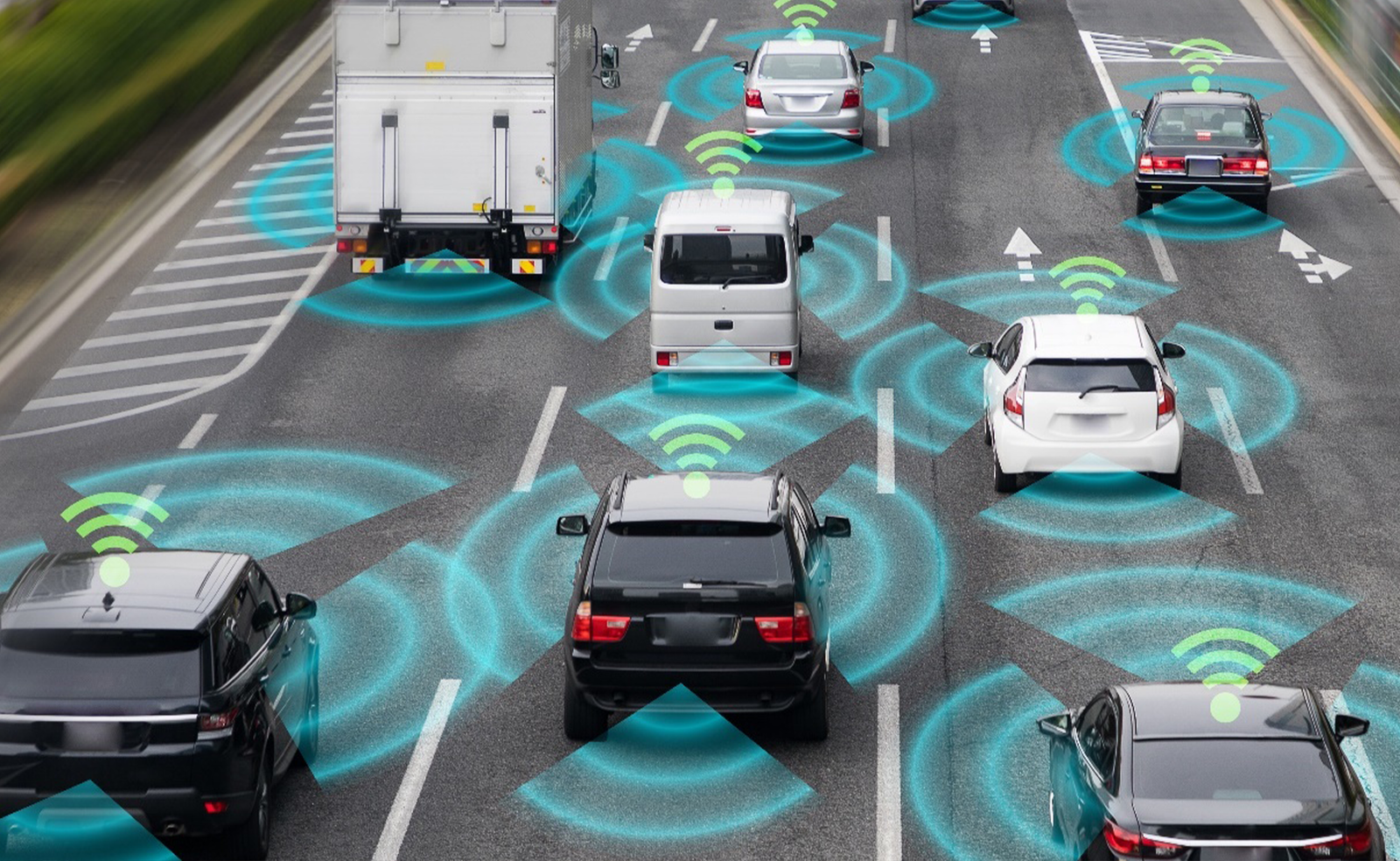
- V2V is a wireless communication system that allows vehicles to exchange real-time data such as speed, location, direction, and braking status.
- It is a sub-set of Vehicle-to-Everything (V2X) technology under the broader Intelligent Transport Systems (ITS)
- The system is inspired by aviation safety systems, where aircraft continuously broadcast position and speed to avoid collisions.
- V2V does not replace drivers but assists decision-making through early warnings.
Q3. How does V2V technology work in practice?
- On-Board Unit (OBU):
- Vehicles are fitted with an OBU costing approximately ₹5,000–₹7,000.
- OBUs enable wireless data exchange within a 300-metre range.
- Real-Time Information Sharing:
- Vehicles continuously broadcast and receive safety-related information.
- Functional Benefits:
- Alerts about sudden braking by vehicles ahead.
- Warnings regarding fog, obstacles, parked vehicles, and accident-prone black spots.
- Early collision risk alerts at intersections and highways.
- Illustration:
- If a vehicle suddenly applies brakes, following vehicles receive instant alerts, reducing chances of pile-ups.
Q4. What institutional and policy developments support V2V in India?
- Spectrum Allocation:
- 30 GHz radio frequency spectrum allocated by the Department of Telecommunications under the National Frequency Allocation Plan.
- Inter-Ministerial Coordination:
- A Joint Task Force between the Ministry of Road Transport and Highways (MoRTH) and DoT has been constituted.
- Standard-Setting Process:
- Technical standards are being developed in consultation with Original Equipment Manufacturers (OEMs).
- Policy Prioritisation:
- V2V is identified as a key road safety initiative under MoRTH’s technology-driven transport reforms.
Q5. What is the proposed rollout strategy for V2V technology?
- Phase I: Mandatory installation in new vehicles.
- Phase II: Retrofitting of OBUs in older vehicles.
- Cost Relief: Radio spectrum to be provided free of cost, reducing compliance burden on manufacturers.
- Timeline: Targeted rollout within the current year, after notification of standards.
Q6. What are global experiences with V2V communication systems?
- United States: Global leader in V2V research, trials, and regulatory frameworks.
- Europe: Countries like Germany, France, and the UK integrate V2V into smart city mobility projects.
- Japan: ITS Connect programme delivers real-time traffic and emergency alerts.
- China: Extensive adoption with integration into smart mobility ecosystems.
- Emerging Pilots: UAE, Saudi Arabia, Brazil, Mexico, and India are in pilot or early implementation stages.
- Commercial Examples: Volkswagen Golf 8 and select Cadillac models support V2V features.
Q7. What challenges and concerns are associated with V2V adoption in India?
- Technological Limitations:
- Signal interference or failure across diverse vehicle categories and terrains.
- Risk of miscommunication leading to incorrect alerts.
- Data Privacy and Surveillance:
- Continuous collection of vehicle movement and behavioural data raises privacy concerns.
- Risk of profiling and misuse without robust safeguards.
- Cybersecurity Risks:
- Vulnerability to hacking, spoofing, and system hijacking.
- Potential large-scale safety and national security implications.
- Regulatory Gaps:
- Absence of clear rules on data ownership, liability in case of failure, and accountability.
Q8. What should be the way forward for effective V2V implementation in India?
- Comprehensive Standards: Align V2V norms with global best practices.
- Legal Integration: Synchronise with upcoming data protection and cybersecurity laws.
- Cyber Audits: Conduct periodic security audits of V2V infrastructure.
- Inclusive Adoption: Ensure coverage of commercial, public, and private vehicles.
- Capacity Building: Train enforcement agencies and conduct public awareness campaigns.
Conclusion
Vehicle-to-Vehicle communication marks a decisive shift towards technology-enabled road safety governance in India. While it offers significant potential to reduce accidents and fatalities, its success hinges on robust standards, cybersecurity safeguards, and balanced regulation. If implemented prudently, V2V can anchor India’s transition to smart, safe, and sustainable mobility.