Context
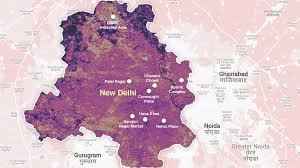
Delhi and the National Capital Region are experiencing increasingly severe and prolonged heatwaves, with high temperatures continuing even during the night. Rapid urbanisation, excessive concretisation, shrinking green cover and rising dependence on cooling systems have intensified the Urban Heat Island (UHI) Effect, making urban areas significantly warmer than surrounding regions.
Causes of Rising Urban Heat
- Heat-Absorbing Infrastructure: Concrete, asphalt, steel and glass absorb large amounts of solar heat during the day and release it slowly at night, preventing effective cooling.
- Dense Construction and Poor Ventilation: High-rise buildings, narrow streets and unplanned urban growth restrict natural airflow and trap heat within the urban environment.
- Glass-Dominated Architecture: Modern glass-heavy buildings increase indoor temperatures by trapping solar radiation, leading to greater dependence on air conditioning.
- Vehicular Emissions and Traffic Corridors: Heavy traffic and transport infrastructure generate additional heat, especially along congested transport corridors.
- Decline of Green and Blue Spaces: Loss of trees, wetlands and water bodies has weakened the city’s natural cooling mechanisms and reduced evapotranspiration.
Heat Feedback Loop and Energy Stress
- Urban Warming from Cooling Systems: Air conditioners cool indoor spaces but release waste heat into the surrounding environment, contributing to rising outdoor temperatures.
- Increasing Pressure on Power Infrastructure: Growing dependence on cooling systems has sharply increased electricity demand, raising concerns regarding grid stability and future energy security during extreme heat events.
Economic and Ecological Impact
- Decline in Productivity: Extreme heat reduces labour efficiency in industries, construction activities and outdoor occupations, affecting overall economic output.
- Supply Chain and Infrastructure Stress: Heatwaves disrupt transportation, storage and industrial operations, increasing operational costs and reducing efficiency.
- Ecological Degradation: Encroachment on wetlands and floodplains, along with declining vegetation cover, has weakened ecological temperature regulation in the city.
Measures Needed
| Measures | Purpose |
| Adoption of cool roofs, reflective coatings and heat-resistant materials | Reduce urban heat absorption |
| Promotion of passive cooling and natural ventilation | Lower dependence on energy-intensive cooling systems |
| Climate-sensitive urban planning and ventilation corridors | Improve airflow and reduce heat accumulation |
| Expansion of urban forests, parks and water bodies | Strengthen natural cooling and ecological resilience |
| Promotion of public transport and electric mobility | Reduce vehicular emissions and anthropogenic heat |
| Adoption of energy-efficient cooling technologies | Reduce electricity demand and waste heat generation |
| Heat-action plans and community cooling centres | Protect vulnerable populations during heatwaves |
| Strengthening renewable energy and power infrastructure | Improve resilience against rising cooling demand |
Conclusion
The Delhi heat crisis reflects the combined impact of climate change, ecological degradation and unplanned urbanisation. Addressing the Urban Heat Island Effect requires climate-sensitive urban planning, ecological restoration and energy-efficient infrastructure.
A balanced approach integrating environmental sustainability, public health and urban resilience is essential for building heat-resilient cities in India.