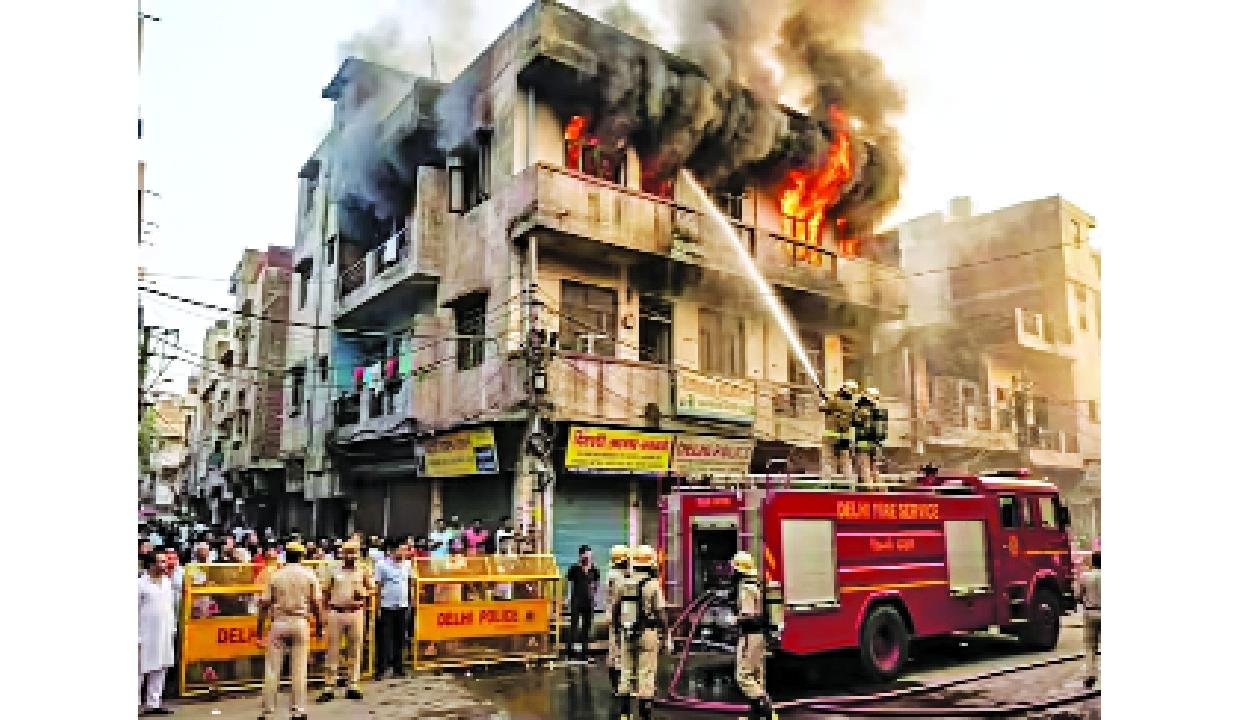
Context
Recent fire incidents in Delhi and Bihar have once again exposed serious shortcomings in urban fire safety, particularly in residential buildings, hospitals, and commercial establishments.
Urban Fire Safety in India
- Residential buildings account for the majority of fire-related deaths in India, making them the most vulnerable category of structures.
- Hospitals and commercial establishments also witness significant fire casualties.
- Most fire-related deaths result from smoke inhalation and toxic gases rather than direct burns.
Governance Framework
- Constitutional and Institutional Responsibility
- Fire services fall under the State List of the Constitution.
- Under Article 243W and the Twelfth Schedule, fire services are among the functions assigned to Urban Local Bodies (ULBs).
- National Building Code (NBC), 2016
- The National Building Code (NBC), 2016, issued by the Bureau of Indian Standards (BIS), provides standards for fire prevention, evacuation systems, smoke management, and safety audits.
- The Code serves as a model framework, and its implementation depends on adoption and enforcement by states and local authorities.
- The primary challenge lies in weak enforcement and compliance rather than the absence of regulations.
Capacity Constraints
- Rapid urbanisation and the growth of high-rise buildings have increased the demand for specialised firefighting capabilities.
- Recognising these gaps, the 15th Finance Commission recommended dedicated financial support for strengthening fire services and emergency response systems.
Challenges and Way Forward
| Challenges | Way Forward |
| Weak enforcement of fire safety norms and building regulations. | Strengthen inspections, periodic audits, and accountability mechanisms. |
| Unauthorised commercial use of residential buildings. | Ensure strict monitoring, licensing compliance, and deterrent penalties for violations. |
| Inadequate fire safety infrastructure and public preparedness. | Mandate fire alarms, extinguishers, evacuation plans, and regular safety drills. |
| Electrical faults and LPG-related hazards. | Promote periodic safety inspections, certification, and public awareness programmes. |
| Congested urban layouts hinder emergency response. | Integrate fire safety requirements into urban planning and building approval processes. |
| Limited manpower and specialised equipment in fire services. | Modernise fire departments through greater investment, training, and technology adoption. |
Conclusion
Urban fire safety requires a shift from reactive response to preventive governance. Effective enforcement of safety standards, resilient urban planning, public awareness, and strengthened fire services are essential to reduce fire-related risks and build safer and more resilient cities.