Context
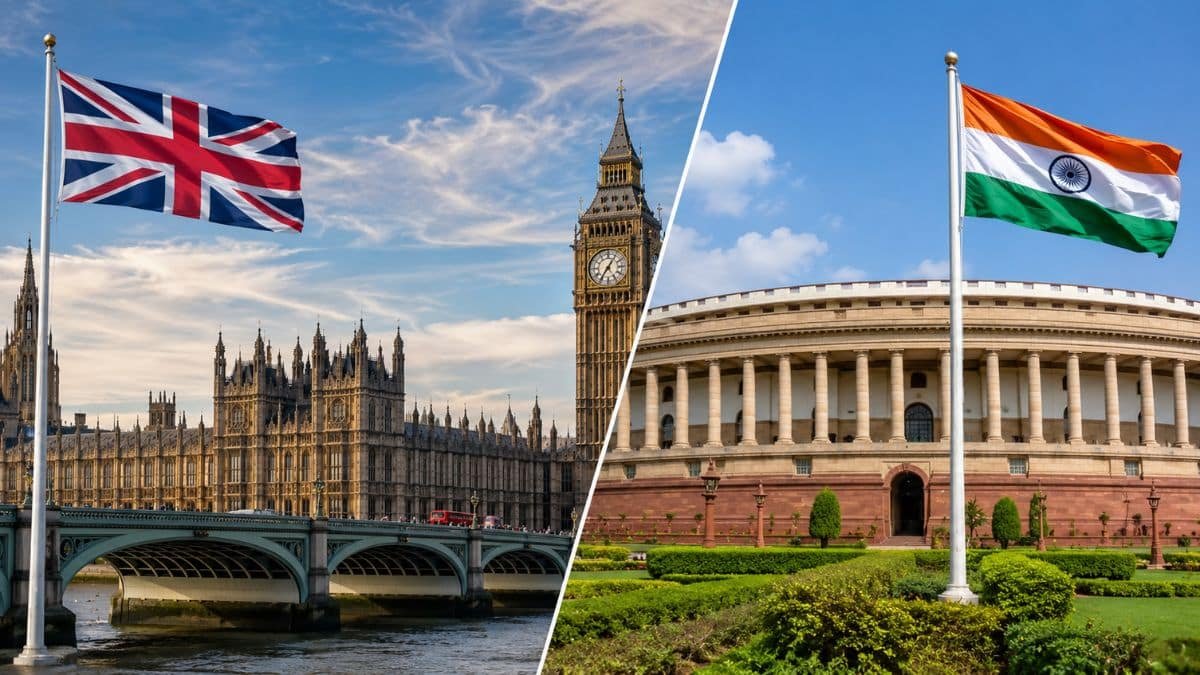
Recent demands for greater autonomy or independence in Scotland and Wales, along with calls for Irish reunification in Northern Ireland, have renewed attention to the constitutional structure of the United Kingdom (UK). The issue is also relevant for understanding the distinction between devolution in the UK and federalism in India.
UK, Great Britain and England
These terms refer to different entities:
- England is one of the four constituent countries of the UK.
- Great Britain comprises England, Scotland and Wales.
- The United Kingdom comprises England, Scotland, Wales and Northern Ireland and is the sovereign state.
Historical Evolution
The present constitutional arrangement emerged through successive developments:
- 1531–35: Wales was incorporated into the English legal and administrative framework.
- 1603 – Union of the Crowns: James VI of Scotland also became James I of England, placing the two kingdoms under a common monarch.
- 1707 – Acts of Union: England and Scotland were united to form the Kingdom of Great Britain.
- 1801 – Act of Union: Great Britain and Ireland formed the United Kingdom of Great Britain and Ireland.
- 1921–22: Following the partition of Ireland, Northern Ireland remained within the UK, while the rest of Ireland left.
- 1999: Scotland, Wales and Northern Ireland received elected devolved institutions.
Devolution in the UK
Devolution refers to the transfer of specified powers from the central authority to elected institutions in constituent territories.
- The UK Parliament at Westminster remains legally sovereign.
- Devolved powers are created through legislation passed by the UK Parliament.
- They include areas such as health and education.
- The scope of these powers differs across territories, making the system asymmetric.
- Since devolved powers derive from legislation, Westminster retains ultimate legal authority over them.
Devolution and Federalism: UK vs India
| United Kingdom | India |
| Based on parliamentary sovereignty | Based on constitutional supremacy |
| Devolved powers arise through legislation | Union-State powers are distributed by the Constitution |
| Devolution is asymmetric | Constitutional distribution governs Union-State relations |
Drivers of Autonomy Demands
The demand for constitutional change is associated with:
- Regional and national identity
- Political divergence with Westminster
- Demands for greater autonomy or independence
- Different political preferences, including views on Brexit
The aspirations also vary: Scotland seeks independence, Wales has pursued greater autonomy or independence, while Northern Ireland seeks Irish reunification.
British Features Adopted by India
India incorporated several important features of the British constitutional system, including:
- Parliamentary form of government
- Cabinet system
- Prime Minister and Council of Ministers
- Collective responsibility
- Bicameral legislature
- Office of the Speaker
- Parliamentary procedures and privileges
- Rule of law
- Single citizenship
India adapted these institutions to a framework of constitutional supremacy. Thus, while the parliamentary model was borrowed from Britain, Parliament in India remains subject to the Constitution.
Conclusion
The UK experience illustrates how devolution can accommodate regional aspirations without altering parliamentary sovereignty. India, in contrast, constitutionally distributes powers between the Union and States, providing a distinct federal framework.
FAQs
- Why is UK devolution described as asymmetric?
Because the extent of devolved powers is not identical across Scotland, Wales and Northern Ireland. - What is parliamentary sovereignty?
It means that the UK Parliament is the supreme legal authority within the British constitutional system. - What is constitutional supremacy?
It means that the Constitution is the highest legal authority, and all State institutions must operate within its limits. - What was the significance of the 1603 Union of the Crowns?
It placed England and Scotland under a common monarch when James VI of Scotland also became James I of England. - Why is Great Britain not a sovereign state?
Great Britain refers to England, Scotland and Wales, while the United Kingdom is the sovereign state that also includes Northern Ireland. - Why did India adapt rather than simply copy the British model?
India adopted British parliamentary institutions but placed them within its own framework of constitutional supremacy and federalism.