| Important questions for UPSC Pre/ Mains/ Interview:
1. What is the broader vision guiding the Union Budget 2026–27? 2. What are the key fiscal estimates and macro-fiscal signals of the Budget? 3. First Kartavya: Accelerating and Sustaining Economic Growth 4. Second Kartavya: Fulfilling Aspirations and Building Human Capacity 5. Third Kartavya: Sabka Saath, Sabka Vikas through Targeted Inclusion 6. What are the key challenges implicit in the Budget’s approach? 7. What should be the way forward? |
Context
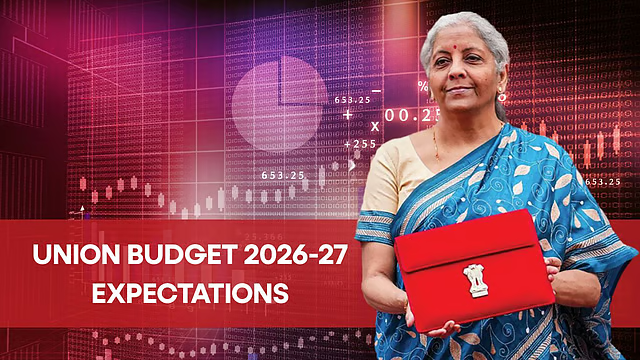
The Union Budget 2026–27, presented in Parliament, outlines a three-kartavya framework to sustain growth, build human capacity, and ensure inclusive development amid global economic uncertainty.
1. What is the broader vision guiding the Union Budget 2026–27?
- The Budget is anchored around three kartavyas (duties) that reflect a medium-term developmental vision rather than short-term fiscal management.
- The first kartavya focuses on accelerating and sustaining economic growth by improving productivity, competitiveness, and resilience.
- The second kartavya emphasises fulfilling people’s aspirations by strengthening human capacity and making citizens active partners in growth
- The third kartavya operationalises Sabka Saath, Sabka Vikas, ensuring that growth reaches all regions, sectors, and social groups.
- Together, the framework links economic expansion, human development, and social inclusion.
2. What are the key fiscal estimates and macro-fiscal signals of the Budget?
- Receipts and expenditure:
- Non-debt receipts are estimated at ₹36.5 lakh crore.
- Total expenditure is projected at ₹53.5 lakh crore.
- Net tax receipts of the Centre are estimated at ₹28.7 lakh crore.
- Borrowings:
- Gross market borrowings are pegged at ₹17.2 lakh crore.
- Net market borrowings from dated securities stand at ₹11.7 lakh crore.
- Fiscal deficit and debt:
- Fiscal deficit for 2026–27 is estimated at 3% of GDP, indicating continued consolidation.
- Debt-to-GDP ratio is projected to decline to 6%, reflecting gradual improvement in fiscal sustainability.
- These numbers signal a balance between growth support and fiscal discipline.
3. First Kartavya: Accelerating and Sustaining Economic Growth
- How does the Budget seek to scale up manufacturing in strategic and frontier sectors?
- Biopharma and healthcare:
- Launch of Biopharma SHAKTI with ₹10,000 crore over five years to position India as a global biopharma hub.
- Expansion of institutional capacity through new and upgraded NIPERs.
- Biopharma and healthcare:
- Creation of over 1,000 accredited clinical trial sites, improving R&D depth.
- Semiconductors and electronics:
- India Semiconductor Mission 2.0 to promote equipment, materials, domestic IP, and industry-led R&D.
- Electronics Components Manufacturing Scheme enhanced to ₹40,000 crore.
- Critical minerals and chemicals:
- Establishment of Rare Earth Corridors in multiple coastal and mineral-rich States.
- Support for States to develop chemical parks through a cluster-based approach.
- These interventions aim to reduce import dependence and strengthen supply-side capacity.
- How does the Budget strengthen capital goods and traditional sectors?
- Capital goods capability:
- Hi-Tech Tool Rooms set up as digitally enabled service bureaus.
- Construction and Infrastructure Equipment scheme to boost advanced domestic manufacturing.
- Capital goods capability:
- Container Manufacturing Scheme with ₹10,000 crore outlay to build export competitiveness.
- Textiles and traditional sectors:
- National Fibre Scheme covering natural, man-made, and new-age fibres.
- Modernisation of clusters through technology upgradation and common facilities.
- Mega Textile Parks with focus on technical textiles.
- Gram Swaraj initiatives to strengthen khadi, handloom, and handicrafts.
- These steps aim to combine employment generation with productivity gains.
- What is the approach towards MSMEs and legacy industries?
- Revitalisation of 200 legacy industrial clusters through infrastructure and technology upgrades.
- Creation of “Champion SMEs” via a ₹10,000 crore SME Growth Fund.
- Additional ₹2,000 crore to the Self-Reliant India Fund for micro-enterprises.
- Development of Corporate Mitras to support compliance and growth, especially in Tier-II and Tier-III towns.
- How does the Budget deliver a major infrastructure push?
- Public capital expenditure raised to ₹12.2 lakh crore in 2026–27.
- Introduction of an Infrastructure Risk Guarantee Fund to crowd in private investment.
- Monetisation of CPSE real estate through REITs.
- Logistics and connectivity:
- New Dedicated Freight Corridor from Dankuni to Surat.
- Expansion of national waterways and inland ship repair hubs.
- Promotion of coastal shipping to double its modal share by 2047.
- Aviation and regional connectivity: Support for indigenous seaplane manufacturing and operations.
- What long-term growth enablers does the first kartavya emphasise?
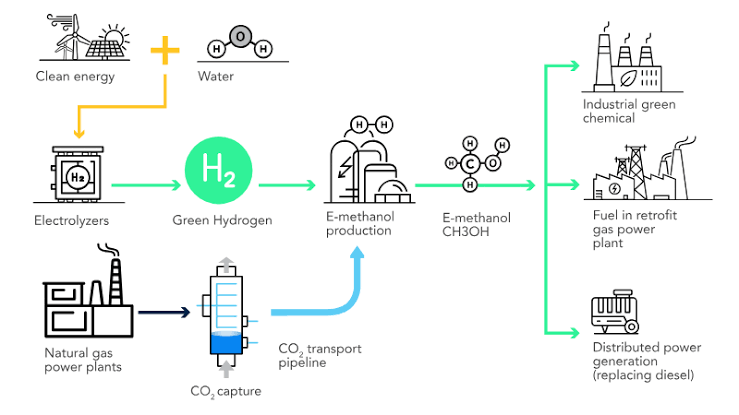
- ₹20,000 crore allocation for Carbon Capture, Utilisation and Storage (CCUS) to ensure energy security.
- Development of City Economic Regions (CERs) through reform-linked funding.
- Seven high-speed rail corridors to connect major growth centres.
- Financial sector reforms to align banking, NBFCs, FEMA rules, and urban bond markets with future growth needs.
4. Second Kartavya: Fulfilling Aspirations and Building Human Capacity
- How does the Budget link education, employment, and enterprise?
- Establishment of a high-powered Education-to-Employment-to-Enterprise Committee.
- Focus on strengthening the services sector as a core engine of Viksit Bharat.
- Policy emphasis on employability rather than mere educational attainment.
- What measures are proposed to expand health, skills, and professional capacity?
- Expansion of Allied Health Professional (AHP) institutions and addition of 1 lakh professionals.
- Creation of five Regional Medical Hubs to boost medical tourism.
- Strengthening of AYUSH systems through new national institutes.
- Scaling up veterinary professionals and private sector participation in animal healthcare.
- How does the Budget promote the creative economy, tourism, and sports?
- Support for AVGC Content Creator Labs across schools and colleges.
- Development of University Townships near industrial corridors.
- One girls’ hostel in every district to improve access to education.
- Upgradation of hospitality education and skilling of tourist guides.
- Creation of a National Destination Digital Knowledge Grid.
- Development of major archaeological and cultural sites.
- Launch of the Khelo India Mission to transform India’s sports ecosystem.
5. Third Kartavya: Sabka Saath, Sabka Vikas through Targeted Inclusion
- How does the Budget seek to raise farmer incomes and modernise agriculture?
- Integrated development of 500 reservoirs and Amrit Sarovars to enhance irrigation.
- Support for high-value crops such as coconut, cocoa, and sandalwood.
- Launch of Bharat-VISTAAR, a multilingual AI-based digital agriculture platform integrating AgriStack and ICAR knowledge systems.
- These measures aim to improve productivity, resilience, and farm incomes.
- What steps are proposed for vulnerable groups and regional balance?
- Divyangjan Kaushal Yojana to integrate persons with disabilities into services sectors.
- Major investments in mental health infrastructure, including NIMHANS-2 and regional apex institutes.
- Focus on Purvodaya States and the North-East through industrial corridors, tourism projects, sustainable transport, and Buddhist circuit development.
- Allocation of ₹1.4 lakh crore to States as Finance Commission grants, strengthening cooperative federalism.
6. What are the key challenges implicit in the Budget’s approach?
- Translating ambitious schemes into effective on-ground implementation.
- Managing fiscal consolidation alongside rising development needs.
- Ensuring private investment response to public capex and guarantees.
- Building institutional capacity at State and local levels.
- Balancing regional equity with efficiency and growth imperatives.
7. What should be the way forward?
- Strengthen Centre–State coordination for implementation and outcomes.
- Prioritise monitoring, evaluation, and adaptive course correction.
- Ensure that human capital and inclusion initiatives keep pace with physical infrastructure growth.
- Maintain fiscal credibility to sustain investor confidence.
- Align economic growth strategies with social and regional development goals.
Conclusion
Union Budget 2026–27 presents a comprehensive, duty-based development framework. Its success will depend on effective execution, cooperative federalism, and sustained focus on productivity, human capacity, and inclusive growth.