Context
Kīlauea volcano has been erupting intermittently since 23 December 2024 inside Hawaiʻi Volcanoes National Park. While lava remains confined to the caldera, tephra from lava fountains may spread downwind, posing risks to nearby communities.
Q1. What is Tephra?
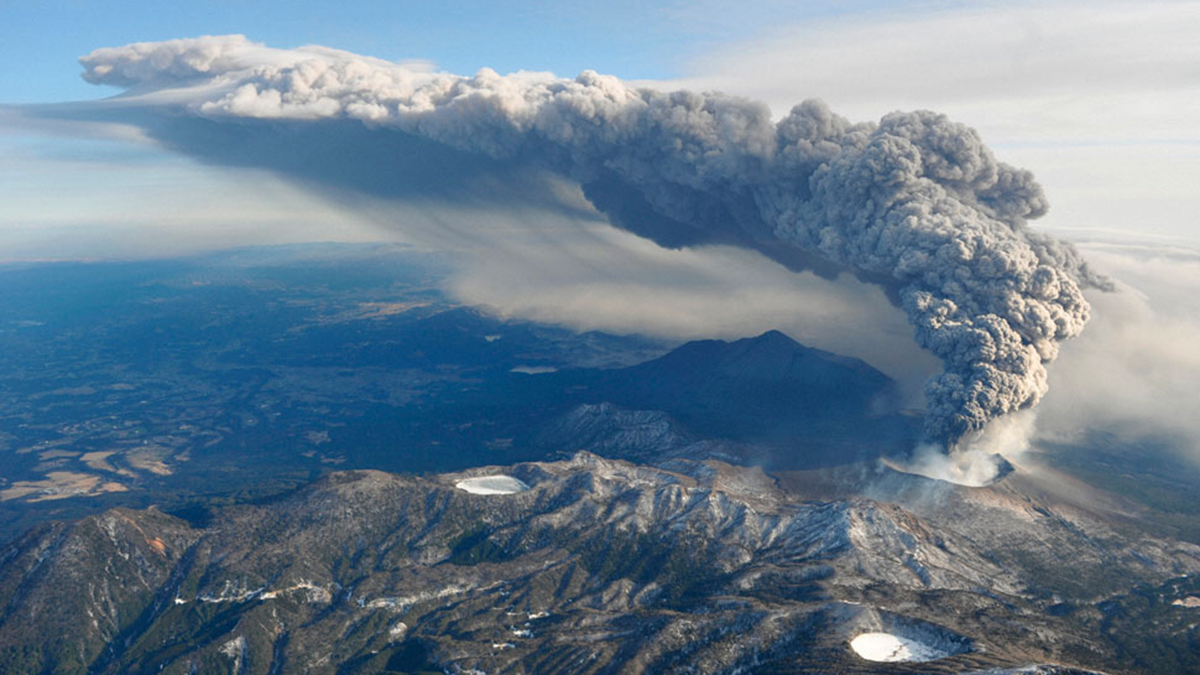
- Tephra is a term used in volcanology to describe ash and fragmented rock material expelled into the air during a volcanic eruption.
- These particles are carried through the atmosphere before settling on ground around volcano.
- The heavier and larger fragments fall closer to the volcano, whereas finer ash particles can travel much farther before deposition.
Q2. What hazards are associated with tephra?
- Hazards in the atmosphere: Volcanic ash particles often become electrically charged, which can trigger lightning within eruption clouds. In some cases, such lightning events during volcanic eruptions have resulted in human fatalities.
- Hazards after ash deposition
- Ash fall can interrupt electricity supply & disrupt television, radio, and telephone networks.
- It may cover roads and other infrastructure, affecting transportation and daily activities.
- Fine ash can damage engines and industrial machinery and may even ignite fires.
- It can also block drainage and sewage systems, creating urban management problems.
- Agricultural areas may suffer as ash destroys crops and reduces productivity.
- Volcanic ash in the air is also dangerous for aircraft, as it can damage aircraft engines.
- Health and structural impacts
- Since ash is dense and heavy, a thick layer accumulating on rooftops may cause buildings to collapse.
- Large ash clouds can block sunlight, leading to sudden darkness & panic among residents.
- Airborne ash also leads to reduced visibility and respiratory health problems.
Conclusion
Tephra’s widespread dispersion can cause serious environmental, infrastructural, and health hazards, especially for communities located near active volcanoes.
FAQs
Q1. What is Tephra in volcanology?
Tephra refers to ash and fragmented rock material ejected into the atmosphere during a volcanic eruption. Larger fragments fall near the volcano, while fine ash can travel long distances before settling.
Q2. What hazards does Tephra cause in the atmosphere?
Volcanic ash clouds can trigger lightning events, reduce visibility, and pose severe risks to aircraft engines. Dense ash clouds may also block sunlight, causing sudden darkness.
- How does Tephra impact infrastructure and daily life after deposition?
Ash fall can disrupt electricity, communication networks, transportation, and drainage systems. It damages machinery, destroys crops, and heavy deposits may even collapse rooftops.
Q4. What are the health risks associated with Tephra?
Airborne ash can cause respiratory problems, eye irritation, and reduced visibility, while thick deposits create unsafe living conditions for nearby communities.