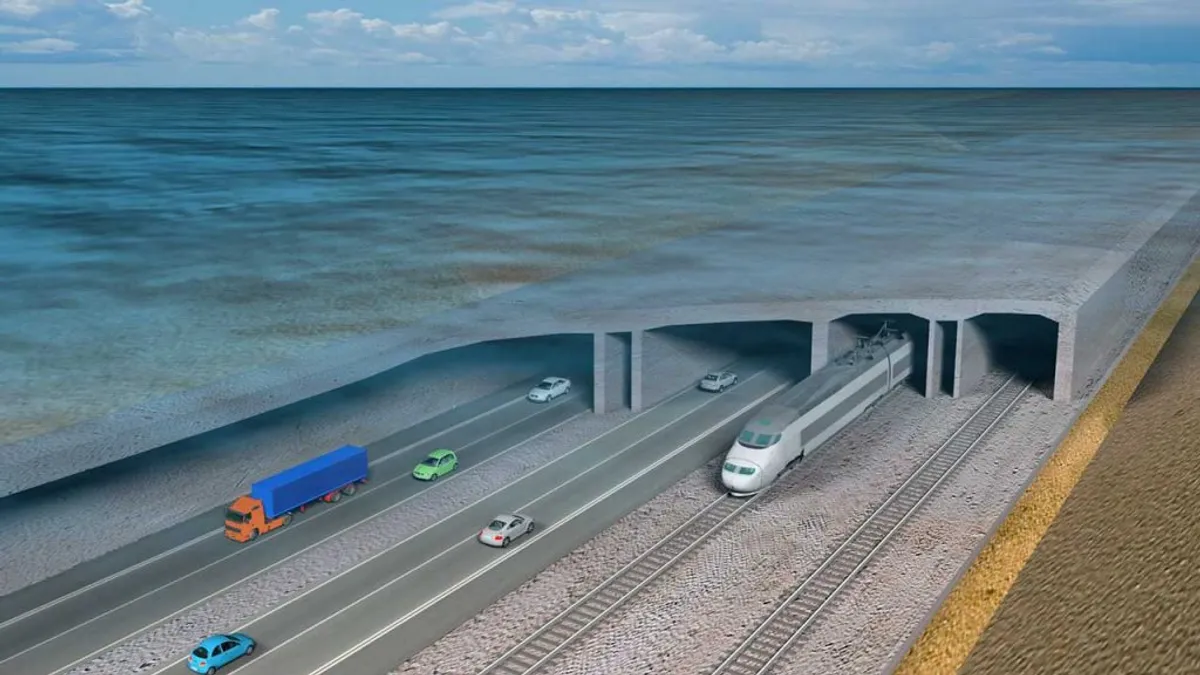
- The Cabinet Committee on Economic Affairs (CCEA) has approved the construction of India’s first underwater twin tube road-cum-rail tunnel project.
- This decision is significant because it aims to strengthen transport connectivity in the Northeast region, which is strategically and economically important.
- Location of the Project
- The project will come up beneath the River Brahmaputra in the state of Assam.
- The total length of the entire project will be 33.7 kilometres.
- The most important part is a 15.79 km long twin-tube tunnel section under the Brahmaputra.
- This makes it one of the most ambitious river-crossing infrastructure projects in India.
- “Twin Tube” Meaning:
- There will be two parallel tunnels built side by side.
- Each tube will allow smooth and separate movement of traffic.
- This design improves safety, traffic management and maintenance efficiency.
- Key Features of the Project
- It will be a four-lane, access-controlled greenfield connectivity project.
- Access-controlled means entry and exit points are limited for smooth traffic flow.
- Greenfield project means it is being built from scratch on new land.
- The tunnel will connect: Gohpur on NH-15 and Numaligarh on NH-715.
- This connection will significantly reduce travel time and improve movement between north and south banks of the Brahmaputra.
- It will be a four-lane, access-controlled greenfield connectivity project.
- The project will be executed under the Engineering, Procurement and Construction (EPC) model. Under this system:
- The government signs a contract with a private contractor.
- The contractor is responsible for:
- designing (engineering)
- purchasing materials (procurement)
- constructing the project
- The government pays the contractor according to agreed terms, while most execution responsibility lies with the contractor.
- Overall, this project represents a major step in modern infrastructure development and regional integration of India’s Northeast.