Context
The process of surveying encroachments and conserving the historic Tughlaqabad Fort has remained slow even though the Delhi High Court and the Supreme Court have been closely monitoring the matter.
About Tughlaqabad Fort
- Tughlaqabad Fort is located in southern Delhi along the rocky Aravalli Hills, which provided natural defence and granite for construction.
- Ghiyasuddin Tughlaq, also known as Ghazi Malik, the founder of the Tughlaq Dynasty, built the fort in 1321 CE to defend the Delhi Sultanate against Mongol invasions.
- Tughlaqabad is recognised as the third historic city of Delhi after Lal Kot and Siri.
- The fort represents early Indo-Islamic military architecture that emphasised strength and defence over ornamentation.
- Builders constructed massive sloping rubble-filled walls to strengthen the fortifications.
- The fortified city had a roughly half-hexagonal layout and included a citadel, palace complex and residential area.
- The palace section contained underground chambers and escape routes, while the residential area had tanks, baolis and rainwater harvesting systems.
- The fort’s elevated location, thick walls and defensive planning made it difficult for invading armies to capture.
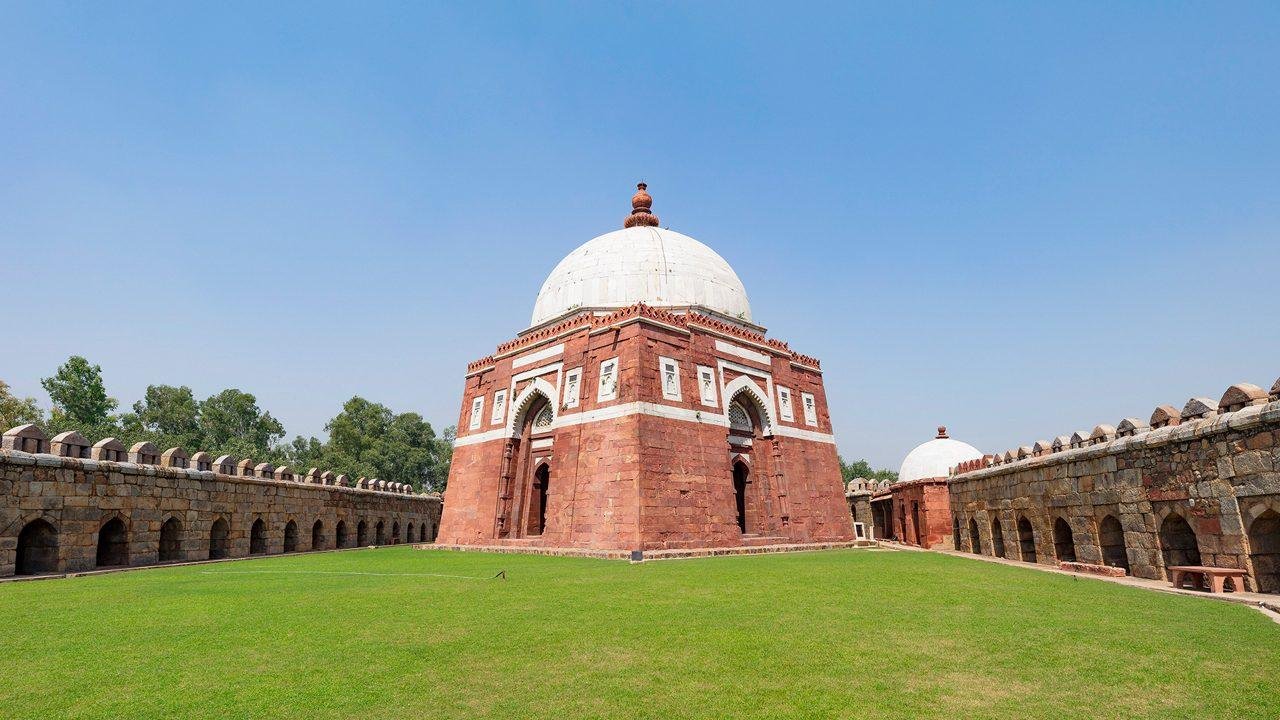
- The tomb of Ghiyasuddin Tughlaq stands outside the fort and connects to it through an elevated causeway.
- Builders used red sandstone and white marble in the mausoleum and topped it with a dome.
- The city declined soon after the death of Ghiyasuddin Tughlaq in 1325 CE.
- Muhammad bin Tughlaq later shifted the capital to Daulatabad and built the nearby Adilabad Fort.
- Local folklore connects the decline of Tughlaqabad with a curse attributed to the Sufi saint Nizamuddin Auliya.