Context
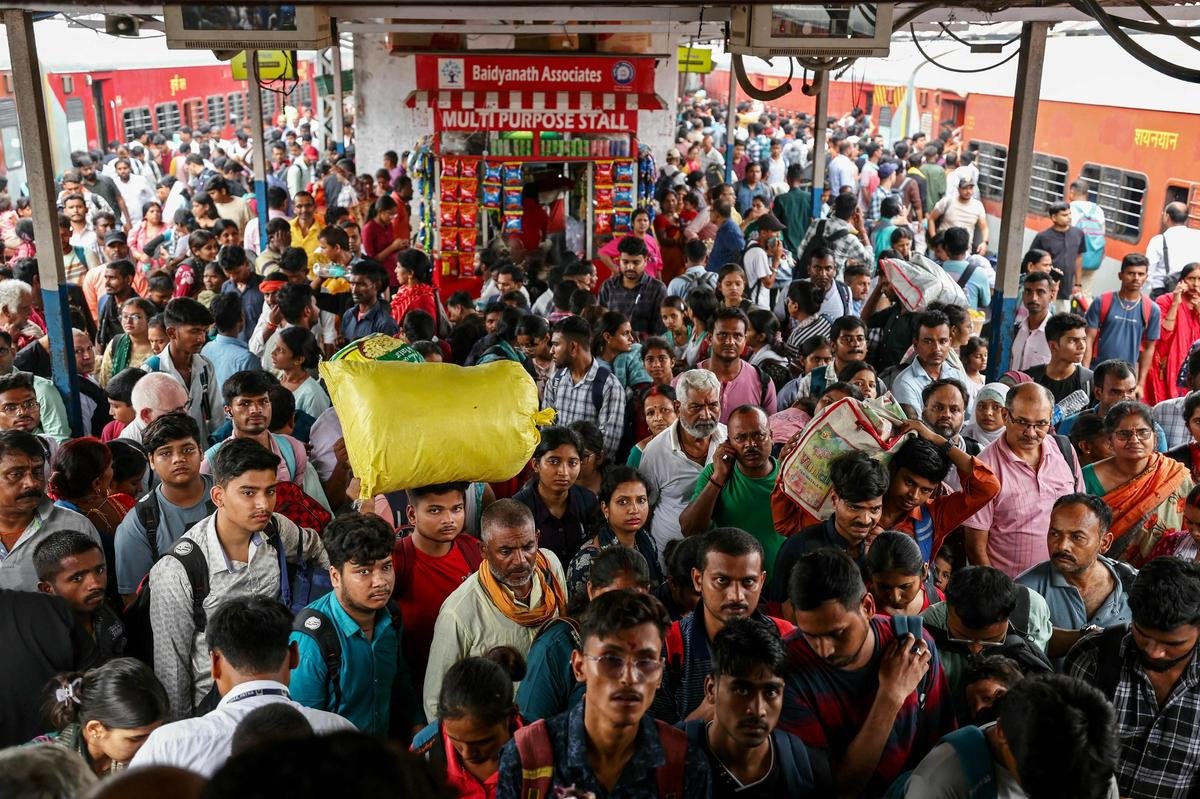
India faced two major transport disruptions: extreme overcrowding on Bihar- bound trains during festival and election travel (Oct-Nov 2025), and widespread IndiGo flight cancellations causing stranded passengers and steep fare hikes (Dec 2025). Together, these events highlight concerns about pricing policies, public investment gaps, monopolies, and the State’s role in ensuring reliable transport services.
What Are the Transport Crises?
- Transport crises occur when demand for travel exceeds supply (as in trains) or supply collapses suddenly while demand remains constant (as in flights).
- The crises reveal two different types of pressures:
- Train overcrowding = Demand Shock: A sudden rise in passengers with fixed supply.
- IndiGo cancellations = Supply Shock: A sudden drop in flights despite normal demand.
- Despite appearing different, both crises expose structural weaknesses in India’s transport system: underinvestment in public services, price controls without capacity expansion, private monopolies, and limited regulatory oversight.
How the Transport Crisis Happened?
Demand Shock in Railways (Train Overcrowding)
- During Chhath Puja and the Bihar elections, lakhs of migrants attempted to travel home at the same time.
- Train fares are kept low for welfare, but the number of trains did not increase.
- Outcome: Extreme overcrowding, Unsafe, cramped travel in unreserved compartments, Long delays and pressure on infrastructure.
- Economic reasoning:
- A sudden rise in demand normally pushes prices up.
- But railways cannot raise prices because essential services must stay affordable.
- Real issue: Low fares are not the problem. Lack of sufficient trains and inadequate investment is the real problem.
- Keeping prices affordable is correct for welfare, but supply must expand; otherwise, overcrowding becomes inevitable.
Supply Shock in Aviation (IndiGo Flight Cancellations)
- IndiGo cancelled a large number of flights due to regulatory non-compliance.
- Demand did not fall, but available flights reduced sharply.
- Outcome: Passengers stranded, Airfares shot up across all airlines and Market disruption despite the issue originating in one airline.
- Reason: IndiGo dominates several aviation routes. A supply reduction by one major player affects the entire market.
- Key insight: A competitive market would absorb the shock. But with a near-monopoly, prices rise sharply and consumers suffer.
Constraints of a Neo-Liberal Fiscal Framework
- What is a Neo-Liberal Framework?
- It is an economic approach where the government limits its spending, borrowing, and role in the economy, believing that markets should drive growth.
- It emphasises strict fiscal discipline, such as low fiscal deficits, which reduces the government’s ability to invest heavily in public services.
- At the same time, it encourages deregulation and private sector expansion, often leading to greater market concentration if not balanced with strong oversight.
- As a result, the State faces a contradiction: Prices must stay low for welfare. But infrastructure cannot expand because spending is tightly controlled.
- Outcome: Overcrowded railways, Insufficient services and Periodic breakdowns during demand spikes
- Economists argue that progressive taxation, including modest taxes on top income groups, can generate resources to expand public services.
- But such steps often face resistance from powerful economic interests.
Why Is the Issue Important?
- The crises highlight structural weaknesses, not isolated failures. They reflect deeper economic tensions between welfare goals and market dynamics.
- Public transport faces demand shocks because fares are kept low for welfare, but fiscal limits prevent expansion of capacity. This makes overcrowding a recurring outcome, not a seasonal problem.
- Private transport faces supply shocks in markets dominated by a few firms. When one major operator collapses or withdraws services, prices rise sharply across the system due to lack of competition.
- Fiscal constraints restrict the State, forcing it to maintain low prices without adequate investment. This creates a long-term gap between demand and available public services.
- Deregulation strengthens private monopolies, giving them pricing power during disruptions. This reduces consumer welfare and increases vulnerability to supply-side failures.
- Taken together, the crises show how India’s transport ecosystem suffers from both underinvestment in public goods and concentration in private markets, creating fragile systems that struggle under stress.
Challenges and Way Forward
| Challenges | Way Forward |
| Underinvested public transport infrastructure | Expand government spending on railways, new trains, and route capacity |
| Fiscal rules restrict investment | Revisit fiscal limits; allow higher spending in welfare-critical sectors |
| Concentration of private market power | Stronger competition laws; prevent dominance by a single airline |
| Unregulated fare spikes in aviation | Enhance regulatory oversight to protect consumer interests |
| Recurrent overcrowding due to fixed low prices | Keep fares affordable but expand supply through long-term investment |
| Neo-liberal imbalance between public and private roles | Build strong public systems + regulate private markets for fairness |
Conclusion
India’s transport crises show that public underinvestment and private monopolies can both reduce welfare. A balanced approach – strong public transport capacity, adequate investment, and fair private competition – is essential to ensure safety, affordability, and resilience in future.
| Ensure IAS Mains Question
Q. Using recent examples from railways and aviation, explain how demand shocks and supply shocks expose structural weaknesses in India’s transport system. How can better public investment and stronger regulation improve consumer welfare? (250 words) |
| Ensure IAS Prelims Question
Q. Consider the following statements: 1. In essential public services, price controls improve welfare only when supply expands along with demand. 2. In private markets dominated by one or two firms, supply shocks can cause sharp price increases and consumer losses. 3. Deregulated markets always ensure efficient outcomes even when competition is weak. Which of the above statements are correct? a) 1 and 2 only b) 2 and 3 only c) 1 and 3 only d) 1, 2 and 3 Answer: a) 1 and 2 only Explanation Statement 1 is correct: Affordable pricing supports welfare only when the government invests enough to expand capacity. Without adequate supply, essential services become overcrowded and inefficient. Statement 2 is correct: In concentrated markets like aviation, a supply shock from one dominant firm raises prices across the sector, reducing consumer welfare. Statement 3 is incorrect: Deregulated markets cannot function efficiently when monopolies exist. Lack of competition allows firms to exercise pricing power and reduces welfare. |