Context
Bangladesh has recently sought China’s support for the Teesta River restoration project, bringing attention to the river’s regional and strategic importance.
About Teesta River
- The river originates in the high Himalayas of North Sikkim, starting from Tso Lhamo Lake at an altitude of about 5,280 metres above sea level.
- The Teesta River system, shared between India and Bangladesh, is an important transboundary river of eastern South Asia, eventually merging with the Brahmaputra River (known as Jamuna in Bangladesh).
- Nearly 83% of its basin lies in India, while about 17% is located in Bangladesh, reflecting its shared hydrological importance.
- It is sustained by multiple glacial and lake sources, including the Pahurni Glacier, Khangse Glacier, and Chho Lhamo Lake, making it a typical glacier-fed river system.
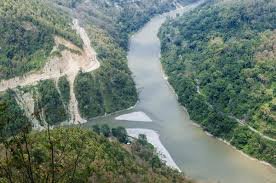
- As it flows through India, it carves deep gorges in the Siwalik Hills near Darjeeling before moving down towards the plains of West Bengal.
- After passing through the Sivok Khola pass, the river enters the plains and continues its journey into Bangladesh, where it finally joins the Brahmaputra.
- Key tributaries contributing to its flow include Lachung Chhu, Dik Chhu, and Rangpo Chhu on the left bank, and the Rangit River on the right bank.
- Its transboundary course through India and Bangladesh makes it a significant river system for regional geography and water sharing dynamics.