Context
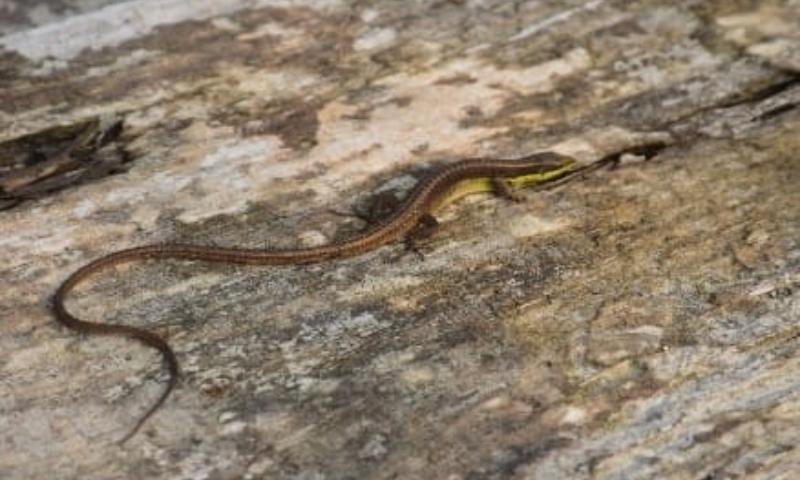
Recently, researchers discovered a new species of Asian grass lizard named Takydromus ultapanensis. The species was identified in Manas Biosphere Reserve landscape in the northeastern state of Assam.
About Takydromus ultapanensis
- It was discovered in a specific forest area – Ultapani Reserve Forest located in Kokrajhar district of Assam
- Habitat of the Species: Many related species usually occur in mountainous or subtropical environments. However, this species inhabits lowland semi-evergreen forests.
- Habitat Characteristics: These forests include waterlogged grasslands, fern-dominated vegetation patches and seasonal water channels.
- Researchers also observed the lizards basking on fern bushes in open patches within the forest where sunlight reaches the ground.
- Distinguishing Morphological Features: Scientists confirmed it as a new species after examining several physical characteristics like different scale patterns, distinct body proportions and unique diagnostic head features, different from other grass lizards like Takydromus khasiensis and Takydromus sikkimensis.
- Conservation Concerns: At present, Takydromus ultapanensis has been recorded only from a single forest range in Assam. Species with such restricted ranges are often vulnerable to habitat loss and environmental changes.
FAQs
Q1. What is Takydromus ultapanensis and where was it discovered?
Takydromus ultapanensis is a newly identified species of Asian grass lizard, discovered in the Ultapani Reserve Forest within the Manas Biosphere Reserve landscape, Kokrajhar district, Assam.
Q2. What type of habitat does Takydromus ultapanensis prefer?
Unlike many related species that inhabit mountainous or subtropical regions, this lizard thrives in lowland semi‑evergreen forests with waterlogged grasslands, fern‑dominated patches, and seasonal water channels.
Q3. How was Takydromus ultapanensis confirmed as a new species?
Researchers distinguished it from other grass lizards like Takydromus khasiensis and Takydromus sikkimensis by examining unique scale patterns, body proportions, and diagnostic head features.
Q4. Why is the discovery of Takydromus ultapanensis important?
The species adds to India’s biodiversity records and highlights the ecological richness of the Manas Biosphere Reserve. It also underscores the need for habitat conservation in Assam’s forests.
Q5. What are the conservation concerns for Takydromus ultapanensis?
Currently, the species has been recorded only in a single forest range in Assam, making it vulnerable to habitat loss, deforestation, and environmental changes. Protecting its habitat is crucial for its survival.