Context
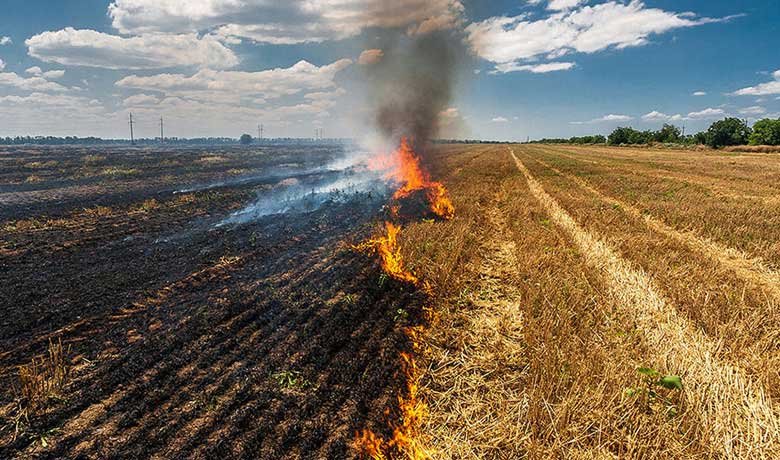
Stubble burning in Punjab, Haryana and Uttar Pradesh contributes to seasonal air pollution in Delhi-NCR. A 2015 IIT Kanpur study estimated that biomass burning accounted for 17–26% of Delhi’s winter particulate pollution, highlighting the need for effective crop-residue management.
Causes
- Short crop cycle: The small gap between paddy harvesting and wheat sowing leaves little time for residue management.
- High management cost: Collection, transport and processing of stubble can be costly, especially for small farmers.
- Limited machinery: Affordable and timely access to crop-residue management machines remains inadequate.
- Low economic returns: Lack of reliable markets and alternative uses makes burning a quick disposal option.
Environmental Impact
- Air Pollution: Releases particulate matter and other pollutants, worsening winter air quality.
- Soil Degradation: Burning destroys organic matter and soil nutrients, reducing soil quality.
- Greenhouse Gas Emissions: Releases greenhouse gases, adding to climate change.
- Regional Pollution: Under unfavourable winter conditions, smoke can worsen pollution across the Delhi-NCR airshed.
Measures Taken
- Crop-Residue Management: The Centre promotes in-situ and ex-situ residue management through agricultural machinery.
- Financial Support: Around ₹3,000 crore was provided to NCR states over five years for crop-residue management.
- Pusa Decomposer: Indian Agricultural Research Institute (IARI) developed this microbial formulation to accelerate paddy-straw decomposition in fields.
- ‘Red Entry’ Mechanism: Stubble burning is recorded as a ‘red entry’ in revenue records, which can make it difficult for farmers to obtain agricultural loans or mortgage their agricultural land, creating a financial disincentive.
- Punjab Measures: Include cash incentives, awareness campaigns, farm-union meetings and promotion of residue management.
- Biomass Utilisation: Biomass handling units collect crop residue for productive use, while brick kilns can use stubble as fuel.
Alternative Uses of Crop Residue
- Manure & Fertiliser: Convert stubble into compost, manure and organic fertilisers.
- Animal Feed: Process suitable crop residue for use as animal feed.
- Energy Generation: Convert straw into biomass pellets for power generation or co-fire with coal in thermal power plants.
- Bioethanol: Use crop residue as a feedstock for bioethanol, supporting energy security.
- Community Model: The Chhattisgarh Gauthan model promotes collection of crop residue for manure and other productive uses.
Way Forward
- Alternative Farming: Promote zero tillage, crop diversification and direct seeding to reduce crop residue.
- Machinery Access: Ensure affordable and timely access to Happy Seeders, rotavators and other residue-management machinery, especially for small and marginal farmers.
- Residue Markets: Build efficient collection, transport, storage and procurement chains to provide farmers economic returns from crop residue.
- Incentives & Awareness: Combine financial incentives, awareness campaigns and targeted enforcement to discourage burning.
- Improved Varieties: Promote short-duration and improved crop varieties to reduce the gap between harvesting and sowing.
- Decentralised Solutions: Expand community-based models for converting residue into manure, fuel, fodder and other useful products.
FAQs
Q1. What is stubble burning?
Ans. It is the open burning of crop residue left after harvesting. It is particularly common after paddy harvesting in north-western India.
Q2. What is the Pusa Decomposer?
Ans. It is a microbial formulation developed by IARI that accelerates the decomposition of paddy straw and facilitates in-situ residue management.
Q3. How can crop residue support energy security?
Ans. It can be converted into biomass pellets for power generation, used for co-firing in thermal plants, or processed into bioethanol.
Q4. What are Happy Seeder and Rotavator machines?
Ans. Happy Seeder enables wheat sowing directly into fields with standing paddy residue, while a Rotavator cuts, mixes and incorporates crop residue into the soil.