Context
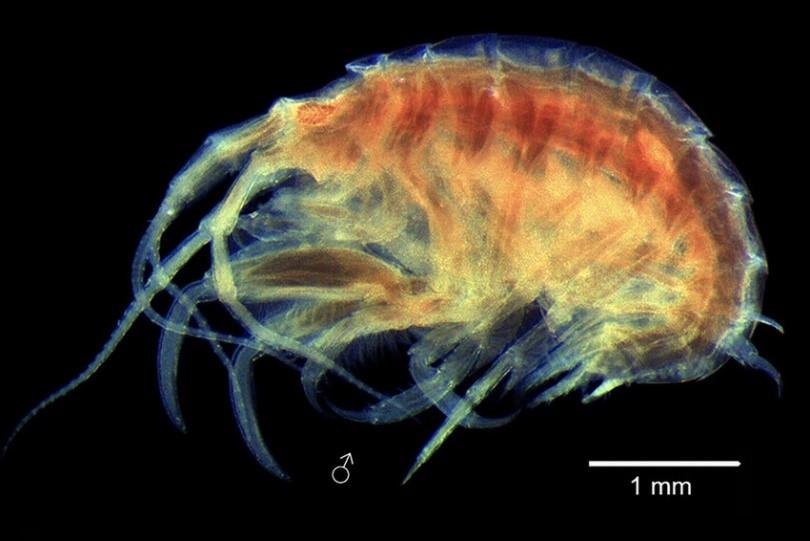
Marine researchers from Berhampur University have recorded the presence of the rare marine amphipod Stenothoe lowryi for the first time in Indian waters. The species was identified during a targeted coastal survey at Aryjapalli Beach.
Q1. What are Amphipods?
- Amphipods are small crustaceans belonging to the order Amphipoda.
- They are related to other crustaceans such as crabs, lobsters and shrimp.
- The name “amphipod” means “different-footed,” referring to the variety of leg structures found on their bodies.
Q2. What are the general features of Amphipods?
- Habitat: Amphipods are highly adaptable and can be found in many environments, including marine ecosystems, freshwater systems such as rivers and lakes, coastal sand beaches, caves and moist tropical habitats.
- Species Diversity: More than 7,000 species of amphipods have been identified globally. Many of them belong to a subgroup known as Gammaridea.
- Body Structure: Amphipods typically have an elongated body shape, a distinct head, a thorax (pereon) with seven segments and an abdomen (pleon) with six segments.
- Size Range: Some amphipods are extremely small, measuring around 0.1 cm. Others can grow up to 34 cm, depending on the species.
- Feeding Habits: Most amphipods feed on dead plant and animal material, organic debris and small organisms found in marine sediments.
Q3. What is Stenothoe lowryi?
- It is a rare marine amphipod, which is a small shrimp-like crustacean found in coastal marine ecosystems.
- It belongs to the family Stenothoidae under the order Amphipoda.
- Before this discovery, the species had only been reported from Malaysian coastal waters.
- Its identification in Odisha marks the first confirmed record of the species in India.
Q4. What are the key physical characteristics of Stenothoe lowryi?
- It has a very small body size of about 5.5 mm.
- The organism possesses large claws known as gnathopods, which are used for gripping surfaces and handling food.
- It has specialized antennae and walking legs (pereopods) that help distinguish it from related species.
- The species is commonly associated with rocky intertidal habitats, where waves frequently expose and submerge the shoreline.
- Although detailed ecological studies are limited, scientists believe that this species plays an important role in marine ecosystems.
FAQs
Q1. What are amphipods?
Amphipods are small crustaceans belonging to the order Amphipoda, related to crabs, lobsters, and shrimp. The name “amphipod” means “different‑footed”, referring to their varied leg structures.
Q2. What are the general features of amphipods?
- Habitat: Found in marine ecosystems, freshwater rivers and lakes, coastal beaches, caves, and tropical habitats.
- Species Diversity: Over 7,000 species identified globally, many in the subgroup Gammaridea.
- Body Structure: Elongated body, distinct head, thorax with 7 segments, abdomen with 6 segments.
- Size Range: From 0.1 cm to 34 cm, depending on species.
- Feeding Habits: Mostly scavengers, feeding on dead plant/animal material and organic debris.
Q3. What is Stenothoe lowryi?
Stenothoe lowryi is a rare marine amphipod belonging to the family Stenothoidae. It is a small shrimp‑like crustacean found in coastal marine ecosystems. Previously reported only from Malaysian waters, its identification in Odisha (Aryjapalli Beach) marks the first record in India.
Q4. Why is the discovery of Stenothoe lowryi in India significant?
It expands the known geographical distribution of the species, highlights the biodiversity of Indian coastal ecosystems, and underscores the importance of marine surveys and monitoring.
Q5. What role does Stenothoe lowryi play in marine ecosystems?
Though detailed ecological studies are limited, scientists believe it contributes to nutrient cycling and food webs in intertidal habitats, supporting overall ecosystem health.