Context
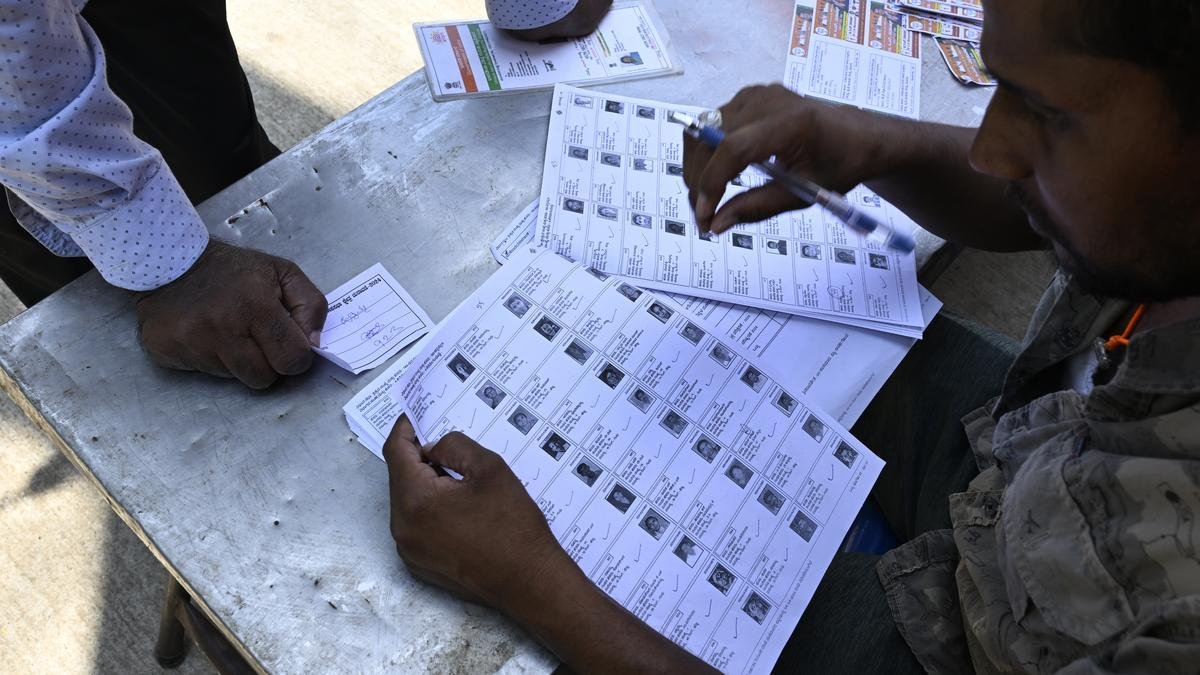
The Supreme Court has directed Maharashtra to complete all local body elections in three phases by January 31, 2026. The election process is taking place amid controversies regarding duplicate names, address mismatches, and exclusion of first-time voters, questioning the accuracy and transparency of the electoral rolls.
What Are the Key Features of the Voters’ List System for the Local Body Elections?
- The State Election Commission (SEC) conducts local body elections but does not prepare or modify the voters’ list.
- Electoral rolls are prepared exclusively by the Election Commission of India (ECI) under the Representation of the People Act, 1950.
- The SEC only bifurcates the ECI’s Assembly-wise list into ward-wise lists for local bodies.
- For the upcoming elections, the roll being used is the one updated up to July 1, 2025.
- The cut-off for including new 18-year-old voters remained January 1, 2025, excluding those who turned 18 after this date.
- A structured revision programme (Nov 20–Dec 12) allows corrections related to wrong wards, missing names, or duplicates, but not addition/deletion of names because SEC can mark duplicate entries but cannot remove them; only ECI has deletion powers.
Why Does the Issue of Voter List Accuracy Matter for the Election Process?
- Accurate electoral rolls ensure free, fair, and credible elections.
- Errors such as duplicate voters, bulk voters at one address, and illegal out-of-State entries undermine public trust.
- Exclusion of new 18+ voters affects youth representation and may distort democratic participation.
- Political neutrality and transparency in elections strengthen local self-governance, which is a constitutional mandate under the 73rd and 74th Amendments.
- Electoral roll problems can result in legal disputes, delayed results, or challenges to the legitimacy of elected bodies.
How Does the State Election Commission Conduct Electoral Roll Revision and Elections in a State?
- The State Election Commission (SEC) is a constitutional authority responsible for conducting elections to rural and urban local bodies (Panchayats and Municipalities) under Articles 243K and 243ZA of the Constitution.
- Its functioning involves a structured, multi-step process to ensure free, fair, and timely elections.
- Using Electoral Rolls Prepared by the Election Commission of India (ECI)
- SEC uses the Assembly constituency-wise electoral rolls prepared by the ECI under the Representation of the People Act, 1950.
- The SEC bifurcates these rolls into ward-wise lists for local bodies (municipalities, nagar panchayats, zilla parishads, panchayat samitis, gram panchayats).
- Before elections, the SEC carries out delimitation, which includes:
- Fixing the number of seats in each local body.
- Dividing the area into wards based on population.
- Using Electoral Rolls Prepared by the Election Commission of India (ECI)
- Ensuring reservations (SC/ST/OBC/Women) as per law.
- Publication of Draft Ward-Wise Voters’ Lists indicating voters assigned to each ward after bifurcation.
- SEC invites Objections and Suggestions for a specific time window (usually 7–15 days):
- Objections about missing names (name in Assembly list but not in ward list).
- Corrections about wrong ward assignment.
- Complaints about duplicate entries.
- Objections to bulk voters or unverified addresses.
- Verification of Objections
- Ward mismatch
- Duplicate names
- Voters registered at suspicious addresses
- Duplicate entries may be star-marked, and voters may be asked to give an undertaking specifying which polling booth they will vote at.
- Publication of the Final Ward-Wise Voters’ List
- After verification, the SEC publishes the final ward-wise list.
- This list becomes the official electoral roll for the local body election.
- Polling-centre-wise lists are also published.
- The SEC then announces of Election Schedule
- Notifies the election schedule (dates for nominations, scrutiny, withdrawal, polling, counting).
- Ensures compliance with Supreme Court/High Court directions for timelines.
- Issues the Model Code of Conduct for local body areas.
- Conduct of the Election
- SEC appoints Returning Officers (ROs) and Presiding Officers.
- Sets up polling stations and arranges EVMs or ballot papers.
- Deploys security, observers, and micro-observers.
- Ensures adherence to the Model Code of Conduct.
- Facilitates voting for General voters, Persons with disabilities (PwDs), Senior citizens and Essential service personnel.
- Counting of Votes and Declaration of Results
- Counting is done under SEC supervision in a transparent, notified manner.
- Results are declared after counting and displayed publicly.
- SEC can order repoll in case of malpractice or violence.
- Post-Election Processes
- Preparation of elected representatives’ list.
- Resolution of election disputes (usually adjudicated by designated tribunals or courts).
- Review of election conduct and improvements for future cycles.
What Are the Broader Implications of the Voters’ List Issues on Governance and the Electoral Process?
- Ensures compliance with Supreme Court timelines but creates a compressed schedule for corrections.
- Makes elections administratively challenging, especially with unresolved duplicates.
- The exclusion of post-January-2025 youth voters weakens representative democracy.
- Opposition concerns may lead to allegations of bias or manipulation, affecting political stability.
- Persistent errors in electoral rolls risk future litigation and undermine the legitimacy of elected local bodies.
Challenges and Way Forward
| Challenges | Way Forward |
| SEC cannot add or delete names; depends on ECI lists | Establish a more integrated SEC–ECI coordination system with rolling updates |
| Duplicate and doubtful entries not fully verifiable in short time | Extend verification teams, allow longer scrutiny windows |
| Exclusion of new 18+ voters due to outdated cut-off | Revise cut-off dates before each local election cycle; allow supplementary rolls |
| Bulk voters, zero-address voters, and out-of-State entries | Use Aadhaar-based digital address verification (with privacy protection) |
| Limited transparency leading to opposition distrust | Publish ward maps, filters, and steps publicly; hold multi-party review meetings |
Conclusion
Maharashtra’s local body election process highlights the tension between meeting constitutional deadlines and ensuring clean, transparent electoral rolls. While the SEC has mechanisms to organise elections efficiently, it remains constrained by its dependence on ECI-prepared voters’ lists. Strengthening coordination, improving verification systems, and updating cut-off norms are essential for ensuring fair, inclusive, and credible local governance.
| EnsureIAS Mains Question
Q. The limitations of the State Election Commissions (SECs) in preparing and revising electoral rolls often hinder the conduct of free, fair, and inclusive local body elections. Discuss the challenges and necessary reforms to strengthen the role of SECs in ensuring electoral integrity at the local level. (250 words) |
| EnsureIAS Prelims Question
Q. Consider the following statements regarding the State Election Commission (SEC): 1. The SEC is responsible for preparing the electoral rolls for Panchayat and Municipal elections. 2. The SEC derives its powers from Articles 243K and 243ZA of the Constitution. 3. The State Election Commission supervises, directs, and controls the conduct of elections to local bodies. Which of the statements given above is/are correct? a. 1 and 2 only Answer: (b) 2 and 3 only Explanation Statement 1 is Incorrect: SECs do not prepare electoral rolls. Rolls are prepared by the Election Commission of India under the RPA, 1950. SECs only use and bifurcate these rolls for local elections. Statement 2 is Correct: Articles 243K (Panchayats) and 243ZA (Municipalities) provide for State Election Commissions. Statement 3 is Correct: SECs have the constitutional mandate of superintendence, direction, and control of local body elections. |