Important Questions for UPSC Prelims, Mains and Interview
|
Context
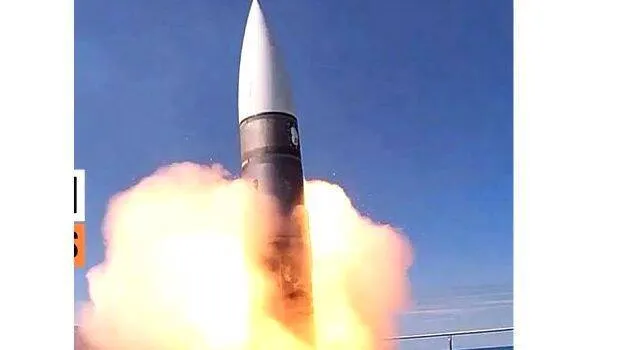
The Ministry of Defence recently signed defence contracts worth ₹5,083 crore, including the procurement of Shtil vertical-launch surface-to-air missiles for the Indian Navy and Advanced Light Helicopters for the Indian Coast Guard. The Shtil system strengthens India’s naval capability to counter aerial threats at sea.
Q1. What is the Shtil Surface-to-Air Missile (SAM) system and what are its main technological features?
- Shtil is a medium-range ship-based surface-to-air missile system designed for naval air defence.
- The system was developed by Russia for deployment on modern naval warships.
- It uses the 9M317ME missile equipped with semi-active radar homing guidance.
- The missile system follows a vertical launch configuration, allowing rapid response to aerial threats.
- It is integrated with shipborne radar and combat management systems.
- The system is designed to protect naval vessels from multiple aerial attacks simultaneously.
- Its automation enables quick reaction during high-speed combat scenarios.
Q2. How does the Shtil missile system operate as part of a naval air-defence network on warships?
- Enemy aerial threats are first detected by the ship’s long-range surveillance radar.
- The information is processed through the ship’s combat management system to identify threats.
- The missile is launched vertically from dedicated launch cells inside the warship.
- During flight, the missile is guided toward the target using radar illumination signals.
- The system can simultaneously track and engage multiple airborne targets.
- Automated targeting systems help prioritise the most dangerous threats first.
- This layered defence helps safeguard entire naval fleets rather than a single vessel.
Q3. What are the key technical specifications and operational capabilities of the Shtil missile system?
- The system has an engagement range of about 3.5 km to 50 km.
- It can intercept targets at altitudes ranging from 5 metres to nearly 15 km.
- The missile travels at speeds close to Mach 2.5 (around 2.5 times the speed of sound).
- It can engage up to 12 aerial targets simultaneously.
- The system uses semi-active radar homing for precise interception.
- The missile is capable of high manoeuvrability, enabling interception of fast targets.
- Vertical launch allows rapid missile firing without rotating launchers.
- Integration with radar ensures continuous tracking and targeting accuracy.
Q4. Why is the procurement of Shtil missiles important for India’s maritime security and naval preparedness?
- The system strengthens the air-defence capability of Indian naval warships.
- It improves protection against anti-ship cruise missiles, a major modern naval threat.
- Stronger air defence enhances survivability of aircraft carriers and destroyers.
- It contributes to securing strategic sea lanes in the Indian Ocean Region.
- Advanced missile systems support India’s naval modernisation programme.
- The system helps counter emerging threats such as drones and precision weapons.
- It enhances India’s ability to maintain maritime dominance and deterrence.
Q5. How does the vertical launch design of the Shtil missile system improve naval combat effectiveness?
- Vertical launch enables missiles to fire instantly in any direction.
- It eliminates the need to physically rotate missile launchers toward targets.
- This reduces reaction time during sudden aerial attacks.
- Launch cells allow multiple missiles to be stored within compact ship compartments.
- Missiles can quickly reorient toward targets after vertical launch.
- This system allows warships to engage threats approaching from different directions simultaneously.
- It improves overall fleet defence during saturation missile attacks.
Q6. What kinds of modern aerial threats can the Shtil missile system intercept in maritime warfare?
- The system can destroy supersonic fighter aircraft attempting naval strikes.
- It can intercept anti-ship cruise missiles approaching warships.
- It is capable of engaging attack helicopters used in naval combat operations.
- It can neutralise unmanned aerial vehicles (UAVs) and reconnaissance drones.
- The system is effective against low-flying sea-skimming missiles.
- It can counter high-speed manoeuvring aerial targets.
- These capabilities help address multi-dimensional threats in modern naval warfare.
Q7. How do radar integration, automation and guidance technologies enhance the operational efficiency of the Shtil missile system?
- The system uses advanced 3-dimensional radar for early detection of threats.
- Radar tracking provides accurate target identification and trajectory prediction.
- Automated command systems allow rapid missile launch decisions.
- Semi-active radar homing ensures precision guidance during interception.
- Integrated sensors support continuous tracking of moving targets.
- Automation reduces human reaction delays during high-speed combat situations.
- Combined technologies significantly improve reaction time and interception success rate.
Conclusion
The Shtil missile system plays a crucial role in strengthening India’s naval air-defence capability. By combining vertical launch technology, advanced radar integration, and high-speed interception, it enables warships to defend against a wide range of aerial threats. The system enhances the Indian Navy’s readiness to safeguard maritime interests and maintain security in the Indian Ocean Region.