Context
Shiveluch Volcano on Russia’s Kamchatka Peninsula recently witnessed a major eruptive event, releasing large quantities of volcanic ash into the atmosphere and leading authorities to issue the highest level of aviation warning for the surrounding region.
About Shiveluch Volcano
- It is estimated to be 60,000–70,000 years old.
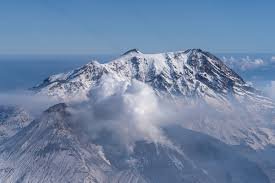
- Shiveluch is a stratovolcano, formed by alternating layers of lava, ash, and volcanic rock.
- The volcano rises to an elevation of about 3,283 metres above sea level.
- Its summit contains a broad 9-km-wide caldera, within which a large lava dome complex has developed.
- Several smaller lava domes are also found on the outer slopes of the volcano.
- Repeated collapse of these lava domes has produced debris avalanches, and their deposits cover much of the caldera floor.
- It has recorded nearly 60 major eruptions over the past 10,000 years, more than any other volcano during this period.
- The volcano has remained continuously active since August 1999, with occasional powerful explosive eruptions.
- Over the past decade, it has frequently emitted ash and steam, along with periodic lava flows, pyroclastic flows, and dome-collapse events.